THE TELEGRAPH: Investors react to warnings that debt-fuelled Budget will raise interest rates and hurt growth
UK borrowing costs have hit their highest levels in a year and stocks have tumbled amid growing concerns about Rachel Reeves’s borrowing plans.
Benchmark 10-year borrowing costs rose by almost 0.2 percentage points to 4.582pc on Thursday, as investors fretted about the Chancellor’s £32bn-a-year increase in borrowing. Analysts have highlighted it would not all be used to fund investment.
The pound also fell by a third of a percent against the dollar to $1.2922 and stocks slumped. The FTSE 250 index, which is made up mainly of domestic companies, fell by 1.4pc and the more internationally focused FTSE 100 was down by 0.80pc in afternoon trade.
The sell-off for British assets and the higher government borrowing costs came as investors reacted to warnings from economists that the Chancellor’s debt-fuelled Budget will leave the country vulnerable to changes in debt costs, put up interest rates and hurt growth. » | Szu Ping Chan, Economics Editor | Thursday, October 31, 2024
Showing posts with label budget. Show all posts
Showing posts with label budget. Show all posts
October 31, 2024
October 30, 2024
Institute of Economic Affairs: Tax Expert Warns: The Budget's Hidden Attack on Your Wages
Oct 30, 2024 | In an analysis of the government's latest budget, Tom Clougherty, Executive Director and Tax Policy Specialist, breaks down the concerning implications of a massive £40 billion tax increase, with £25 billion coming from employer National Insurance contributions alone. With taxes already at historic highs, Clougherty explains how these changes will likely suppress wages and reduce job opportunities across the private sector.
Despite the change in government, Clougherty identifies a troubling continuity in economic policy, with an increasingly state-centric approach to growth. He critiques the administration's heavy reliance on public spending and capital projects, arguing this comes at the expense of private sector innovation and investment – the true engines of sustainable economic growth.
Drawing from years of economic evidence, Clougherty challenges the government's claim that workers won't be affected by these tax increases. He demonstrates how employer National Insurance hikes inevitably get passed through to employees in the form of lower wages and reduced benefits, adding to existing cost of living pressures. This comprehensive analysis offers vital insights for businesses and workers alike as they navigate the implications of the new budget.
Despite the change in government, Clougherty identifies a troubling continuity in economic policy, with an increasingly state-centric approach to growth. He critiques the administration's heavy reliance on public spending and capital projects, arguing this comes at the expense of private sector innovation and investment – the true engines of sustainable economic growth.
Drawing from years of economic evidence, Clougherty challenges the government's claim that workers won't be affected by these tax increases. He demonstrates how employer National Insurance hikes inevitably get passed through to employees in the form of lower wages and reduced benefits, adding to existing cost of living pressures. This comprehensive analysis offers vital insights for businesses and workers alike as they navigate the implications of the new budget.
October 28, 2021
Budget 2021: IFS Predicts ‘Real Pain’ for Low-income Households
THE GUARDIAN: Thinktank’s verdict on Rishi Sunak’s budget says tax rises and inflation will mean falling living standards for many

Rishi Sunak in Bury, the day after delivering the budget. Photograph: Lindsey Parnaby/AFP/Getty Images
Rishi Sunak’s decision to raise taxes on workers amid high levels of inflation will squeeze living standards next year, causing “real pain” for low-income households, the Institute for Fiscal Studies has warned.
Issuing its verdict after the chancellor’s budget on Wednesday, the UK’s leading tax and spending thinktank said a middle earner was likely to be worse off next year as high rates of inflation and tax rises negate weak growth in wages.
It said that while Sunak was promising a new age of optimism, voters might not get much feelgood factor after the chancellor announced £40bn of tax increases this year – the largest increase since 1993.
Paul Johnson, the director of the IFS, said the outlook for living standards jarred with the chancellor’s upbeat tone. “Over the next several years a combination of tax increases and high inflation will mean very slow growth in living standards,” he said. » | Richard Partington, Economics correspondent | Thursday, October 29, 2021

Rishi Sunak’s decision to raise taxes on workers amid high levels of inflation will squeeze living standards next year, causing “real pain” for low-income households, the Institute for Fiscal Studies has warned.
Issuing its verdict after the chancellor’s budget on Wednesday, the UK’s leading tax and spending thinktank said a middle earner was likely to be worse off next year as high rates of inflation and tax rises negate weak growth in wages.
It said that while Sunak was promising a new age of optimism, voters might not get much feelgood factor after the chancellor announced £40bn of tax increases this year – the largest increase since 1993.
Paul Johnson, the director of the IFS, said the outlook for living standards jarred with the chancellor’s upbeat tone. “Over the next several years a combination of tax increases and high inflation will mean very slow growth in living standards,” he said. » | Richard Partington, Economics correspondent | Thursday, October 29, 2021
November 09, 2012

The US has finally voted and the dark visions of America's future broadcast on television screens across the country -- and most intensively in battleground states -- have come to an end. Supporters of both Barack Obama and Mitt Romney had developed doomsday scenarios for what would happen if their candidate's opponent were to win. Four more years of Obama, the ads warned, would result in pure socialism. A Romney presidency would see the middle and lower classes brutally exploited.
But following Obama's re-election, Americans are now facing a different, much more real horror scenario: In just a few weeks time, thousands of children could be denied vaccinations, federally funded school programs could screech to a halt, adults may be forced to forego HIV tests and subsidized housing vouchers would dry up. Even the work of air-traffic controllers, the FBI, border officials and the military could be drastically curtailed.
That and more is looming just over the horizon according to the White House if the country is allowed to plunge off the "fiscal cliff" at the beginning of next year. Coined by Federal Reserve head Ben Bernanke, it refers to the vast array of cuts and tax increases which will automatically go into effect if Republicans and Democrats can't agree on measures to slash the US budget deficit.
In total, the cuts add up to $1.2 trillion over the next nine years, with half coming from the military and half from other government programs, and with $65 billion coming in the first year alone. They were enshrined in law with the Budget Control Act of 2011, which also increased the debt ceiling. And though a deadline of Jan. 2, 2013 was set, they were never meant to come into effect. The plan for deep across-the-board cuts was intended as a way to prod Democrats and Republicans into reaching agreement on a long-term plan to reduce America's vast budget deficit. » | David Böcking | Thursday, November 08, 2012
September 29, 2012

To the dismay of a swath of French bankers, business leaders and the wealthy, President François Hollande has remained true to his word and unveiled €20bn (£16bn) in new taxes, including a 75% "supertax" band that will hit the rich.
In what Hollande has described as France's harshest budget in 30 years, business and personal taxpayers were asked on Friday to make an "unprecedented effort" to slash the country's public spending deficit.
However, the Socialist government sidestepped swingeing cuts in public spending, including pensions and state salaries, in its 2013 budget, which aims to find €36.9bn in savings.
It was also forced to concede it could not keep its pledge to get the country out of the red by 2017.
The budget was a delicate balancing act in which Hollande sought to reassure investors and the financial markets, while simultaneously hiking taxes on large businesses and high-earners.
However, it commits the government to an austerity programme that will be unpopular with leftwingers in the party, at a time when unemployment is rising and the economy teeters on the brink of recession. » | Kim Willsher in Paris | Friday, September 28, 2012
March 27, 2012
March 23, 2012

What on earth was the Treasury thinking, as it busily leaked details of the Budget left, right and centre while failing to alert anyone to the biggest revenue-raising measure of all? George Osborne talked about the abolition of age-related allowances, which will cost some pensioners several hundred pounds a year, as a “tax simplification”. Did he think the over-65s would be grateful? Or did he just not think about the position of decent middle-income pensioners at all?
Whatever the truth, it is certainly the case that this “stealth tax” has upset a very important political group. Judging by the emails and phone calls I have already received, there is widespread anger out there.
The Chancellor’s decision to reduce the real value of older people’s personal allowances means they will have to pay more tax than would otherwise be the case. For future pensioners, the impact will be to reduce their income by around £250 a year. This only affects the middle classes – the four and a half million or so older people who did put some money by for their future. Around half of pensioners have incomes below £10,000 a year and aren’t affected, as they pay no tax. The highest income pensioners are also unaffected, as the age allowance is withdrawn once incomes rise above about £24,000 a year.
It is those with incomes between about £10,500 and £24,000 a year – the “squeezed middle” – who have just been squeezed some more. These are people who saved to provide themselves with a decent income in retirement; not a lavish lifestyle, but enough to enable them to look after themselves and their families. So it is from this particular group that the Chancellor intends to take over £1 billion a year in extra tax.
These are the very people who have already been hit by the recent policy of ultra-low interest rates, which took away much of the savings income they had been expecting to live on. And then the Bank of England’s money-printing, gilt-buying spree – called quantitative easing – hurt them again as it led to high inflation and falling annuity rates, as well as hitting people in income drawdown very hard, too. Many of these pensioners feel they have already suffered a series of stealth raids on their incomes and they were outraged that the Chancellor announced so casually yesterday that he was piling on yet more pain. Read on and comment » | Ros Altmann | Thursday, March 22, 2012
My comment:
Excellent article!
George Osborne has shown that he and his cronies have nothing but contempt for all the little people. For this public school cabal, if you are not mega-rich and probably working in the financial sector, you're worthless. The little people be damned; we're going to look after the fat cats.
One of the things that troubles me greatly is the ultra-low interest rates which we now have. For pensioners and those dependent on generating an income from their savings, this is a catastrophe.
These idiots believe that capitalism is about rewarding the high earners with ever more tax breaks and bonuses. They seem to have little understanding that paying interest on accumulated capital in the form of savings belongs every bit as much to capitalism as rewarding risk-takers.
Any responsible government should be rewarding savers. People who save can look after themselves on rainy days and in retirement. Financially-independent people are not going to become a burden on the state. This budget did nothing for savers; in fact, it sent out the message that saving is a worthless pursuit.
The day of reckoning will surely come for this reckless and irresponsible government. And it should be noted that I write as a lifelong Conservative voter. No more! – © Mark
This comment also appears here
Related »
March 21, 2012
My comment:
What a pathetic little man Osborne is. Has he no original thoughts of his own? He knows damn well that raising the cost of cigarettes will not decrease the amount smoked; rather, it will make the poor, poorer. The rich, of course, can continue to smoke till the smoke comes out of their gills – the price increase simply won't affect them.
Smokers fund much of the NHS, and Osborne knows it. Osborne has no interest in prolonging people's lives. He does have an interest in collecting more taxes, though.
Pathetic man, pathetic budgetary move. – © Mark
This comment also appears here

Rail union leader Bob Crow said the tax changes meant that a banker on half a million pounds will receive a "kick back" of £17,500, money "robbed" from public services and the neediest in society.
Paul Kenny, general secretary of the GMB, said: "The different treatment of people at either end of the income scale is stark. Ordinary families are losing their tax credits and child allowances and suffering pay freezes while people on top salaries of £150,000 to £1 million a year are getting cash hand outs." » | Wednesday, March 21, 2012
February 13, 2012
REUTERS DEUTSCHLAND: Washington (Reuters) - US-Präsident Barack Obama setzt trotz eines Schuldenbergs in Rekordhöhe auf massive zusätzliche Ausgaben zur Ankurbelung der Konjunktur.
Neun Monate vor der Präsidentenwahl stellte er am Montag einen Entwurf für das kommenden Haushaltsjahr vor, der vorsieht, 800 Milliarden Dollar in Maßnahmen zur Schaffung von Arbeitsplätzen und zum Ausbau der Infrastruktur zu stecken. Gleichzeitig sollen die Steuern für Millionäre auf mindestens 30 Prozent steigen.
Mit seinen Plänen beißt Obama bei der Opposition auf Granit. Die Republikaner haben bereits klar gemacht, dass der Entwurf gestorben ist, sobald er den Kongress erreicht. Sie kontrollieren das Repräsentantenhaus - und nicht der Präsident, sondern diese Kammer hat in Haushaltsfragen die Vorhand. » | Reuters | Montag, 13. Februar 2012
REUTERS FRANCE: Obama veut stimuler emploi et croissance avec le budget 2013 » | Alister Bell et Laura MacInnis, Jean-Philippe Lefief pour le service français, édité par Gilles Trequesser | lundi 13 février 2012
Related »

Obama's 2013 spending proposal is expected to go nowhere in a divided Congress and is widely seen as more of a campaign document that frames his economic pitch to voters and seeks to shift the focus from deficits to economic growth.
It fleshed out a major theme of his re-election campaign - "economic fairness." He wants wealthier Americans to bear more of the burden of slashing a federal deficit that was a trillion plus dollars for a fourth year in a row.
The budget proposal is a "reflection of shared responsibilities," the Democratic president said at a campaign-style event in Annandale, Virginia, referring to his call for a minimum 30 percent tax on millionaires.
In one of his best opportunities before the November 6 election to convince voters that he deserves a second term, Obama called for more than $800 billion for job creation and infrastructure investment, including billions of dollars for roads, railways and schools.
He also set aside money to hire more teachers, police and firefighters and invest in manufacturing, while extending tax breaks to spur hiring.
"At a time when our economy is growing and creating jobs at a faster clip, we've got to do everything in our power to keep this recovery on track," Obama said.
He casts his Republican rivals as the party for the rich while Republicans want to paint Obama as a tax-and-spend liberal.
The budget projects deficits remaining high this year and next before starting to decline, meaning more borrowing that will add well over $7 trillion to the national debt over the next decade. » | Alister Bull and Laura Macinnis | WASHINGTON | Monday, February 13, 2012
April 14, 2011

THE AUSTRALIAN: BARACK Obama has set the scene for an ideological battle in next year's presidential election, announcing tax increases for the wealthy.
The proposed hike is part of his plan to reduce the federal budget deficit by $US4 trillion ($3.8 trillion) over 12 years.
In a break from his conciliatory style, Mr Obama has ripped into his Republican opponents for trying to put the burden of deficit reduction on the poor and elderly while continuing to cushion the wealthy.
The President announced a broad plan for reducing the US budget deficit yesterday, including cuts to government health programs and defence spending.
But he raised Republican hackles by refusing point blank to extend tax cuts introduced by the Bush administration for people earning more than $US250,000 a year.
Mr Obama said he had agreed to renew the tax cuts for high-income earners once, as part of a deal with Republicans to guarantee cuts for the middle class. "I refuse to renew them again," he said. » | Brad Norington, Washington Correspondent | The Australian | Friday, April 15, 2011
March 22, 2011
 THE GUARDIAN: • Consumer price index hits 4.4% for February • Public sector net borrowing for February at £10.3bn • Hopes dashed of big cut in deficit • News increases chance of cautious budget package
George Osborne was handed a double dose of unwelcome pre-budget news on Tuesday when official figures showed inflation leaping to 4.4% and public borrowing hit its highest February level since modern records began in 1993.
With the chancellor putting the finishing touches to his second package of fiscal measures, the rise in inflation put additional pressure on the Bank of England to raise interest rates while the deterioration in the public finances put paid to City hopes that borrowing in 2010-11 would significantly undershoot the government's £148bn target.
The disappointing economic news increases the chances of a cautious package from Osborne on Wednesday. The setback to the public finances gives the chancellor even less scope for budget giveaways and he will see a tough fiscal stance as necessary to prevent the Bank from raising interest rates.
Higher heating costs, the soaring price of oil and mark-ups from clothing and footwear retailers were mainly responsible for the increase in the consumer prices index measure of inflation from 4% to a 28-month high of 4.4%, according to the Office for National Statistics. » | Larry Elliott, economics editor | Tuesday, March 22, 2011
THE GUARDIAN: Inflation hits 4.4% in February: Retail prices index, which includes housing costs, hit 5.5% - its highest level since July 1991 » | Graeme Wearden | Tuesday, March 22, 2011
September 15, 2010
THE TELEGRAPH: Meryn King, the Governor of the Bank of England, has urged the unions to accept public sector reforms and jobs cuts by warning that anything short of tackling the UK's record Budget deficit would “fail the next generation”.
Addressing the Trades Union Congress, he described the current deficit as “unsustainable” and, in an implicit defence of the Coalition's policy, argued that “the current plan ... to reduce the deficit steadily over five years [is] a more gradual fiscal tightening than in some other countries”.
“Vague promises would not have been enough,” he told the Manchester conference, where union leaders have described the Government as the “Demolition Coalition” and threatened civil disobedience in protest at the planned reforms.
“Market reaction to rising sovereign debt can turn quickly from benign to malign, as we saw in the euro area earlier this year. It is not sensible to risk a damaging rise in long-term interest rates that would make investment and the cost of mortgages more expensive,” Mr King said.
“The costs of this crisis will be with us for a generation. And we owe it to the next generation to seize this opportunity to put in place the reforms that will make another crisis much less likely and much less damaging.”
He stressed that reducing the Budget deficit, which is forecast to hit £149bn this year – the largest peacetime deficit in history and the biggest as a proportion of GDP in Europe, is one of a number of necessary reforms, and will require co-operation from the unions. >>> Philip Aldrick, Economics Editor | Wednesday, September 15, 2010
June 22, 2010
THE TELEGRAPH: VAT will rise and benefits will be cut to wipe out Britain’s budget deficit within five years, George Osborne has announced.
The Chancellor used his emergency Budget to announce that VAT will rise from 17.5 per cent to 20 per cent from January 4.
He will also cut £11 billion a year from benefits and welfare payments.
High-earners will be hard hit by the measures. Anyone earning more than £49,700 a year will be almost £1,600 a year worse off, Treasury figures indicated.
The average earner will be £400 a year worse off.
Mr Osborne said the wide range of cuts and tax rises were needed to pay off the deficits Labour ran up.
“This is the unavoidable Budget,” he said.
“It is tough but it is fair. I am not going to hide hard choices from the British people.
He added: “Today, we take decisive action to deal with the debts we have inherited.”
He insisted that all income groups will share in the pain to come. “When we say we are all in this together, we mean it,” he said. >>> James Kirkup, Political Correspondent | Tuesday, June 22, 2010

THE INDEPENDENT: A stern-faced Chancellor George Osborne delivered his "tough but fair" emergency Budget plans to Parliament, promising to balance Britain's books within five years.
In a statement issued after briefing Cabinet colleagues, Mr Osborne said the Budget aimed to protect children and pensioners and ensure the richest bear the largest share of the burden.
He then posed briefly on the steps of 11 Downing Street, flanked by his equally grim-faced Treasury team, before heading to the House of Commons to unveil his plans.
In his statement, Mr Osborne said: "My Budget is tough but it is fair. This is an unavoidable Budget because of the mess we have to clear up. So the coalition Government will take responsibility for balancing Britain's books within five years.
"We are going to do this fairly, protecting children and pensioners and ensuring the richest contribute the most. And it means getting enterprise going, because it is business, not Government, that will create the jobs of the future." >>> Press Association | Tuesday, June 22, 2010

THE TIMES: George Osborne will claim today that the harshest Budget for 30 years will squeeze the rich more than it hits the poor. The Chancellor will seek to sell his package of record spending cuts and tax rises as being stamped by fairness as he tries to win public support for a four-year austerity drive.
Nick Clegg moved to pre-empt any revolt by Liberal Democrats last night by insisting that his party’s values were at the heart of Mr Osborne’s assault on the deficit. “This is one of the hardest things we will ever have to do,” he wrote in an e-mail to party members, an acknowledgement that the pain to come will put the coalition under immense strain.
Mr Osborne’s Budget statement is a watershed moment, when households learn how much they will have to suffer to help to pay off the country’s debts. Read on and comment >>> Roland Watson, Political Editor | Tuesday, June 22, 2010
June 17, 2010
THE INDEPENDENT: David Cameron today set out Britain's "red lines" on economic sovereignty at his first summit encounter with fellow EU leaders.
He said Britain would not submit its annual Budget for "peer review" to Brussels as part of a new economic surveillance crackdown.
And he warned that proposed hefty sanctions against countries breaching deficit and debt limits set by the EU must apply only to the single currency member states.
The new boy in the bloc was invited to speak early on in today's summit debate on EU "economic governance" and, after formally introducing himself, set out Britain's well-established defence against central control over the domestic budget programme.
Summit conclusions on the table seem to offer the Prime Minister a way out of the "peer review" plan, which would require all countries to submit annual national Budget details and analysis to Brussels before presenting them to MPs.
The text backed by most EU leaders proposes that, from 2011, in the interests of strengthening budgetary discipline across the EU, member states should present their budgetary plans to the Commission each Spring "taking account of national budgetary procedures". >>> Press Association | Thursday, June 17, 2010
June 08, 2010
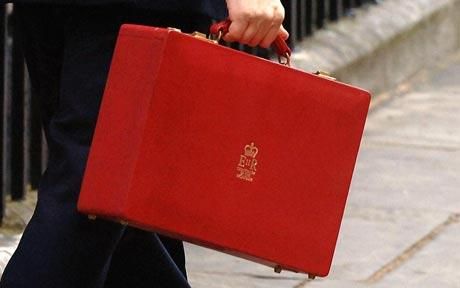
THE TELEGRAPH: David Cameron is facing a fight with European leaders at his first summit next week over demands for Britain to have its budget vetted by the EU before it is presented to parliament.
He will refuse to sign up to plans, supported by all Europe's finance ministers except Britain's, in which officials would assess the "main assumptions" of a budget before it was seen by MPs and the public.
The "budgetary surveillance" demand will overshadow the prime minister's first EU meeting next Thursday and will put him at odds with Angela Merkel, the German Chancellor and Nicolas Sarkozy, the French President.
Herman Van Rompuy, the EU President, and the European Commission have proposed that all treasuries must discuss their budget plans with other European finance ministers and officials before they are presented to national parliaments.
Mr Van Rompuy said: "The main assumptions underlying the budgetary plans, like the levels of growth or inflation, would be examined. So would the main aggregates, like total revenues, total spending and deficit targets.
"A government presenting a budgetary plan with a high deficit will have to justify itself in front of its peers. There would still be time to adjust the plans before the final budget is presented."
Mr Van Rompuy has defended the plan saying it will help national parliaments to better judge complicated budgets. "A national parliament would be able to judge its governments' budget plans knowing fully their credibility," he said.
The measure is intended to prevent a repeat of the Greek debt crisis and to help the EU police rules, applying to all 27 member states, limiting public spending in order to safeguard the euro. >>> Bruno Waterfield in Brussels | Tuesday, June 08, 2010
Subscribe to:
Posts (Atom)