THE NEW YORK TIMES: The S&P 500 is now more than 10 percent below its last record high — a line in the sand for investors worried about a sell-off gathering steam.
The world’s most widely followed stock-market benchmark slid into a correction on Thursday, a drop that underscores how the two-year-long bull market is running out of steam in the early days of the Trump administration.
The move stems from investors’ growing pessimism about the whipsawing policy pronouncements from Washington over the past few weeks. On-again, off-again tariffs and mass layoffs of federal workers have fomented unease on Wall Street.
On Thursday, the S&P 500 fell 1.4 percent. After weeks of selling, the index is now down 10.1 percent from a peak that it reached less than one month ago and is in a correction — a Wall Street term for when an index falls 10 percent or more from its peak, and a line in the sand for investors worried about a sell-off gathering steam.
Other major indexes, including the Russell 2000 and the tech-heavy Nasdaq Composite, had already fallen into correction. On Thursday, the Nasdaq fell 2 percent, while the Russell 2000 index of smaller companies, which tend to be more exposed to the ebb and flow of the economy, was 1.6 percent lower. » | Joe Rennison and Danielle Kaye | Graphics by Karl Russell | Thursday, March 13, 2025
Why ever did investors and electors believe that Donald Trump knew how to manage the economy? In his working life, he declared business bankruptcy at least four times (click here and here for details), practising on himself first. Now, he's putting the expertise he has gained to use, practising on us. Now, he wants to make the country bankrupt instead! You can't say you weren't warned. Enjoy the rough and bumpy ride! Have plenty of tablets to hand for motion sickness! You're going to need them. This is just the start. Nearly four more years to go of this – at least. – © Mark Alexander
Showing posts with label stock market. Show all posts
Showing posts with label stock market. Show all posts
March 13, 2025
January 22, 2024
Wall Street Traders Celebrate New Stock Market Record | BBC News
June 30, 2022
After Worst Start in 50 Years, Some See More Pain Ahead for Stock Market
THE NEW YORK TIMES: At the halfway point of the year, it’s been a historically horrible time for stocks. Bonds are in bad shape, too.

The stock market is on track for its worst first half of the year since at least 1970. | Julia Nikhinson/Associated Press
Wall Street set records in the first half of the year, none of them good.
The economy is on the cusp of a recession, battered by high inflation and rising interest rates, which eats into paychecks, dents consumer confidence and leads to corporate cutbacks. As it has teetered, markets have tanked.
The stock market is on track for its worst first six months of the year since at least 1970. The S&P 500 index, the cornerstone of many stock portfolios and retirement accounts, peaked in early January and has fallen 19.9 percent over the past six months.
The sell-off has been remarkably broad, with every sector except energy down this year. Bellwethers including Apple, Disney, JPMorgan Chase and Target have all fallen more than the overall market.
And that’s only part of the horror story for investors and companies this year. » | Isabella Simonetti | Thursday, June 30, 2022

Wall Street set records in the first half of the year, none of them good.
The economy is on the cusp of a recession, battered by high inflation and rising interest rates, which eats into paychecks, dents consumer confidence and leads to corporate cutbacks. As it has teetered, markets have tanked.
The stock market is on track for its worst first six months of the year since at least 1970. The S&P 500 index, the cornerstone of many stock portfolios and retirement accounts, peaked in early January and has fallen 19.9 percent over the past six months.
The sell-off has been remarkably broad, with every sector except energy down this year. Bellwethers including Apple, Disney, JPMorgan Chase and Target have all fallen more than the overall market.
And that’s only part of the horror story for investors and companies this year. » | Isabella Simonetti | Thursday, June 30, 2022
October 08, 2021
Economic and Earnings Concerns Begin to Weigh on Stocks
THE NEW YORK TIMES: After having few cares about the markets all year, investors are getting nervous as the Fed signals that harsher policies are on the way.
Wall Street’s imperviousness to bad news, which enabled stocks to double in value from their pandemic panic lows, may be starting to crack.
When the Federal Reserve signaled in September that it would soon tighten monetary policy by curtailing asset purchases, the stock market took it well, but not for long. The S&P 500 rose modestly for a few days before reversing course, pushing the index more than 5 percent below the high it set earlier in the month, which amounted to its biggest drop for the year.
Despite that setback, the market managed to eke out a 0.2 percent gain for the third quarter.
A stingier Fed is not the market’s only concern. Inflation, dismissed until recently by the Fed as a transitory artifact of the pandemic, is coming to be seen as more persistent as the prices of goods, services and labor increase. What is being acknowledged as transitory, though, is the jolt to economic growth and corporate profits provided by several trillion dollars of added spending by Congress.
With a number of threats to prosperity becoming harder to ignore, many investment advisers have become less enthusiastic about stocks. They are revising return expectations down and recommending exposure only to narrow niches. » | Conrad de Aenlle | Friday, October 8, 2021
Wall Street’s imperviousness to bad news, which enabled stocks to double in value from their pandemic panic lows, may be starting to crack.
When the Federal Reserve signaled in September that it would soon tighten monetary policy by curtailing asset purchases, the stock market took it well, but not for long. The S&P 500 rose modestly for a few days before reversing course, pushing the index more than 5 percent below the high it set earlier in the month, which amounted to its biggest drop for the year.
Despite that setback, the market managed to eke out a 0.2 percent gain for the third quarter.
A stingier Fed is not the market’s only concern. Inflation, dismissed until recently by the Fed as a transitory artifact of the pandemic, is coming to be seen as more persistent as the prices of goods, services and labor increase. What is being acknowledged as transitory, though, is the jolt to economic growth and corporate profits provided by several trillion dollars of added spending by Congress.
With a number of threats to prosperity becoming harder to ignore, many investment advisers have become less enthusiastic about stocks. They are revising return expectations down and recommending exposure only to narrow niches. » | Conrad de Aenlle | Friday, October 8, 2021
January 29, 2021
Redditors Proved That the Stock Market Is a Joke and Wealth Is Imaginary
August 15, 2019
Donald Trump Grapples with Self-Inflicted Economic Wounds as Markets Plunge | The Last Word | MSNBC
May 12, 2019
The Week Trump Drove the Stock Market Nuts: Here's a Play-by-Play of How His Trade War with China Wreaked Havoc and Erased $1.4 Trillion in Market Value
They say all good things must come to an end, and that certainly rang true this past week for the US stock market.
Equities entered Monday riding high after a historically strong start to 2019. But by the time Friday afternoon rolled around, they'd suffered through their worst week of the year. As of Thursday's close, the MSCI All-Country World Index of global stocks had already seen $1.4 trillion of market value erased.
But that summary hardly does justice to the turbulence felt along the way, which frayed investor nerves and led many to wonder if this was the beginning of the end for the 10-year bull market. » | Joe Ciolli | Saturday, May 11, 2019
October 14, 2018
Strategist: The Stock Market Will Pull Back 40 Percent from the Highs
August 25, 2018
Will a Saudi Aramco IPO Ever Happen? | Inside Story
Media reports say the initial public offering has been postponed indefinitely. But the Saudi government has disputed this. Energy Minister Khalid al-Falih says the government is committed to conducting the IPO, at the 'appropriate circumstances and time'.
The plan to float around five percent of the oil company was expected to be the world's largest stock sale; and it lies at the heart of Crown Prince Mohammed Bin Salman's vision to transform the economy.
So, where does this leave Saudi Arabia's efforts to raise money and diversify its economy?
Presenter: Richelle Carey | Guests: Mahjoub Zweiri - Professor in Contemporary History of the Middle East at Qatar University; Mohammed Cherkaoui - Professor of Conflict Resolution at George Mason University; James Dorsey - Senior Fellow at the S. Rajaratnam School of International Studies at Nanyang Technological University
July 03, 2018
Trump Tariffs Causing Market Buyers to Go to the Sidelines: Gartman
February 06, 2018
August 20, 2017
The Stock Market - Siphoning To The Rich - Peter Joseph & Abby Martin
Joseph began his professional career working in advertising and as a private equity trader on Wall Street. In 2007, he produced a live performance art piece in New York City that he entitled "Zeitgeist." A film version was created and released by Joseph online and went viral with millions of views.
Peter Joseph is the founder of the Zeitgeist Movement, a grassroots, worldwide organization that advocates an alternative economic system based on sustainability, cooperation and human need. His most recent book, ‘The New Human Rights Movement,’ delivers a startling exposé about the violent oppression that defines our economic order, while issuing an urgent call for global activism to unite to replace it.
Abby Martin is an American journalist and presenter of The Empire Files, an investigative news program on the socialist state-funded satellite network teleSUR English[2][3] and YouTube.[4] She was formerly the host of Breaking the Set on the Russian network RT America, working from the Washington, D.C. bureau.[5] Before hosting her own show, she had worked for two years as a correspondent for RT America.
Martin is also an artist and activist, and helped found the citizen journalism website Media Roots. She serves on the board of directors for the Media Freedom Foundation which manages Project Censored.
August 05, 2017
Trump Is Turning Against the White Working Class that Elected Him
August 24, 2015
Trump Talks Stock Market Slide, Biden and Border Security
March 15, 2011
LE FIGARO: Le CAC 40 perd plus de 3% et s'enfonce sous les 3800 points. Londres et Milan suivent le même chemin tandis que Francfort lâche 5%. Les opérateurs s'inquiètent de l'aggravation de la situation nucléaire du Japon.
Encore une journée morose à la Bourse de Paris. Le CAC 40, qui a plongé sous les 3900 points hier, reste ce mardi ancré dans le rouge. Après un démarrage en forte baisse de 2,17% à 3793,95 points, l'indice phare de Paris creuse ses pertes et lâche 3,43% à 3744 points vers 10h30. À Londres et Milan, les Bourses suivent le même chemin et abandonnent également plus de 3%. La Bourse de Francfort creuse ses pertes à près de -5%.
Les indices ont du mal à retrouver le chemin de la hausse alors que la situation nucléaire japonaise s'est encore aggravée. Une nouvelle explosion et un incendie ont eu lieu au sein de la centrale de Fukushima Dai-ichi. «Le niveau de radioactivité a considérablement augmenté» et devient dangereux pour la santé, a déclaré le premier ministre japonais, Naoto Kan, à la télévision, provoquant un vent de panique sur les marchés d'Asie. La Bourse de Tokyo, pour sa part, s'est écroulée de 10,55%. » | Par Hayat Gazzane | Mardi 15 Mars 2011
THE DAILY TELEGRAPH: London joins global sell-off as Japan crisis fuels panic: London shares fell sharply on Tuesday as investors in Europe joined a global market sell-off that started with a 10.55pc plunge in the Nikkei as panicked investors dumped stocks in the face of an escalating nuclear crisis in Japan. » | Tuesday, March 15, 2011
March 03, 2011
 THE DAILY TELEGRAPH: Fears of sectarian uprisings in Bahrain and Saudi Arabia have set off the first serious wave of investor flight from the Gulf, compounding market turmoil as civil war in Libya pushes Brent crude over $116 a barrel.
Saudi Arabia’s Tadawul stock index has tumbled 11pc in wild trading over the past two days, led by banks and insurers. Dubai’s bourse has hit a 7-year low.
The latest sell-off was triggered by the arrest of a Shi’ite cleric in the Kingdom’s Eastern Province after he called for democratic reforms and a constitutional monarchy. The province is home to Saudi Arabia’s aggrieved Shi’ite minority and also holds the country’s vast Ghawar oilfield, placing it at the epicentre of global crude supply.
“Unrest in this region can have fatal consequences for the world,” said JBC Energy. “The plunge on the Saudi stock exchange can be interpreted as a sign of waning trust.”
In Bahrain, the island nation’s Sunni elite holds sway over a Shi’ite majority that is denied key jobs and has a token political voice, making it a trial run for Saudi Arabia’s near-identical tensions in the Eastern Province.
Bahraini dissidents have so far been much bolder, prompting a bloody crackdown last month when at least seven people were shot by the military. The ruling family – under intense pressure from Washington to stop the killings – has since held out an olive branch to protesters and let the radical Haq leader Hassan Mushaima return from exile, yet the crisis is far from contained.
My Mushaima said on Wednesday that protesters have “the right to appeal for help from Iran” if Saudi military units interfere in the struggle. Tanks were seen crossing the 17-mile causeway from Saudi Arabia to Bahrain on Tuesday.
“These were supposed to be Bahrain’s tanks returning from Kuwait: that is not a credible story,” said Siras Abi Ali, a Gulf expert at the risk group Exclusive Analysis.
He said the outcome in Bahrain will set the template for events across the border. “There is no good outcome from this for Saudi Arabia. If Bahrain offers concessions, the Saudi Shia will demand similar concessions. If they crack down, they risk an uprising. These people do not want to live under the House of Saud,” he said. >>> Ambrose Evans-Pritchard, International Business Editor | Wednesday, March 02, 2011
December 15, 2010
THE DAILY TELEGRAPH: Britain's 38 million savers have been urged to invest their money in the stock market after being warned that for many of them it is now a "waste of time" putting their cash into a savings account.
The warning came after official figures indicated that the cost of living had increased once again in November, making it nearly impossible to earn a real rate of return on any bank or building society savings product.
As the London stock market closed at a two-and-a-half-year high, experts said that for many savers taking the risk of abandoning a deposit account and placing it in a high-yielding collection of shares was a more sensible option.
The dearth of decent savings products was laid bare by figures from the personal finance website Moneyfacts which showed that there were just three accounts – out of a total of 2,203 on the market – that paid a real rate of return, and only one for higher-rate taxpayers. >>> Harry Wallop, Consumer Affairs Editor, and Garry White | Tuesday, December 14, 2010
To suggest that people with hard-earned savings expose themselves to the vicissitudes of fortune that the stock market can bring within nanoseconds, and to suggest that it would be a good idea for the uninitiated to risk their future security on a market which is subject to the vagaries of the experienced investor, is the height of folly and irresponsibility on the part of Darius McDermott.
If this man is such an expert, he should know that the first law of successful stock market investing is to buy low and sell high. That means to say that it is not a good idea to buy stocks and shares at the top of the market. The fact that the stock market is at a two-year high should raise the alarm bells.
The stock market is highly speculative. One has to know what one is doing. It is no place for people who do not understand the workings of the marketplace. Moreover, it is certainly no place for the inexperienced. And that is especially true today, when the economy is so volatile, the world political situation is so fragile, and the financial system is in total disarray.
Further, it is sound advice, especially for people who have been savers hitherto, to avoid the stock market unless they have money they can well afford to lose. Because it must be stressed that the value of stock market investments, as we all know, can go down as well as up; and often so quickly that people do not have the time to take their money out of the market before a crash, before disaster strikes.
For people who wish to avoid future poverty, they might be better advised to ignore Mr. McDermott and hold on to their money, however poor the rate of return on their savings. At least they’ll end up with their capital intact. That way they will be keeping their powder dry for a time when the economy returns to a certain equilibrium, and returns to a state which rather more resembles normality. – © Mark
This comment also appears here
May 08, 2010
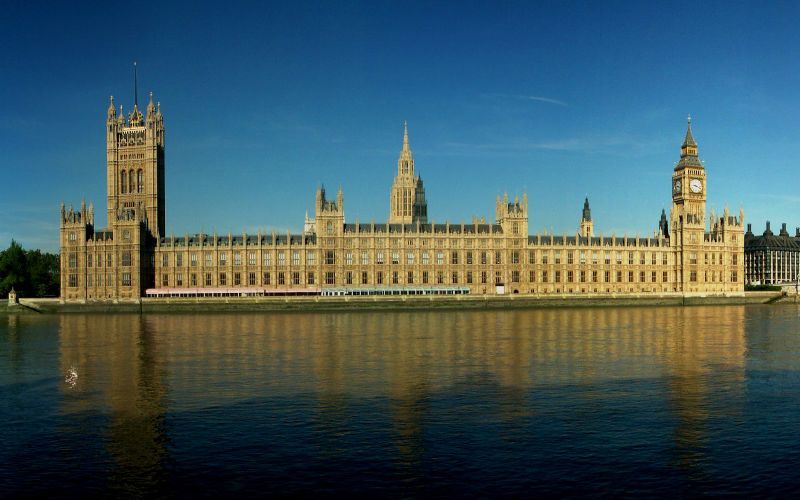
THE TELEGRAPH: The pound plunged up to 4½ cents against the dollar during a roller coaster 24 hours of trading as the prospect of coalition Government prompted investors to ditch UK assets.
The inconclusive election result unnerved investors already spooked by Greece's deepening debt crisis and a global rout of equity markets.
Gilt yields see-sawed, with investors at one point demanding an extra 1.25 percentage points to hold 10 year gilts rather than German Bunds – the biggest spread since 1998. Shares also fell, with the benchmark FTSE 100 dropping 2.6pc, capping its worst week for 14 months.
Michael Saunders, chief European economist at Citigroup, said Britons should brace for a potential "meltdown" if there is no deal for stable government by Monday.
"Right now there is a firestorm of a sovereign credit crisis sweeping global markets," he said. "If markets do not get some sense on Monday that there is a solid government with a credible route back to fiscal stability, things could get very ugly indeed. A coalition of Labour, Lib Dems and nationalist parties could well precipitate a market meltdown."
The best outcome so far as investors were concerned would be a Conservative-Liberal Democrat coalition with an outline plan to cut the deficit, he said. >>> Richard Fletcher and Edmund Conway | Friday, May 07, 2010
February 19, 2009
The Dawning of a New Dark Age – Paperback (US) Barnes & Noble >>>
The Dawning of a New Dark Age – Hardcover (US) Barnes & Noble >>>
Subscribe to:
Posts (Atom)