Showing posts with label Great Britain. Show all posts

March 29, 2026

Brit in Germany: Why Britain's Story No Longer Holds

Mar 29, 2026 | Many people in Britain say the same thing now: “I feel like a stranger in my own country.”

This video explores why that feeling has become so widespread, and why it isn’t primarily about immigration, culture wars, or political tribes.

Britain is a country historically held together by story rather than systems. But when the economic reality changes and the story doesn’t, coherence starts to break down.

This is an analysis of national identity, economics, culture, and what happens when a country no longer recognises itself, even though life still appears to function.


September 21, 2025

Beyond Trump’s Carriage Ride: Britain’s Cautionary Tale for the US

Sep 21, 2025 | Donald Trump’s visit to Britain this week came with royal pageantry, but the cautionary tale is what’s outside the palace gates. Britain’s post-Brexit reality is a warning for America. From Brexit to MAGA, both nations abandoned the larger stories that once bound their people together.

July 23, 2024

Why Britain Joined the EU

Jun 5, 2024 | On D-Day we remember how brave men and women from many allied countries fought the final battles against the Nazis to bring the most brutal world war to an end in Europe. Peace came at last as a direct result of their enduring efforts.

Tens of thousands of lives were tragically and horribly lost in the pursuit of that aim. But how was lasting peace achieved between European countries that, for centuries, had been more used to resolving their differences through violence, war, and subjugation?

The European Community, established during the post-war years and now called the European Union, played a key role. Yes, NATO helped to protect us from external threats. But it was the European Union that brought sustained security and peace between its members.

By collaborating and cooperating, in peace and democratically, to decide on the running and future direction of our continent, European countries found and agreed solutions to common problems.

It worked. Never has a shot been fired between EU member states. An amazing achievement, for which the EU won the Nobel Peace Prize in 2012. So, when people ask, ‘Why was the EU started?’ the answer, first and foremost, was peace. Yes, trade was one of the means, but peace was the primary goal. And it’s why Britain joined the European Community. To work together, peacefully and democratically, with our European allies to recreate our post-war continent based on democracy, human rights, free market trade and the rule of law.

Did people truly understand this when ticking the ‘Leave’ box in the 2016 referendum?


December 15, 2011

UK 'Should Be Downgraded' Before France, Says ECB's Christian Noyer

THE DAILY TELEGRAPH: Britain should have its AAA credit rating [downgraded] before France, according to Christian Noyer, head of the French central bank, as the war of words between the two countries heats up following David Cameron's EU treaty veto.

A downgrade of France's AAA rating would not be justified and the ratings agencies are making decisions based more on politics than economics, said Christian Noyer, who is a European Central Bank policymaker as well as head of the Banque de France.

Standard and Poor's is due to decide whether or not to downgrade eurozone countries in the coming days following an EU agreement on Friday to forge tougher fiscal rules.

"The downgrade does not appear to me to be justified when considering economic fundamentals," Mr Noyer said in an interview with local newspaper Le Telegramme [sic] de Brest.

"Otherwise, they should start by downgrading Britain which has more deficits, as much debt, more inflation, less growth than us and where credit is slumping," he went on. » | Agencies | Thursday, December 15, 2011

December 14, 2011

Angela Merkel 'Regrets' Britain's Veto of EU Treaty

THE DAILY TELEGRAPH: Angela Merkel tells Germany's parliament that Britain is still an important partner in the European Union despite 'regretting' its refusal to back fiscal integration plans.


The German chancellor told the Bundestag that Britain will remain a crucial partner within the European Union despite its veto last week of a treaty on budget discipline, [.]

Chancellor Merkel appeared to be trying to build bridges following Prime Minister David Cameron's refusal to agree to changes to the EU's Lisbon Treaty on tougher budget rules after he failed to win safeguards for the City of London.

"As much as I regret that Britain did not join us on this path, and as much as I regret that 20 years ago Britain decided against the euro, I have no doubt that in the future Britain will also be an important partner in the European Union," Merkel told the lower house of parliament.

Countering the views of pro-Europeans who argue that Mr Cameron has risked isolating Britain from the EU decision[-]making process, the German chancellor said that Britain still had a role to play in several significant areas. » | Wednesday, December 14, 2011

December 11, 2011

Britain and the EU: The Failure of a Forced Marriage

SPIEGEL ONLINE INTERNATIONAL: Was the outcome of the Brussels summit a bad one for the EU? Not at all. The British were never completely dedicated to European unity and the ongoing project of greater fiscal integration is better off without them.

It was to be expected. And now it's official: The British have elected not to join the treaty governing Europe's new financial system. Prime Minister David Cameron refused.

Does that mean, then, that German Chancellor Angela Merkel and French President Nicolas Sarkozy have failed? Not at all. Only incompetent amateurs could have believed that London would join the attempt to overcome the European debt crisis together. European leaders in Brussels hammered out an agreement that marks the end of unlimited fiscal sovereignty -- and that conflicts fundamentally with the British understanding of Europe.

The result of Thursday night -- the 17 euro-zone countries joined by nine otherspending parliamentary approval in three of the non-euro-zone capitals -- is a success. A success for the majority of Europeans and for efforts to find a solution to the euro crisis. Any deal with the obstreperous British would have been a weak compromise, and one that would have allowed questionable economic practices to continue.

But from the very beginning, Great Britain's participation in a united Europe was amisunderstanding. When the EU was founded, the British still hadn't finished mourning over their lost empire. Europe seemed far away and Continental efforts at unification were seen by many among the British elite as little more than naïve idealism.

Despite such doubts, the EU became a reality, and a success -- and it was economic realities that ultimately led London to join. Companies in the UK pushed the government toward Brussels because staying away was far too risky economically. » | A Commentary by Wolfgang Kaden | Saturday, December 10, 2011

May 14, 2010

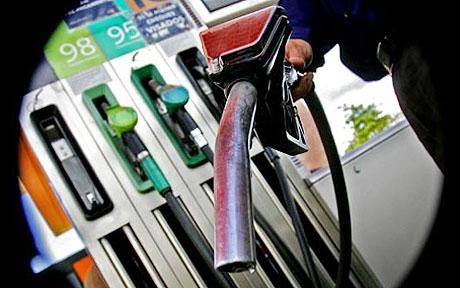
Fresh Profiteering Row as Petrol Prices Hit New Record High

THE TELEGRAPH: Petrol prices have hit a new record high, despite a fall in the wholesale cost paid by super-markets and forecourts, triggering fresh accusations of profiteering.

According to the AA, motorists are now paying 121.61 pence for a litre of unleaded, compared to 109.88 on January 1. This has added just under £6 to the cost of filling an average car such as a Vauxhall Astra.

Diesel has risen from 111.52p at the start of January to 123.03p now, a rise of more than 11 pence.

While British motorists have seen no end in sight to the inexorable rise in pump prices, their counterparts on the continent have seen the cost of filling a car fall by as much as two per cent over the last week. Read more about the rip-off >>> David Millward, Transport Editor | Friday, May 14, 2010

May 12, 2010

Europe Tells Britain Not to Ask for Help in a Crisis

THE TELEGRAPH: Britain has been warned it will be punished by Europe if the pound is hit by a financial crisis, after refusing to support a massive euro bail-out.

Officials from both euro and non-euro countries said Britain should not ask for help if it runs into trouble because it had not signed up to a £378 billion support fund.

French, Swedish and many Brussels officials have predicted that it is only a matter of time before Sterling is hit by the same market turbulence that came close to destroying the euro at the weekend.

Jean-Pierre Jouyet, a former French Europe minister and the current chairman of France's financial services authority, yesterday predicted only "God would help" a rudderless Britain after it snubbed its euro zone neighbours.

"There is not a two speed Europe but a three speed Europe. You have Europe of the euro, Europe of the countries that understand the euro ... and you have the English," he said.

"The English are very certainly going to be targeted given the political difficulties they have. Help yourself and heaven will help you. If you don't want to show solidarity to the euro zone, then let's see what happens to the United Kingdom." >>> Bruno Waterfield in Brussels | Tuesday, May 11, 2010

January 06, 2010

Britain Threatens to Freeze Iceland Out of EU as Loan Payback Vetoed

TIMES ONLINE: Britain warned Iceland that it would be frozen out of the European Union after its President abruptly vetoed the repayment of a £3.6 billion loan.

The Treasury expected Reykjavik to rubberstamp the terms of repayment for the loan extended by Britain and the Netherlands at the height of the financial crisis. The loan meant that 400,000 savers with deposits in Icesave did not lose their money.

President Ólafur Grimsson stunned the world’s financial community by refusing to sign the repayment schedule into law. Instead, he said that the matter would be decided in a referendum among Iceland’s 243,000 voters.

The decision threatened to bring down the Icelandic Government, took its financial system to the brink of collapse and sparked the worst row with Britain since the Cod Wars of the 1970s. Fitch, the international rating agency, downgraded Iceland’s credit rating to junk status.

Lord Myners, the financial services minister, said that if the decision was allowed to stand Iceland would be frozen out of the international financial system and would not be able to join the European Union. >>> Suzy Jagger and Jill Sherman | Wednesday, January 06, 2010

September 19, 2009

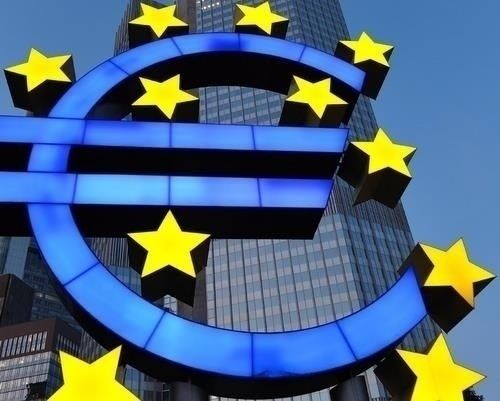
It’s Time to Adopt the Euro

Staying out of the Eurozone is costing the average Brit dear. The value of the pound sterling continues to decline and decline. The pundits are now already talking of parity with the euro. This is happening because of mismanagement of our economy and mismanagement of our currency.

Gordon Brown is guilty of the mismanagement of both the economy and the currency; but he is not alone. Successive governments since World War II have allowed the value of the pound sterling to halve approximately every ten years. That means to say that what one could buy for ten shillings in 1940, one would have had to pay a pound for in 1950, two pounds in 1960, four pounds in 1970, eight pounds in 1980, sixteen pounds in 1990, thirty-two pounds in 2000, and in 2010, it will cost one a staggering sixty-four pounds.

This rule holds for so many goods and services. If you don’t believe me, ask your grandmother what she paid for goods and services back in ‘the old days’, and compare prices today. Do some research on prices inbetween. You’ll find that the rule works a treat. I should be surprised if your conclusion will not be the same as mine: namely, that the value of our beloved pound sterling has halved approximately every ten years. Interestingly, in 1961/62, there were eight US dollars to the pound, and twelve Swiss francs. How many are there now? As of writing this, the pound is worth 1.62650 US dollars, and 1.68912 CHF, or Swiss francs. (Verify these figures here.) So if this is allowed to go on, we shall all be using the currency of a banana republic in just a few years. The pound sterling is becoming worthless!

I, for one, would prefer the euro, for the euro is proving itself to be a strong currency. I would like to handle such a currency on a day-to-day basis. I would have more faith in it than I have in the pound. The British authorities cannot be trusted to manage our currency; otherwise, they would not have allowed it to go to the wall as they have.

To all the sentimental people, I say this: We can’t afford to be sentimental; there is no room for sentiment in business. And to all those naysayers who worry about our sovereignty, I say this: We lost our sovereignty when we entered the European Union. That happened long ago. That train has already left the station. It’s time to catch the next train. The one that leads to the Eurozone!

Bring on the euro, I say. I can’t wait! – © Mark Alexander

All Rights Reserved

July 02, 2009

Benedict Brogan: Cutting Britain's Defence Budget to Pay Other Bills Is a False Economy

THE TELEGRAPH: Benedict Brogan believes both the main parties are missing the point of maintaining a nuclear deterrent

A free people, George Washington said, must be constantly awake against the insidious wiles of foreign influence. At any moment, from any quarter, trouble may pounce to put the sovereignty of the nation under threat. Defending the realm demands eternal vigilance.

Yet in this particular kingdom we are nodding off, distracted by the agonies of a financial crisis and the positioning of leaders vying for power. A time of great uncertainty abroad is met by political indifference at home.

From climate change and resource shortages, to cyber-warfare and disorderly states, to Islamist terrorism and international criminal networks, the dangers are multiplying. And then there are the unknown unknowns, the things we don't know that we don't know that kept Donald Rumsfeld up at night. Thirty years from now, who is to say that Russia will not have reverted to its expansionist ways, or that a nuclear-armed Caliphate of Waziristan will not be parked where Pakistan used to be?

Which is what makes British foreign policy, and our capacity to implement it, such a vital part of what a government does. It remains essential to us that our diplomatic effort be played out in the international premier league.

Listen to the whispers coming out of the chancelleries of Europe or the US state department, however, and the talk is of relegation. Britain is slipping down the rankings as Gordon Brown focuses on a domestic fight for survival. Ominously, there is no sign that the prospect of having David Cameron in charge will do anything to reverse the trend.

As so often with a national share price, it is a concatenation of decisions and behaviours that drives it downwards. Financial mismanagement, the prospect of a debt downgrade, an inability to produce the necessary resources in Iraq or Afghanistan, loose talk of defence cuts and an end to Trident, speculation about giving up our permanent seat on the UN Security Council, the threat of legal action against serving intelligence officers, and confusion over the Iraq inquiry have helped contribute to a steady loss of credibility.

The strength of our commitment to future defence is this week's wobble. Having frittered away billions since 1997, Mr Brown, with the tacit support of the Conservatives, is eyeing up those cash-draining Cold War programmes. It is tempting to detect the hand of his friends in the unions behind the well-timed leaks about cost over-runs on the two planned aircraft carriers, while the top brass fall over each other to volunteer the weapons programmes of rival services for the chop. >>> Benedict Brogan | Wednesday, July 01, 2009

January 22, 2009

Gordon Brown Brings Britain to the Edge of Bankruptcy

Photobucket
Photo of Gordon Brown, the then incompetent Chancellor and the now incompetent Prime Minister, courtesy of The Telegraph

THE TELEGRAPH: Iain Martin says the Prime Minister hasn't 'saved the world' and now faces disgrace in the history books

They don't know what they're doing, do they? With every step taken by the Government as it tries frantically to prop up the British banking system, this central truth becomes ever more obvious.

Yesterday marked a new low for all involved, even by the standards of this crisis. Britons woke to news of the enormity of the fresh horrors in store. Despite all the sophistry and outdated boom-era terminology from experts, I think a far greater number of people than is imagined grasp at root what is happening here.

The country stands on the precipice. We are at risk of utter humiliation, of London becoming a Reykjavik on Thames and Britain going under. Thanks to the arrogance, hubristic strutting and serial incompetence of the Government and a group of bankers, the possibility of national bankruptcy is not unrealistic. >>> By Iain Martin | Wednesday, January 21, 2009

The Dawning of a New Dark Age (Paperback & Hardback) – Free delivery >>>

January 08, 2009

ECB Deems Britain Unworthy of Euro

THE TELEGRAPH: The European Central Bank has deemed Britain unfit for monetary union even if it wants to join following the dramatic slide in sterling and the explosion in the UK budget deficit.

"Great Britain does not meet the entry criteria for the euro," said Lorenzo Bini Smaghi, the ECB's board member in charge of international affairs.

"The public deficit will rise to around 6pc (of GDP) in 2009 and even higher in 2010. Sterling's exchange rate is not yet sufficiently stable," he told Italy's La Repubblica newspaper.

The entry rules impose a deficit ceiling of 3pc of GDP, two years of currency stability, and a public debt limit of 60pc of GDP. The rules were waived for political reasons to let Italy, Belgium and Greece into EMU, but terms are becoming stricter as the ECB seeks to exclude East European states before they are ready.

If anything, Mr Bini Smaghi may have been too kind to Britain. The Treasury expects the deficit to reach £118bn in the 2009 tax year - almost 8pc of GDP - but there are now fears that this will rise even higher as tax revenues collapse. Some analysts have begun to warn that Britain will soon face a deficit of 10pc, the sort of catastrophic levels seen in Latin America in the 1980s. >>> By Ambrose Evans-Pritchard | Thursday, January 8, 2009

The Dawning of a New Dark Age (Paperback & Hardback) – Free delivery >>>