Showing posts with label the euro. Show all posts
Showing posts with label the euro. Show all posts
December 30, 2021
Europe Marks 20 Years of the Euro | DW News
December 12, 2013
Dismantle the Euro, Says Nobel-winning Economist Who Once Backed Currency Union
A Nobel prize-winning economist will on Thursday withdraw his support for the euro saying it has created a “lost generation” unemployed youngsters and should be broken up.
Sir Christopher Pissarides was once a key proponent of a single currency but will on Thursday accuse the euro of “dividing Europe” and say action is needed to “restore the euro’s credibility in international markets” and the “trust that Europe’s nations once had in each other”, according to the Daily Mail.
Speaking at the London School of Economics, where he teaches, Professor Pissarides will say: “The euro should either be dismantled in an orderly way or the leading members should do the necessary as fast as possible to make it growth and employment-friendly.
“We will get nowhere plodding along with the current line of ad hoc decision-making and inconsistent debt-relief policies. » | Miranda Prynne, New Reporter | Thursday, December 12, 2013
September 24, 2011

THE DAILY TELEGRAPH: European officials are working on a grand plan to restore confidence in the single currency area that would involve a massive bank recapitalisation, giving the bail-out fund several trillion euros of firepower, and a possible Greek default.
German and French authorities have begun work on a three-pronged strategy behind the scenes amid escalating fears that the eurozone’s sovereign debt crisis is spiralling out of control.
Their aim is to build a “firebreak” around Greece, Portugal and Ireland to prevent the crisis spreading to Italy and Spain, countries considered “too big to bail”.
According to sources, progress has been made at the G20 meeting in Washington, where global leaders piled pressure on the eurozone to fix its problems before plunging the world back into recession. In a G20 communique issued on Friday, the world’s leading economies set themselves a six-week deadline to resolve the crisis – to unveil a solution by the G20 summit in Cannes on November 4.
Sources said the plan would have to be released as a whole, as the elements would not work in isolation.
First, Europe’s banks would have to be recapitalised with many tens of billions of euros to reassure markets that a Greek or Portuguese default would not precipitate a systemic financial crisis. The recapitalisation plan would go much further than the €2.5bn (£2.2bn) required by regulators following the European bank stress tests in July and crucially would include the under-pressure French lenders. » | Philip Aldrick, and Jeremy Warner in Washington | Saturday, September 24, 2011
September 19, 2011
January 27, 2011
 THE DAILY TELEGRAPH: France and Germany will never turn their backs on the euro, French President Nicolas Sarkozy has said in his most robust defence of the troubled single currency to date.
Addressing the World Economic Forum in Davos, he told speculators to be prepared for big losses if they bet against the euro. “[Germany’s] Chancellor Merkel and myself will never – do you hear me, never – let the euro fall,” he said.
“The euro is Europe. And Europe spells 60 years of peace. Therefore we will never let the euro go or be destroyed… To those who bet against the euro, watch out for your money because we are fully determined to defend the euro.”
President Sarkozy’s intervention comes with the single currency under greater strain than at any time in its short history. Davos has been abuzz with talk of a two-speed Europe, with billionaire investor George Soros warning that the “euro could possibly fall apart” under the strain.
Greece and Ireland are implementing painful pay cuts and other deflationary measures because they can not devalue, while Germany powers ahead. Ken Rogoff, the Harvard economist, has suggested Greece should be allowed to fail in an orderly fashion because its debts are insurmountable.
However, President Sarkozy said: “To imagine that we might pull out shows a complete misunderstanding of the European psychology. It has to do with our identities as Europeans.” >>> Philip Aldrick, Economics Editor, in Davos | Thursday, January 27, 2011
January 19, 2011

SPIEGEL ONLINE INTERNATIONAL: German Chancellor Angela Merkel has snuffed out speculation about reintroducing the deutsche mark in Germany as a response to the current euro crisis. In a magazine interview, she renewed her support for the common currency and rejected the idea of splitting the euro zone in two.
Chancellor Angela Merkel has categorically stated that Germany will not abandon the euro and reintroduce the deutsche mark. Her comments are intended to quell speculation that Germany's love of the common currency is flagging in the wake of expensive bailouts of troubled euro-zone members Greece and Ireland.
In an interview to be published in Germany's weekly Stern magazine on Thursday, Merkel also rejected the idea of splitting the euro zone into north and south zones, reaffirming Germany's commitment to an economically united Europe.
"There can be no return to the deutsche mark," she said, adding that Germany would "continue to do everything necessary to guarantee a stable euro." She told the magazine that, while she took citizens' concerns very seriously, she was convinced that "we in Germany can handle everything." >>> jap - with wires | Wednesday, January 19, 2011
November 17, 2010
THE DAILY TELEGRAPH: The eurozone bail-out for Greece has begun to unravel after Austria suspended aid contributions over failure to comply with the rescue terms, and Germany warned Athens that its patience was running out.

The clash caught markets off-guard and heightened fears that Europe's debt crisis may be escalating, with deep confusion over the Irish crisis as Dublin continues to resist EU pressure to request its own rescue.
Olli Rehn, the EU economics commissioner, said escalating rhetoric in Europe was turning dangerous. "I want to call on every responsible European to resist the centrifugal tendencies and existential alarmism."
Swirling rumours hit eurozone bond markets, while bourses tumbled across the world. The FTSE 100 fell 2.4pc to 5681.9, and the Dow dropped over 200 points in early trading. The euro slid two cents to $1.3460 against the dollar as the US currency regained its safe-haven status. Read on and comment >>> Ambrose Evans-Pritchard | Tuesday, November 16, 2010
TELEGRAPH BLOGS – JEREMY WARNER: Austria Tells Greece to Get Stuffed: Europe’s hastily assembled bailout fund already seems to be coming apart at the seams, and that’s before Ireland has even tapped into it. Austria is refusing to contribute to the next tranche of bailout money for Greece, citing the country’s failure to meet conditions. Yesterday it emerged there is serious slippage in Greece’s deficit reduction programme. >>> Jeremy Warner | Tuesday, November 16, 2010
June 18, 2010
THE TELEGRAPH: Russian President Dmitry Medvedev has expressed concerns that the massive Gulf of Mexico oil spill could lead to the "annihilation" of BP.

Mr Medvedev stopped short of saying the disaster would prompt a review of Russia's partnership with BP, but he said: "This is a wake-up call."
"Certainly, we are not indifferent to their future... Hopefully, they can absorb the losses," he told the Wall Street Journal.
BP shares, which have fallen around 46pc since the spill began, rose 4.5pc in early tradiing on Friday.
BP is present in Russia through TNK-BP, the third largest oil producer in the country, accounting for roughly a quarter of BP's global production. It owns half of TNK-BP and the other half is owned by Alfa Access-Renova, a consortium of Russian businessmen.
When asked how the oil spill would affect Russia's view of BP as a partner, he said: "What I know is that BP will have to pay a lot of money this year.
"Whether the company can digest those expenditures, whether they will lead to the annihilation of the company or its breakup into pieces is a matter of expediency."
Mr Medvedev's comment come as estimates of the damage caused by the US's biggest environmental accident spiral[.] >>> | Friday, June 18, 2010

THE WALL STREET JOURNAL: ST. PETERSBURG, Russia—Russian President Dmitry Medvedev expressed doubts about the future of Europe's common currency and said the Gulf of Mexico oil spill could threaten the survival of BP PLC.
Asked whether Europe's debt turmoil could threaten the euro, Mr. Medvedev said, "I don't exaggerate the threat, but it can't be underestimated."
The Russian president didn't rule out financial assistance to struggling European nations, but said the European Union should bear the burden of any major "financial injections."
"Russia's prosperity, to a large extent, depends on how well things are going on the European continent," Mr. Medvedev said in an interview with The Wall Street Journal. "We are not a member of the EU, but we are a European country."
On the eve of his first state visit to the U.S. next week, Mr. Medvedev also questioned whether the Gulf oil spill might lead to the "annihilation" or breakup of BP, as the company faces billions of dollars in losses from the disaster.
He stopped short of saying Russia would re-evaluate BP's lucrative partnership in Russia, which represents almost a quarter of its oil production, but predicted the spill will prompt a fundamental rethinking of oil exploration around the world.
"This is a wake-up call," Mr. Medvedev said. Of BP's fate, he added: "Certainly, we are not indifferent to their future. ... Hopefully, they can absorb the losses." >>> Gregory L. White, Robert Thomson, and Rebecca Blumenstein | Friday, June 18, 2010
May 17, 2010
THE WALL STREET JOURNAL: "The party's over. It's time to call it a day. They've burst your pretty balloon, and taken the moon away."
So wrote Betty Comden and Adolph Green over fifty years ago, when they couldn't possibly have realized they were creating a lyric that would some day describe the euro zone.
No need retelling the well-reported slide of Greece into what will likely be an eventual default. Or the trials and tribulations of the euro zone's other periphery countries. What is worth noting is that it is one thing for healthy nations to be the unfortunate victims of "contagion," quite another for them to pick up the infection by embracing the diseased country.
Which is what euro-zone countries have done.
They have in effect welcomed the disease-weakened balance sheets of Greece and other countries onto their until-now healthy, stronger balance sheets, wiping out decades of good, prudent living in the case of Germany, and calling attention to thirty years of deficits, in the case of France.
Worse still, the spread of the fiscal disease is not confined to the euro zone, which it can be said by the querulous should have seen it coming. Britain, with a fiscal deficit of Grecian proportions—12% of GDP—and the U.S., in similar circumstances, find themselves not immune to the disease.
The rating agencies are increasingly nervous about leaving unchanged the triple-A ratings of the U.K. and the U.S. And the Obama administration is sufficiently fearful of the effect on America's recovery of the euro zone's problems, that the president called Spanish president José Luis Rodriguez Zapatero to urge him to take "resolute action" to get Spain's fiscal house in order—rather like the pot calling the kettle black, since the president has shown no inclination to cut his own spending programs, even thought the government's debt is headed to 110% of GRP by 2015, compared with 90% at the end of World War II. >>> Irwin Stelzer | Sunday, May 16, 2010
THE TELEGRAPH: Asian stock markets tumbled and the euro slid to a four-year low against the dollar on Monday as fresh worries over debt woes in Europe dampened sentiment across the region.
Japan's benchmark Nikkei 225 stock average dropped 2pc, Hong Kong's Hang Seng index lost 2.5pc and the Shanghai Composite 3.4pc. In South Korea, the Kospi slid 2.8pc and Australia's S&P/ASX 200 index was down 2.8pc.
Asian investors' mood turned downbeat on growing concerns that cost-cutting fiscal measures being taken by Greece, Portugal and Spain could hamper a recovery in the eurozone economy.
The euro fell as low as $1.2235 against the dollar and the pound weakened further, hitting $1.4252 at one stage against the US currency. >>> Angela Monaghan | Monday, May 17, 2010
May 10, 2010
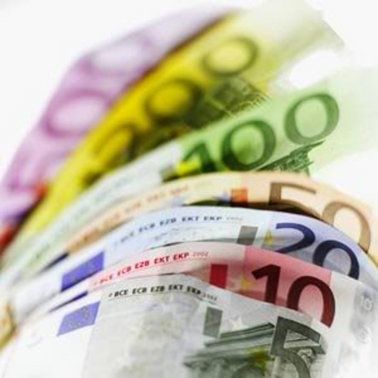
THE TELEGRAPH: The euro soared on Monday morning as investors reacted with initial relief at the €750bn plan to defend the single currency and European Monetary Union from potential collapse.
After a frantic weekend of negotiations in Brussels, the Eurozone's 16 finance ministers released a package that pledges: €440bn in loans or guarantees from Eurozone countries, €60bn from the European Union's Budget and up to €250bn from the International Monetary Fund.
The EU's monetary affairs commissioner, Olli Rehn, said the agreement "proves that we shall defend the euro whatever it takes."
In a statement, the Finance Ministers said: "We are facing such exceptional circumstances today and the mechanism and the mechanism will stay in place as long as needed to safeguard financial stability," the ministers said in a statement.
The radical action, which will see the European Central Bank buy the debt of the most troubled countries, likely to include Portugal, Greece and Spain, comes as European Monetary Union faces the gravest threat in its short history. Fears that the debt crisis that has engulfed Greece would spread throughout southern Europe reached a crescendo last week. Investors welcomed the package. >>> | Monday, May 10, 2010
LE FIGARO: Euphorie sur les Bourses européennes : Le plan d'aide à la zone euro rassure les marchés. A Paris, le CAC 40 s'envole de près de 7%. Les bancaires grimpent sur des progressions à deux chiffres. >>> Par Marine Rabreau | Lundi 10 Mai 2010
THE TELEGRAPH: FTSE 100 soars as €750bn rescue package for Europe sparks global rally: The FTSE 100 joined in a stock market rally across Europe on Monday, as investors reacted with initial relief at the €750bn (£655bn) plan to defend the single currency from potential collapse. >>> | Monday, May 10, 2010
THE WALL STREET JOURNAL: European Markets Surge: European stocks and the euro surged Monday, as investors took heart from a €750 billion ($954.83 billion) rescue package intended to stabilize the single currency and prevent the Greek debt crisis from spreading to other member countries. >>> Michele Maatouk and Ishaq Siddiqi | Monday, May 10, 2010
May 09, 2010
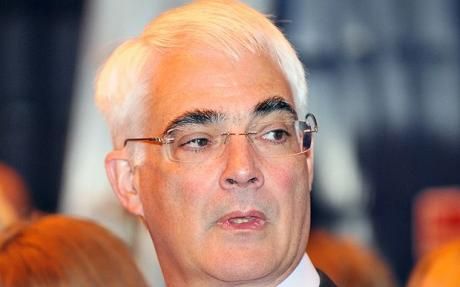
THE TELEGRAPH: Alistair Darling has agreed to consult directly with George Osborne and Vince Cable as European leaders looked poised to push through a new multi-billion pound bail-out fund part-financed by British taxpayers.
Mr Darling, who is still officially Chancellor of the Exchequer, will represent Britain at an extraordinary meeting of European finance ministers in Brussels today, slated to adopt far-reaching new powers for the Commission and its fellow bodies.
The meeting is the first major policy test for the hung parliament, coming with Britain in limbo between two governments. In a sign of the highly unusual nature of the situation, the Chancellor has privately committed to consulting before the meeting with his counterparts in the Conservatives and Liberal Democrats.
However, despite the likelihood that Labour will be ejected from Downing Street imminently, Mr Darling will have the final say over Britain's vote on participation in the new scheme.
The proposal, tabled by Nicolas Sarkozy in an emergency meeting late on Friday night, will involve the creation of a €60bn "European stabilisation mechanism" designed to provide bail-out support for countries which may face similar strain to Greece in the coming months.
It is thought to be focused particularly on Spain and Portugal, both of whose leaders fear an assault by "bond vigilantes" in the market who have scented weakness within the eurozone. The plan will have fiscal implication for all European Union countries, including the UK. The key element is an extension of an existing bail-out package, already used to support Hungary and Latvia. >>> Edmund Conway and Bruno Waterfield | Saturday, May 08, 2010
May 04, 2010
April 30, 2010
THE TELEGRAPH: The euro extended gains against the dollar on Friday as fresh hopes of aid for Greece eased fears about Athens' ability to reduce it massive deficit.
By mid-morning, the single currency was trading above $1.33, up from a one-year low against the dollar of $1.31 hit earlier in the week following downgrades on Greek, Portuguese and Spanish debt.
Stock markets in Germany and France also edged higher as investors took heart at speculation that talks on a rescue loan should be completed in the next few days after it seemed Germany had accepted it must act quickly to support a bail-out. >>> | Friday, April 30, 2010

SPIEGEL ONLINE INTERNATIONAL: The current Greek crisis has shown all too starkly the limits of the euro zone's sanction and support mechanisms. If the monetary union is to have a future, it needs new rules to keep members in line and bail them out if necessary.
Europe is in the worst crisis of the postwar era. For months, the governments of the European Union member states have proven to be incapable of developing a convincing solution for the serious debt problems of individual countries, as well as for the reduction of imbalances within the monetary union. Uncertainty among investors has grown in recent weeks, which is primarily attributable to the helplessness of political leaders, and only secondarily to the influence of speculators.
The banking crisis of the fall of 2008 demonstrated that bailout packages approved in response to market pressures fail to have the desired effect in the event of a massive crisis of confidence. At the time, it took the comprehensive approach of the Financial Market Stabilization Act to finally bring about stabilization in Germany. Today, the euro zone needs a common strategy that successfully combines sound public finances with solidarity between member states. On the one hand, the member states must be protected against the excesses of the financial markets. On the other hand, steps must be taken to ensure that the solidarity of member states doesn't undermine efforts to achieve fiscal consolidation in individual countries. In other words, what is needed is the appropriate balance of support and requirements. >>> Peter Bofinger* | Thursday, April 29, 2010
*Peter Bofinger has been a member of the government-appointed German Council of Economic Experts known colloquially here as the "Five Wise Men" since 2004. He is a professor of monetary policy and international economics at the University of Würzburg. His most recent book, published in German, is called "Ist der Markt noch zu retten?" ("Can the Market Still Be Saved?").
April 29, 2010
THE TELEGRAPH: The Greek horror story should scare us all, says Edmund Conway. Its problems are not unique.

It has all the ingredients for a perfect Hollywood sequel. The cliffhanger plot kicks off right where its predecessor ended; the cast is stellar, some characters from the original reprising their roles. But this time the stakes are even higher, the mood even tenser.
Greece is on the brink of bankruptcy. Based on almost any yardstick, markets are now betting that the government will default on its debt. At a staggering 18 per cent, the going rate to borrow for a mere two years is similar to the penal rates credit card companies charge their dodgiest customers. The government, International Monetary Fund and European Union have promised, vaguely, to hand over the necessary cash to help tide the country over, but to no avail.
It would be all the more shocking had it not happened before. But Greece's problems today are merely Lehman Brothers redux. This is Global Meltdown 2. Granted, this time it is a country, rather than a mere bank, that faces collapse; this time, the victim may really be too big to fail. But the pattern is eerily familiar: the money starts to run out; investors realise with horror that there is a real chance of failure; the politicians promise that they will stand behind the institution; in a last-gasp attempt to halt the disaster, they ban short-selling; eventually the law of gravity proves irresistible, investors stage an effective run on the banks and the end is nigh.
Faced with such a scenario, there are two options: confront the crisis, knowing you simply may not have the firepower to deal with it, or go running, screaming, for the hills. The head of the Organisation for Economic Co-operation and Development, Angel Gurria, has chosen the latter path, declaring that the contagion is spreading "like Ebola... when you realise you have it you have to cut your leg off in order to survive".
Before we lapse into amateur dramatics, however, let's establish the facts: the market for Greek government debt has effectively frozen, much as the money markets did worldwide in 2007 – the initial trigger point for the crisis. Its banking system, stacked high with those same government bonds, is effectively insolvent. The country had been due to return to investors on May 19 to raise money; if a bail-out cannot be agreed by then, Greece will have no option but to default. But even that deadline is increasingly academic: the country has fallen victim to a run, and as anyone who watched Northern Rock's demise knows, what follows is not usually pretty. How did it come to this? >>> Edmund Conway | Thursday, April 29, 2010
April 27, 2010
THE NEW YORK TIMES: FRANKFURT — Europe’s debt crisis deepened still further Tuesday after the ratings agency Standard & Poor’s downgraded Greek and Portuguese debt, investors sold off government bonds amid fears of a default, and workers in those Mediterranean nations took to the streets to protest austerity measures.
S.&P. downgraded Greek government debt to junk status, saying in a statement, “Greece’s economic and fiscal prospects lead us to conclude that the sovereign’s creditworthiness is no longer compatible with an investment-grade rating.”
The ratings agency also downgraded Portuguese government bonds, but they remain well above junk status.
“This thing is getting more and more urgent and tense,” said Robert Barrie, head of European economics at Credit Suisse in London. He predicted, though, that markets could settle down once Greece manages to refinance €8.5 billion, or $11.2 billion, in bonds that mature in May. “But it’s anything but calm at the moment,” he added.
As transport workers in both Portugal and Greece went on strike against austerity measures Tuesday, the risk premium on Greece’s bonds set new records even before S.&P. announced the downgrades.
A European Central Bank official warned all euro-zone countries to cut their soaring budget deficits and suggested that Greece may need to impose even harsher austerity measures to bring its debt under control. >>> Jack Ewing | Tuesday, April 27, 2010
Subscribe to:
Posts (Atom)