Showing posts with label rescue package. Show all posts

May 10, 2010

Europa zahlt teuer für Illusionen und Versäumnisse: Kommentar zur versuchten Rettung der Währungsunion

Photobucket
Bild: NZZ Online

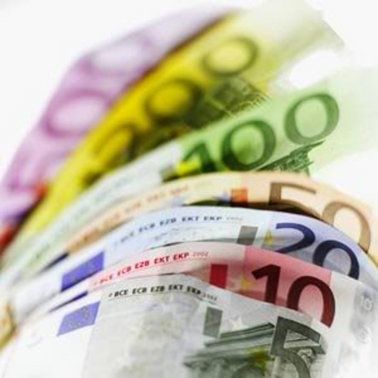
NZZ ONLINE: Um eine Währungsunion zu bewahren, die wohl kaum zu retten ist, greifen Europas Politiker tief in die Tasche und beugen sämtliche Regeln. Ob die Übung gelingen wird, darauf mag man hoffen, man darf aber auch daran zweifeln.

Man wähnt sich an den Höhepunkt der Finanz- und Wirtschaftskrise erinnert, als in den USA und im Rahmen der G-20 die Summen von Massnahmenpaketen nicht hoch genug ausfallen konnten, um die Märkte von der Entschlossenheit der Politiker zur Krisenbewältigung zu überzeugen.

Das in der Nacht zum Montag von den EU-Finanzministern verabschiedete Massnahmenpaket zur Stabilisierung der Finanzmärkte soll mit dem Preisschild von insgesamt 750 Milliarden Euro wohl genau diese Botschaft aussenden, auch wenn dies eine Höchstgrenze darstellt und die Hoffnung besteht, nie auch nur annähernd so viel wirklich einsetzen zu müssen. Der grösste Teil Last tragen dabei die 16 in der Euro-Währungsunion zusammengefassten Länder. >>> Von Walter Meier | Montag, 10. Mai 2010

NZZ Video anschauen: «Die Bazooka wurde herausgeholt» >>>

NZZ ONLINE: Gigantisches Bollwerk zum Schutz des Euro: EU und IMF beschliessen Rettungspaket von 750 Milliarden >>> tsf. | Montag, 10. Mai 2010

FINANCIAL TIMES: EU buys itself time: In the end, there was no choice. Faced with an existential threat, the European Union has demonstrated that it can act fast if necessary. European leaders deserve respect for finally getting ahead of the situation. >>> Wolfgang Münchau | Monday, May 10, 2010

NZZ ONLINE: Die Börsenparty ist schon vorbei: Ernüchterung nach der EuphorieDas Nothilfepaket für den Euro-Raum hat am Montag für Jubelstimmung an den Börsen gesorgt. Nach nur einem Tag legt sich die Euphorie bereits wieder. In Tokyo drehten die Kurse nach einem guten Start ins Minus. Auch in Europa ist das Feuerwerk vorüber. >>> tsf. | Dienstag, 11. Mai 2010
Jeremy Warner: Why European Rescue May Be Bad News for Britain

THE TELEGRAPH – BLOGS: The commitment by European leaders to do “whatever it takes” to defend the single currency is a repeat of what US policymakers were forced into in the wake of the Lehman Brothers collapse. Not until the US Treasury and Federal Reserve promised in effect to bailout every bank and financial institution that looked like sinking did the hurricane begin to abate. Europe will be hoping for similarly positive results from yesterday’s smorgasborg of initiatives. The initial response of markets is encouraging. But this is not yet an entirely done deal, despite President Sarkozy’s bombast. There’s many a slip.

Whether it works in the longer term is anyone’s guess. Euro nations have in effect taken another giant step down the road to fiscal and political union by agreeing to cross guarantee the loans of weaker nations. No less significant, the European Central Bank has been dragged kicking and screaming into conducting a programme of quantitative easing – buying up public and private debt securities – similar to that already carried out in Britain and the US.

In its announcement, the ECB has attempted to pass this off as little more than a technicality to address the malfunctioning of securities markets and restore an appropriate monetary policy transmission mechanism. But although the ECB plans to carry out operations to remove the extra liquidity its actions inject into markets (sterilization), making them neutral for monetary policy, it is plainly much more than that. Again, its actions are indicative of more overt economic union than we have seen to date.

By the way, the ECB has a lot to answer for in provoking the final stages of this particular meltdown. Last week’s press conference by the ECB president, Jean-Claude Trichet, was a textbook study in how not to do it. When he said that the idea of buying up government bonds had not even been discussed by the ECB’s governing council, he seemed like a man in denial, with very little grasp of the seriousness of the crisis he was sailing into. It wasn’t really his fault. Lack of transparancy has been a persisent problem for the ECB. Trichet’s inability to confess outright to a strategy that must by then have been under consideration caused confidence to plummet. Belately, the ECB has been able to do the right thing, though there is still a worrying lack of detail over what the plan entails. Read on and comment >>> Jeremy Warner | Monday, May 10, 2010
EU Bailout: Quantity Has A Quality All Its Own

Euro Jumps as Markets Welcome €750bn Rescue

THE TELEGRAPH: The euro soared on Monday morning as investors reacted with initial relief at the €750bn plan to defend the single currency and European Monetary Union from potential collapse.

After a frantic weekend of negotiations in Brussels, the Eurozone's 16 finance ministers released a package that pledges: €440bn in loans or guarantees from Eurozone countries, €60bn from the European Union's Budget and up to €250bn from the International Monetary Fund.

The EU's monetary affairs commissioner, Olli Rehn, said the agreement "proves that we shall defend the euro whatever it takes."

In a statement, the Finance Ministers said: "We are facing such exceptional circumstances today and the mechanism and the mechanism will stay in place as long as needed to safeguard financial stability," the ministers said in a statement.

The radical action, which will see the European Central Bank buy the debt of the most troubled countries, likely to include Portugal, Greece and Spain, comes as European Monetary Union faces the gravest threat in its short history. Fears that the debt crisis that has engulfed Greece would spread throughout southern Europe reached a crescendo last week. Investors welcomed the package. >>> | Monday, May 10, 2010

LE FIGARO: Euphorie sur les Bourses européennes : Le plan d'aide à la zone euro rassure les marchés. A Paris, le CAC 40 s'envole de près de 7%. Les bancaires grimpent sur des progressions à deux chiffres. >>> Par Marine Rabreau | Lundi 10 Mai 2010

THE TELEGRAPH: FTSE 100 soars as €750bn rescue package for Europe sparks global rally: The FTSE 100 joined in a stock market rally across Europe on Monday, as investors reacted with initial relief at the €750bn (£655bn) plan to defend the single currency from potential collapse. >>> | Monday, May 10, 2010

THE WALL STREET JOURNAL: European Markets Surge: European stocks and the euro surged Monday, as investors took heart from a €750 billion ($954.83 billion) rescue package intended to stabilize the single currency and prevent the Greek debt crisis from spreading to other member countries. >>> Michele Maatouk and Ishaq Siddiqi | Monday, May 10, 2010

May 04, 2010

Olli Rehn: EU Rescue Package for Greece 'Unprecedented'


September 25, 2008

Bush Warns of Dire Economic Consequences if the Bailout Plan Is Rejected by Congress


THE TELEGRAPH: President George W. Bush summoned Barack Obama and John McCain to the White House as he warned a failure by Congress to agree to a $700 billion bailout plan would lead to a "long and painful recession"

In a prime-time television address, Mr Bush said America's "entire economy is in danger" and implored Democrats and Republicans on Capitol Hill to act swiftly and vote for the package. "It should be enacted as soon as possible," he said.

He stressed: "Without immediate action by Congress, American [sic] could slip into a financial panic and a distressing scenario would unfold."

Mr Bush warned that "the market is not functioning properly" and that with a "widespread loss of confidence" major business sectors were at risk. More banks could fail, triggering a recession, pushing down houses [sic] prices and "millions of Americans could lose their jobs". He added: "We must not let this happen."

In the long run, he said, Americans had good reason to be confident in their country's economic strength. "Despite corrections in the marketplace and instances of abuse, democratic capitalism is the best system ever devised."

Shortly after the speech, Representative Barney Frank, chairman of the House of Representatives Financial Services Committee, said that the majority Democrats had reached an agreement on the financial bailout plan and there would therefore be enough votes to pass it and send it to Mr Bush.

"We now have between House and Senate Democrats an agreement on what we think should be in the bill, and we have a meeting scheduled at 10 am tomorrow to meet with the Republicans."

Mr Bush explicitly endorsed several of the changes that have been demanded in recent days from the right and left. But he warned that he would draw the line at regulations he determined would hamper economic growth.

"It should be enacted as soon as possible," the president said.

His move was aimed at explaining the package to the American public. Bush said the goal is to help the government buy up troubled assets so that credit can start flowing again and the economy will rebound.

He said the rescue is aimed at helping the country, not individual companies. Financial Crisis: George W Bush to Meet John McCain and Barack Obama on Economy >>> By Toby Harnden in Washington | September 25, 2008

THE TELEGRAPH:
Dollar Tumbles as Bailout Hangs in the Balance: The dollar slumped against the pound and the euro after President George W Bush's warning of the possibility of a "long and painful recession" unless Congress supports a bail-out of Wall Street. >>> By Angela Monaghan | September 26, 2008

The Dawning of a New Dark Age – Paperback (US) Barnes & Noble >>>
The Dawning of a New Dark Age – Hardcover (US) Barnes & Noble >>>