November 12, 2011

Eurozone Split 'Would Destroy Single Market’

THE DAILY TELEGRAPH: The entire European single market could collapse if countries are forced to leave the euro, the head of the European Union has said.

The warning from Herman Van Rompuy came after David Cameron said there was now a “big question mark over the future of the eurozone”.

Angela Merkel, the German chancellor, is next week expected to back proposals to change European treaties to allow countries to leave the euro.

French and German officials are understood to have begun discussing how countries such as Greece and Italy could be forced out of the eurozone if they refuse to cut public spending and borrowing.

However, Mr Van Rompuy, the president of the European Council, said: “Let us be clear: we will not prune the eurozone to a more selective club.

“That would be contrary to the letter and the spirit of the European political pact, as embodied in the treaties.

“If the eurozone’s integrity would not be preserved, one should not take the continued functioning of the internal market for granted.” Read on and comment » | Robert Winnett, and Nick Squires in Rome | Friday, November 11, 2011

November 11, 2011

Merkels Hochachtung für Rumäniens Anstrengungen

Das EU-Mitglied will bis im Jahr 2015 den Euro einführen

NZZ ONLINE: Rumänien hat ein ehrgeizige Ziel: Das EU-Land will bis 2015 alle Kriterien erfüllen, um den Euro einzuführen. Das sagte Präsident Basescu bei einem Treffen mit der deutschen Kanzlerin Merkel. Über die schleppenden Schengen-Verhandlungen ist man enttäuscht.

Rumänien will ungeachtet der gegenwärtigen Schuldenkrise den Euro einführen. «Wir möchten dem Euro-Raum beitreten und alle Kriterien bis 2015 erfüllen», sagte der rumänische Präsident Traian Basescu nach einem Treffen mit Bundeskanzlerin Angela Merkel am Donnerstag in Berlin. » | ddp | Donnerstag 10. November 2011

November 10, 2011

Eurozone Crisis Threatens to Spread to France as Paris Is Warned over Its Debts

THE GUARDIAN: Nicolas Sarkozy's government told to do more to cut state spending as figures reveal a slump in the country's industry

France is under pressure to reassure markets that it can cope with the deteriorating situation in the eurozone, after official figures showed a slump in industrial production that could wipe out any chance of growth next year.

The eurozone's second largest economy came under fire from the European Union and international investors for not doing more to cut government spending amid fears the debt crisis would escalate and ensnare the French economy.

Bond yields, which determine the interest rate for government borrowing, rose as France snubbed the EU call for more austerity measures, saying the country's latest round of belt tightening would be enough to bring its deficit within EU limits.

The gap between French and German bond yields hit a new record as German yields fell to 1.78% and French yields rose to 3.48% on 10-year bonds.

The febrile atmosphere surrounding Paris was heightened after the ratings agency Standard & Poor's mistakenly issued a notice stripping France of its coveted AAA rating. The agency has threatened to issue a downgrade, which would push up bond yields further, but said the document was a mistake.

Some economists said the gloomy picture in France meant the country had fallen out of the first rank of euro nations. » | Phillip Inman, economics correspondent | Thursday, November 10, 2011
Les Cubains accèdent à la propriété privée

TRIBUNE DE GENÈVE: HISTORIQUE | L’interdiction de vendre ou d’acheter un logement est levée aujourd’hui à Cuba. Une mesure qui en annonce d’autres

Révolution au pays des Castro. Les Cubains sont désormais autorisés à acquérir et à vendre un bien immobilier. Une première après cinquante ans d’interdiction. Après avoir légalisé la vente de véhicule entre particuliers il y a tout juste un mois, le gouvernement communiste fait un (petit) pas de plus vers l’économie de marché.

Près de 80% des 11,2 millions de Cubains sont «propriétaires» d’un logement attribué par l’Etat. Mais jusqu’à présent, s’ils voulaient changer, ils devaient obligatoirement passer par la «permuta», un système de troc très compliqué qui a rapidement donné naissance à un marché parallèle. Dorénavant, ces échanges prendront la forme d’une transaction commerciale en bonne et due forme. Et le vendeur, comme l’acheteur, devra s’acquitter d’une taxe à l’Etat.

La nouvelle loi «reconnaît l’achat, la vente, l’échange, le don ou l’adjudication – par divorce, décès ou sortie définitive du pays – pour les Cubains vivant dans le pays et les étrangers résidents permanents dans l’île», explique le quotidien officiel Granma [EN]. » | Yannick Van der Schueren | jeudi 10 novembre 2011

Related »
Lucas Papademos, nouveau premier ministre de la Grèce

LE FIGARO: PORTRAIT - Lucas Papademos a œuvré au côté de Jean-Claude Trichet en tant que vice-gouverneur de la Banque centrale européenne, le rendant crédible aux yeux des créanciers de la Grèce.

Après plusieurs jours d'intenses tractations , la Grèce a enfin un nouveau premier ministre : Lucas Papademos. Il aura encore fallu une réunion de plusieurs heures jeudi matin pour sortir du psychodrame politique et parvenir à une nomination officielle.

Ce banquier de 64 ans, membre de l'Académie d'Athènes depuis 2006, prendra donc la tête d'un gouvernement de transition, réunissant des ministres socialistes et conservateurs. Après plus d une semaine de crise politique, ponctuée de rebondissements quotidiens, sous les pressions européennes et internationales, Papademos était le seul homme accepté par l'ensemble de la classe politique et le mieux placé, au vu de la conjoncture, pour devenir le huitième technocrate à prendre les rênes de l'exécutif grec depuis le début du XXe siècle. Lucas Papademos a œuvré au côté de Jean-Claude Trichet en tant que vice-gouverneur de la Banque centrale européenne, il jouit d'une renommée internationale et serait crédible auprès des créanciers de la Grèce. » | Par Alexia Kefalas | jeudi 10 novembre 2011

SCHWEIZER FERNSEHEN: Griechenland hat neuen Regierungschef: Lucas Papademos wird neuer griechischer Ministerpräsident. Der frühere Vizepräsident der Europäischen Zentralbank (EZB) erhielt von Staatspräsident Karolos Papoulias den Auftrag zur Bildung einer neuen Regierung. » | sda/stom/schj | Donnerstag 10. November 2011

THE DAILY TELEGRAPH: Lucas Papademos appointed to form new Greek government: Lucas Papademos, a former European Central Bank vice-president, was appointed to form a new Greek government after days of wrangling. "The president has given Mr Papademos the mandate to form a government," the office said in a statement. ¶ Mr Papademos, 64, is an acknowledge[d] expert on financial matters and has been appointed as the man to steer Greece out of its worst post-war economic crisis. ¶ In his first comments, Mr Papademos said membership of the euro would eventually deliver monetary stability and ensure Greece makes the adjustments needed to restore economic grow. » | Damien McElroy, Foreign Affairs Correspondent | Thursday, November 10, 2011
Contagion: Now Eurozone Debt Virus Starts to Overwhelm Italy

THE INDEPENDENT: EU team heads for Rome as Europe's markets fall sharply

Christine Lagarde, managing director of the International Monetary Fund, warned yesterday that the world is facing a "lost decade" of economic growth thanks to a eurozone sovereign-debt crisis that is spiralling out of control.

Ms Lagarde was speaking in Beijing on a day when the perilously fragile state of the Italian economy – the eurozone's third largest – came into sharp focus when the borrowing rates of the Italian government shot above levels which have forced other eurozone states to seek international bailouts.

Amid increased concern that Italy might be heading for a default, reports from EU sources in Brussels said that German and French officials had held "intense consultations" about setting up a more integrated and potentially smaller eurozone. The move raises the possibility that one or more countries might have to leave the eurozone.

Investors and traders desperately sold off Italian debt yesterday morning, pushing the yield – or interest rate – on 10-year Italian bonds to 7.4 per cent.

At such elevated borrowing rates, Italy will be unable to roll over its €1.9trillion (£1.6trn) sovereign debt pile, raising the prospect of an uncontrolled default by the country, an event that would plunge the global financial markets into chaos. » | BEN CHU | Thursday, November 10, 2011

November 09, 2011

Family Doctors Earning More than £200,000

THE DAILY TELEGRAPH: Hundreds of GPs are earning more than £200,000 a year with the average doctor earning more than £100,000, it has emerged.

Official figures have revealed that 890 GPs earned more than £200,000 in 2009/10, slightly fewer than the number in that bracket the previous year.

However 210 of those earned more than £250,000.

High earning doctors run the business side of the practice and many also have pharmacies allowing them to dispense medicines.

GP earnings have proved controversial as it was revealed last week that one unnamed doctor in Kent earned a pre-tax salary of £770,000.

Another doctor, in Birmingham, earned £665,000, while another in Essex was paid £412,400.

Data from the NHS Information centre, based on tax returns, found that on average a partner in a GP practice earned £105,700 in 2009/10.

David Cameron earns around £142,000 a year by comparison. » | Rebecca Smith | Wednesday, November 09, 2011
Endgame for Italy as Bond Yields Surge

THE GUARDIAN: With bond yields at 7.4%, Italy may soon need a bailout – and Germany will have to choose between printing euros and a breakup of the single currency

"There is a feeling in Asia that this crisis could go terribly wrong," said Stuart Gulliver, chief executive of HSBC, this morning as the yield on 10-year Italian bonds approached 7%.

Actually, there's a feeling everywhere this morning that it's already going wrong. As Gulliver also said, the reality is dawning that the crisis is moving faster than politicians' ability to deal with it.

With Italian yields now at 7.4% (at 11am), Italy will need a bailout if prices were to stay even roughly were they are. That's just arithmetic.

As a Lombard Street Research note pointed out, International Monetary Fund (IMF) simulations show that if Italy's funding costs rose to 8%, its interest payments on outstanding debt would reach 20% of government revenues by 2015. That 20% level is generally regarded as intolerable for any country.

The problem, of course, is that Italy cannot be bailed out – or, at least, not easily or quickly. » | Nils Pratley | Wednesday, November 09, 2011

November 07, 2011

Soros: Angela Merkel Was the Creator of the European Crisis

George Soros explains to Reuters' Chrystia Freeland how German Chancellor Angela Merkel's actions in 2008 could lead to the disintegration of the European Union. Consequently, a disorderly default of European sovereignties may lead to a global financial meltdown worse than 2008. He explains his analysis here.


Soros: European Governments Have the Bazooka

The EU must use ''the bazooka in its hands'' properly to combat debt default, George Soros tells Reuters' Chrystia Freeland. The European Central Bank should not recapitalize the banks, but rather, guarantee the banks against default.

Plan de rigueur: le salaire de Nicolas Sarkozy gelé

LE MATIN: François Fillon a annoncé lundi le gel du salaire du président de la République et des ministres jusqu’au retour à «l’équilibre strict» des finances publiques.

"Le salaire des membres du gouvernement et du président de la République sera gelé jusqu’au retour à l’équilibre strict des finances publiques", a déclaré le Premier ministre lors de sa conférence de presse de présentation du plan d’austérité.

"J’appelle les responsables politiques et les dirigeants des grandes entreprises, en particulier des entreprises du Cac 40, à faire exactement la même chose", a-t-il ajouté.

"Je demande vraiment à chacun de faire preuve d’un très grand sens des responsabilités", a souligné M. Fillon en jugeant que les hausses de rémunération de certains grands patrons, "c’est tout juste indécent". » | LeMatin.ch & les agencies | lundi 07 novembre 2011

November 06, 2011

We Are Paid Too Much, Bankers Confess in St Paul's Survey

THE INDEPENDENT ON SUNDAY: As politicians shift ground on high earners, City workers admit public sector gets raw deal

British bankers have admitted that they are paid too much, a report into moral standards in the City of London will reveal tomorrow.

A survey of 500 workers in City financial institutions, carried out for the Christian think-tank St Paul's Institute, found that "a substantial number" believed they were overpaid compared with other professions – particularly frontline workers including teachers and, most of all, nurses.

The results will fuel continuing bitterness towards the industry over its culpability for the financial crisis and its apparent failure to rein in huge salaries and bonuses . Last night The Sunday Times reported the publicly owned Royal Bank of Scotland is planning to pay its investment bankers about £500m in bonuses.

The Archbishop of York, Dr John Sentamu, yesterday joined the attack on bankers' pay, claiming excesses in the financial sector had helped to create huge inequalities in wealth, "demonstrating how scandalously unfair our society is". » | MATT THOMAS, BRIAN BRADY | Sunday, November 06, 2011
Cubans Hail a Private Property Revolution

THE OBSERVER: State controls are whittled back as Raúl Castro abolishes the ban on buying and selling houses

"I almost feel rich!" says Yeni, 26, speaking from her dilapidated two-bedroom apartment in Havana's Vedado district. Her surroundings are not those of a wealthy woman. The home she shares with an infant cousin and two aunts was built in the 1940s. It has no hot water and has not been renovated in 70 years – but it is hers. And from Thursday she will be able to sell it.

Shortly after the Cuban revolution brought Fidel Castro to power in 1959, all homes effectively became the property of the state. Cubans who remained on the island were given the right to live in the homes they occupied and pass them on to friends or relatives. They were also permitted to swap houses. However, selling or buying was prohibited.

All that changed last week, when the Cuban government announced – with significant understatement – an "amendment" to the existing property law. What it amounts to is the creation of a legal property market and the most significant loosening of the state's dominance of Cubans' lives since the revolution.

It is part of a process that has been slowly unfolding since 2006, when Castro was forced by illness to hand over the presidency to his brother, Raúl, after 47 years in power. The younger Castro, who turned 80 last June, has emerged as far less dogmatic than Fidel. He vowed, on taking office, to make "structural changes" to the way Cuba was run. At first those changes appeared minuscule; Cubans were permitted to have their own mobile phone contracts and stay in previously off-limits tourist hotels.

But in the past 18 months the scale of the reforms has increased. Last month, in a bid to increase productivity, it was announced that private farmers would be allowed to lease up to 67 hectares (165 acres) of land and cultivate it themselves. Raúl Castro has also vowed to reduce the number of people on the state payroll by 20% and boost self-employment. In two years, more than 300,000 people have moved into private enterprise. Street stalls selling everything from pirate DVDs to kitchen implements have appeared all over Havana. » | Andrew Hamilton | The Observer | Sunday, November 06, 2011

November 05, 2011

Ende des G20-Gipfels

Der G20-Gipfel ist  zu Ende gegangen. Die Teilnehmer haben sich für einen weiteren Aktionsplan geeinigt. Einschätzungen von SF-Wirtschaftsredaktorin Marianne Fassbind aus Cannes.

Tagesschau vom 04.11.2011
Occupy Wall Street (OWS) to Attack Banks with Spam?

Romney Presents Plan to Cut $500 Billion from Federal Budget

LOS ANGELES TIMES: The Republican presidential candidate tells a gathering in Washington that he would trim Social Security, cap the cost of Medicaid and restructure Medicare.

Reporting from Washington— Before a noticeably cool but polite audience of conservative activists, Mitt Romneyredoubled his efforts Friday to align his agenda with that of the tea party — laying out a plan to slash $500 billion from the federal budget, in part through major changes to the nation's entitlement programs.

Romney's proposals to reduce federal spending to 20% of the nation's gross domestic product by 2016 were far-reaching but often lacked specifics.

The former Massachusetts governor said he would lower the cost of Social Security by raising the eligibility age for benefits, but he did not specify how quickly those changes would be phased in. He estimated that he could achieve tens of billions of dollars in savings by capping the cost of Medicaid, the federal program that provides medical care to the poor, and allowing the states to take it over — a move his campaign said would "empower them to innovate."

In one of the most controversial elements of his plan, Romney proposed a major restructuring of Medicare, which currently provides health insurance to about 47 million elderly and disabled people. Under the changes, Medicare would become just one of many plans that seniors could purchase with a new "premium support" system that would give them a set amount of money each year to purchase a plan. » | Maeve Reston and Seema Mehta, Los Angeles Times | Saturday, November 05, 2011
Un Francais sur trois favorable au retour du franc

TRIBUNE DE GENÈVE: SONDAGE | Un Français sur trois est tenté par le retour au franc et une sortie de l’euro, selon un sondage Ifop commandé par le site d’information Atlantico publié samedi.

Selon un sondage, réalisé les 3 et 4 novembre, en pleine crise de la dette grecque et de déroute des marchés financiers, 32% des Français se sont déclarés en faveur d’un retour au franc et ce pourcentage s’élève à quasiment 50% parmi les employés et les ouvriers.

De manière générale, un Français sur trois ne serait donc pas convaincu par les discours politiques et médiatiques expliquant qu’une sortie de la zone euro serait une pure folie, indique le site internet. » | AFP | samedi 05 novembre 2011
Archbishop of York Attacks High-paid Executives

THE DAILY TELEGRAPH: Dr John Sentamu has attacked the salaries of top executives saying that huge differences between the rich and poor "weaken community life and make societies less cohesive".

Archbishop Sentamu, the second most important figure in the Church of England, said that excesses in the financial sector have helped to create huge inequalities in wealth, "demonstrating how scandalously unfair our society is".

Writing in the Yorkshire Post, Dr Sentamu called for a change in public attitudes towards excessive personal wealth as profound and rapid as moves against racism, homophobia and sex discrimination in recent decades.

He said: "If they [FTSE 100 chief executives] have a responsibility to their staff, it is hard to imagine a more powerful way of telling someone that they are of little value than to pay them one-third of one per cent of your salary.

"Top pay has been found to bear little or no relation to company performance, but even if it did, isn't the performance of a company dependent on the work and well-being of all its staff?

"Among the ill-effects of very large income differences between rich and poor are that they weaken community life and make societies less cohesive." » | Saturday, November 05, 2011

YORKSHIRE POST: Sentamu hits out at greed culture of fat cats: THE Archbishop of York has urged the Government to introduce a radical overhaul of the tax system and called for greed to be made as socially unacceptable as racism and homophobia. ¶ Dr John Sentamu claimed many of the wealthiest in society are avoiding paying their dues in a stinging attack on the growing divide between Britain’s rich and poor. » | Saturday, November 05, 2011

Dr John Sentamu: Our Unequal, Unjust Society... the Richest Are Getting Richer and the Poorest Lose All Hope

YORKSHIRE POST: WITH renewed public outrage at the excesses of the financial sector and the huge inequalities in wealth it has helped to generate, we are being confronted daily with new evidence of extremes of wealth and poverty, demonstrating how scandalously unfair our society is.

But how is this to be addressed? This is the urgent task for us all. The news that chief executives (CEOs) of the FTSE 100 companies last year received average pay increases of almost 50 per cent adds urgency to our cause.

Typically, these CEOs receive 300 times as much as the least well paid British employees in their companies. If they have a responsibility to their staff, it is hard to imagine a more powerful way of telling some people that they are of little value than to pay them one-third of one per cent of your own salary.

Top pay has been found to bear little or no relation to company performance, but even if it did, isn’t the performance of a company dependent on the work and well-being of all its staff?
Among the ill effects of very large income differences between rich and poor are that they weaken community life and make societies less cohesive.

If the concept of the Big Society is to become a reality, so that people come to know and take more care of each other, income differences must surely be reduced. No one wants a “dog eat dog” society in which people feel obliged simply to fend for themselves.

But over the last few decades, the gains from economic growth have gone disproportionately to those who already have most. In contrast, forecasts suggest that child poverty will increase. The danger is that rather than increasing equality of opportunity, social mobility will slow down and people will become more divided by class and status. » | Dr. John Sentamu | Saturday, November 05, 2011
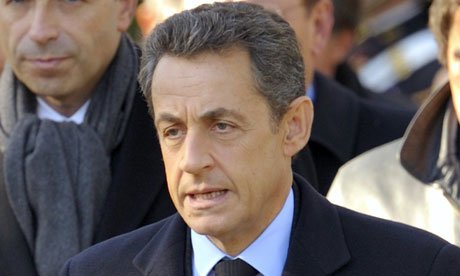
Global Recession Grows Closer as G20 Summit Fails

THE GUARDIAN: IMF to monitor Italy to ensure austerity as leaders fail to agree plan for financial aid for distressed countries


A world recession has drawn closer after a fractious G20 summit failed to agree fresh financial help for distressed countries and debt-riddenItaly was forced to agree to the International Monetary Fund monitoring its austerity programme.

Financial markets fell sharply after the two days of talks in Cannes broke up in disarray, amid concerns that Italy will now replace Greece at the centre of Europe's deepening debt crisis.

UK hopes that the Germans would relent and allow the European Central Bank to become the lender of last resort for the euro were also dashed.

On a day of unremitting gloom and yet more market turbulence, the Greek prime minister, George Papandreou, won a late-night confidence vote in his parliament after making a speech in which he promised to start powersharing talks to form a caretaker coalition government. Although he won the vote by 153-145, he is now expected to step down and a national unity government is expected to take over in the coming days.

Papandreou said he would visit the country's president on Saturday to launch power-sharing talks "with the [opposition] parties … for the formation of a government of broad co-operation."

In a sign that the spread of the debt crisis to Italy could break up the single currency, the chancellor, George Osborne, admitted the Treasury was undertaking crisis planning for a eurozone collapse. » | Patrick Wintour and Larry Elliott in Cannes | Saturday, November 05, 2011

Related »
David Cameron: 'British Economy Is Getting Worse as Euro Crisis Goes Unresolved'

THE DAILY TELEGRAPH: The British economy is getting worse “every day” that the euro crisis goes unresolved, David Cameron has warned, as he told European leaders that the “world cannot wait” any longer for a rescue package to be agreed.

The Prime Minister condemned the “endless questions and changes” in the eurozone that led to the G20 summit of world leaders ending acrimoniously without a detailed plan. His warning that the crisis is having a “chilling effect” on the economy heightened fears that growth in Britain has stalled.

Following the two-day meeting in Cannes, Germany and France failed to explain how they intended to implement a €1trillion rescue package for the single currency after admitting that they were struggling to raise sufficient funds.

The US objected to proposals to increase substantially the size of the International Monetary Fund, which could directly help countries such as Italy. President Barack Obama made clear that he wanted eurozone countries to do more to solve the single currency’s problems.

Cash-rich emerging economies such as China were also not willing to help finance the eurozone bail-out until the Europeans themselves did more.

President Nicolas Sarkozy warned that a deal involving the eurozone and the IMF could take until February to finalise. » | Robert Winnett, Political Editor, in Cannes | Saturday, November 05, 2011
EU: We'll Make UK Cut Bank Bonuses

THE INDEPENDENT: Exclusive: Europe threatens to crack down on City's excessive pay

The European Commission is considering tough new proposals to curb the pay and bonuses that banks can hand out to staff working across the European Union.

The plans, which are likely to go further than those proposed so far in the UK, would meet significant opposition from the City of London, which claims cutting benefit packages would result in an exodus of talent to Asia and America.

But the new restrictions could not be blocked by the Government if a majority of other European countries vote in favour of them. The proposal by Michel Barnier, the EU Commissioner in charge of financial services, emerged as G20 leaders meeting in Cannes failed to produce concrete plans to tackle the eurozone's sovereign debt crisis. » | OLIVER WRIGHT | Saturday, November 05, 2011