March 11, 2010
THE TELEGRAPH: Mexican billionaire Carlos Slim has stripped Bill Gates of his crown as the world’s richest man, as Latin American and Asian entrepreneurs begin to outpace the US and Europe when it comes to wealth creation.

Mr Slim, with a fortune of $53.5bn (£36bn) from his investment in telecoms and banking in Latin America, is worth $500m more than Bill Gates, the Microsoft founder, according to the just-released Forbes annual billionaires survey.
It is the first time in 16 years that a non-American has taken the top spot, with the Mexican, who saw his wealth increase by $18.5bn in the year, following in the footsteps of the Rausing Brothers in 1994.
But Mr Slim’s rise to the top is part of a much wider trend in the annual Forbes list – that of the rise of dollar billionaires from developing nations at the expense of those from more traditional wealthier countries.
Although the US still has the most billionaires on the list – some 403 with a combined net worth of $1.1 trillion – their hold is beginning to loosen, accounting for 40pc of the world’s billionaires in the latest list compared to 45pc last year.
At the same time, countries such as China, Turkey, Russia, Brazil and Argentina have all seen a significant rise in the number of billionaires. Pakistan now has its first billionaire in the shape of Mian Muhammad Mansha, who owns the country’s MCB Bank.
China is now home to 64 billionaires – the most of any country outside the US – with 27 of them reaching the $1bn mark for the first time. >>> James Quinn, US Business Editor | Wednesday, March 10, 2010
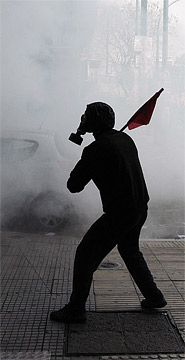
TIMES ONLINE: Much of Greece ground to a halt today as public and private sector unions called another general strike in opposition to tough government austerity measures and proposed pension reforms aimed at restoring fiscal order for the battered economy.
Traffic stopped moving around the centre of Athens with streets closed off as an estimated 20,000 demonstrators holding banners and chanting slogans marched towards the parliament building in Syntagma square. There were separate mass demonstrations in the northern city of Thessaloniki.
More than two million workers of the five million strong Greek workforce have walked off the job after a 24-hour nationwide general strike by ADEDY, the 800,000-strong civil servants’ union, was joined by the larger General Confederation of Greek Workers (GSEE), which represents about two million workers in the private sector.
The mood was tense in parts of the capital as several hundred demonstrators aligned to anarchist or extreme leftist groups also took to the streets.
At one point, small groups of rock-throwing protestors clashed with riot police, who fired tear gas to disperse them. Although they constitute a relatively small minority of the largely peaceful but very vocal demonstrations, they were closely watched as they often clash with police or cause damage to property. >>> Philip Panaglos in Athens | Thursday, March 11, 2010
LE FIGARO: Une grève nationale touchant les transports et les services publics continue de figer la Grèce pour le deuxième jour consécutif. Près de 10.000 personnes manifestent ce jeudi à Athènes contre le plan d'austérité.
La Grèce affronte ce jeudi sa deuxième journée de grève nationale, en moins d'une semaine. A l'appel des deux principaux syndicats du pays, les employés du secteur public et des transports ont cessé le travail pour protester contre le plan d'austérité. A Athènes, 10.000 manifestants défilent dans les rues, selon les chiffres de la police, aux cris de «pas de sacrifice pour la ploutocratie».
Les transports sont paralysés, le trafic aérien nul et les hôpitaux publics sont gérés par le personnel d'urgence. >>> Par lefigaro.fr | Jeudi 11 Mars 2010
Related:
Several articles and videos pertaining to the crisis in Greece >>>
Liens en relation avec ces articles:
De nombreux articles relatifs à la crise financière grecque >>>
Verbunden mit diesen Artikeln:
Mehrere Artikel über die Finanzkrise in Griechenland >>>
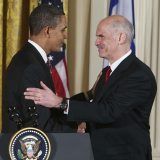
NZZ ONLINE: US-Präsident Barack Obama begrüsst nach den Worten des griechischen Regierungschefs Giorgos Papandreou europäische Initiativen im Kampf gegen Spekulanten. Papandreou war in Washington mit Obama zusammengetroffen.
Im Kampf gegen Spekulanten bekommt das hoch verschuldete Griechenland nach Gesprächen mit den Europäern auch von den USA Unterstützung. Nach Beratungen mit dem amerikanischen Präsidenten Obama sagte Regierungschef Papandreou, Obama begrüsse entsprechende Initiativen in Europa.
Er habe vom US-Präsidenten in dieser Frage eine «positive Antwort» erhalten, sagte Ministerpräsident Giorgos Papandreou nach Angaben der Finanz-Agentur Bloomberg in Washington. Obama habe auch seine Unterstützung für die Massnahmen im Kampf gegen die Schuldenkrise in Griechenland deutlich gemacht. >>> sda/dpa | Mittwoch, 10. März 2010
March 10, 2010
lePARISIEN.fr: Les riches ignorent la crise. A croire même qu'elle leur profite... Aux Etats-Unis, en tout cas, les millionaires (en dollars) sont de plus en plus nombreux. Selon une étude publiée mardi par la société de conseil Spectrem Group, leur nombre a augmenté de 16% en 2009, alors qu'il avait chuté de 27% l'année précédente.
En 2009, environ 7,8 millions de ménages américains disposaient d'avoirs équilanets ou supérieurs à un million de dollars, sans compter le capital investi dans leur résidence principale. C'est donc 1,1 million de ménages en plus qu'en 2008, année où l'économie atteignait son plus bas niveau depuis 2003 et où le nombre de millionnaires américains chutait.
«Bien que (le nombre de millionnaires) soit encore loin de son record de 9,2 millions de personnes en 2007, la hausse observée cette année (2009) n'en constitue pas moins une nouvelle bienvenue pour une économie encore en phase de reprise», a commenté George Walper Junior, président de Spectrem Group. >>> Ph.L. | Mercredi 10 Mars 2010
THE INDEPENDENT: China and India may be growing faster but in technical innovation there's no contest
Americans may be glum about their political situation but they are becoming less so about their economic one. So much of the reporting from and within the US has focused on the discord in Washington that the wall of sound has obliterated the signals from the economic heartland. Such signals that have come through have been largely negative and have been reported though a political prism.
It makes a good headline to write that employment has failed to respond to the increase in output and it makes a good picture to show the decaying homes on abandoned developments. Such positive stories that have been around, of which the recovery in share prices is the most obvious, have almost made matters worse, for they suggest that the few on Wall Street are again benefiting from the tax dollars of the many on Main Street.
Dig a little deeper though and you can sense that American corporate self-confidence is returning: a sense of optimism, almost of swagger, that is quite absent from the prevailing mood in Europe and the UK. Quite suddenly, after all the despair, the fears of financial meltdown have evaporated. America, or at least Business America, is back. Why?
Well part of it is what has been happening in financial markets. Markets both reflect the prevailing mood and help shape it. If the financial services industry is making money then it becomes easier for the rest of industry, "real" industry you might say, to get investment funds, think of possible acquisitions and resume planning for the future. Six months ago it was still a question of survival. Now that is past.
The dollar has helped too, not in the sense that a strongish currency is good for business but rather that it shows that, whatever the problems of the US, at least the currency is not bowed down by the concerns that have been plaguing the euro and the pound. Rationally California may be in an even bigger financial mess than Greece and at some stage pretty soon the country will have to come forward with credible plans to tackle the Federal deficit. But for the moment at least the dollar remains a safe haven and in that sense carries the message that the US is a safe haven for global savings. >>> Hamish McRae | Wednesday, March 10, 2010
March 09, 2010
THE TELEGRAPH: Barack Obama seems unable to face up to America's problems, writes Simon Heffer in New York.

It is a universal political truth that administrations do not begin to fragment when things are going well: it only happens when they go badly, and those who think they know better begin to attack those who manifestly do not. The descent of Barack Obama's regime, characterised now by factionalism in the Democratic Party and talk of his being set to emulate Jimmy Carter as a one-term president, has been swift and precipitate. It was just 16 months ago that weeping men and women celebrated his victory over John McCain in the American presidential election. If they weep now, a year and six weeks into his rule, it is for different reasons.
Despite the efforts of some sections of opinion to talk the place up, America is mired in unhappiness, all the worse for the height from which Obamania has fallen. The economy remains troublesome. There is growth – a good last quarter suggested an annual rate of as high as six per cent, but that figure is probably not reliable – and the latest unemployment figures, last Friday, showed a levelling off. Yet 15 million Americans, or 9.7 per cent of the workforce, have no job. Many millions more are reduced to working part-time. Whole areas of the country, notably in the north and on the eastern seaboard, are industrial wastelands. The once mighty motor city of Detroit appears slowly to be being abandoned, becoming a Jurassic Park of the mid-20th century; unemployment among black people in Mr Obama's own city of Chicago is estimated at between 20 and 25 per cent. One senior black politician – a Democrat and a supporter of the President – told me of the wrath in his community that a black president appeared to be unable to solve the economic problem among his own people. Cities in the east such as Newark and Baltimore now have drug-dealing as their principal commercial activity: The Wire is only just fictional.
Last Thursday the House of Representatives passed a jobs Bill, costing $15 billion, which would give tax breaks to firms hiring new staff and, through state sponsorship of construction projects, create thousands of jobs too. The Senate is trying to approve a Bill that would provide a further $150 billion of tax incentives to employers. Yet there is a sense of desperation in the Administration, a sense that nothing can be as efficacious at the moment as a sticking plaster. Edward B Montgomery, deputy labour secretary in the Clinton administration, now spends his time on day trips to decaying towns that used to have a car industry, not so much advising them on how to do something else as facilitating those communities' access to federal funds. For a land without a welfare state, America starts to do an effective impersonation of a country with one. This massive state spending gives rise to accusations by Republicans, and people too angry even to be Republicans, that America is now controlled by "Leftists" and being turned into a socialist state. "Obama's big problem," a senior Democrat told me, "is that four times as many people watch Fox News as watch CNN." >>> Simon Heffer | Monday, March 08, 2010
March 08, 2010
THE GUARDIAN: Dominique Strauss-Kahn remains confident that Europe's leaders can resolve the Greek crisis
The head of the International Monetary Fund believes Greece will resolve its debt crisis without an IMF bailout, and today dismissed fears that other European nations will be engulfed by the crisis.
Dominique Strauss-Kahn insisted this morning that other eurozone countries with large public deficits would not be forced into the same predicament as Greece. Speaking to Reuters in Nairobi, Strauss-Kahn said the wider European economy was still strong - despite fears that Greece might default on its debts. While the IMF is poised to assist Greece if needed, Strauss-Kahn remains confident that Europe's leaders could resolve the issue.
"The eurozone wants to deal with the problem itself, and I can understand that," he said. "I think they can do it … and we're just here to help."
Strauss-Kahn also argued that those who claim that Spain or Ireland could suffer a debt default are simply trying to "scare" the financial markets.
"We have a problem with Greece. We don't have a problem with Spain to date. The eurozone has to deal with the Greek problem. They are doing this," said Strauss-Kahn.
"No one knows what's going to happen tomorrow morning but there's no reason why the spillover to Portugal or to Spain will take place," he added. >>> Graeme Wearden | Monday, March 08, 2010
March 07, 2010
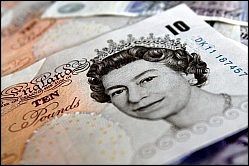
20MINUTEN.ch: Zuerst wetteten die Zocker gegen den Euro. Nun gerät das britische Pfund unter Druck. Spekulanten glauben, dass die Regierung in London ihre Schulden bald nicht mehr unter Kontrolle hat. Londons Schuldenwirtschaft hat griechische Verhältnisse erreicht.
Mit einem müden Lächeln blickten die Briten in den vergangenen Monaten zum europäischen Festland herüber. Die griechische Schuldenwirtschaft ging London nichts an, denn die Briten waren 1999 der europäischen Währungsunion nicht beigetreten. Statt in Euro zahlt das Vereinigte Königreich weiterhin mit «Pound Sterling».
Nun gerät das Pfund jedoch stark unter Druck, denn die Spekulanten haben nach dem Euro die britische Währung ins Visier genommen. Die Zahl der Short-Positionen an der Terminbörse von Chicago, mit denen Händler auf ein sinkendes Pfund wetten, sind stark gestiegen. Kürzlich ist das britische Pfund gegenüber dem Dollar auf ein 10-Monatstief gefallen.
Die «Euro-Verwandten» leiden
Der Ökonom David Meier von der Bank Julius Bär begründet den Kurssturz so: «Die meisten europäischen Währungen, die dem Euro nahestehen, haben sich in den letzten zwei Monaten gegenüber dem Dollar abgeschwächt. So auch das britische Pfund, die norwegische Krone und der Schweizer Franken.» Grund dafür ist der Vertrauensverlust in den Euro, der wegen Griechenlands Schuldenwirtschaft in eine tiefe Krise gestürzt sei, so Meier, der täglich die Währungsentwicklungen analysiert.
Der jüngste Schwächeanfall von anfangs Woche erklärt der Ökonom mit der politischen Entwicklung. «Das hängt mit dem ungewissen Ausgang der britischen Unterhauswahlen zusammen. Umfragen zeigten, dass die konservative Partei wahrscheinlich keine absolute Mehrheit im Parlament holen wird», so Meier. Dies sei insofern von Bedeutung, da der Markt den Labour-Kräften nicht zutraue, die während der Wirtschaftskrise angehäuften Schulden zu reduzieren und die Ausgaben in den Griff zu bekommen.» Briten als Schuldenkönige >>> Von Sandro Spaeth | Donnerstag, 04. März 2010

leJDD.fr: Lorsque Nicolas Sarkozy accueillera, ce soir, à 18 heures, le Premier ministre grec Georges Papandréou, son attitude sera scrutée dans toute l’Europe. Le Président français naviguera entre deux écueils. Il ne peut donner l’impression que les gouvernements de "grands" pays imposent une purge à des "petits" alors qu’eux-mêmes ont laissé filer leurs propres dépenses. Et la France ne doit pas accorder un chèque en blanc à la Grèce, comme le craignent les Allemands. Bref, ne pas humilier Athènes, ne pas braquer Berlin.
Le premier objectif des autorités européennes est de stopper la spéculation qui ébranle l’euro. Les taux d’intérêt grecs ont explosé avec d’énormes primes de risque (les fameux "Credit Default Swap" ou CDS). Ils sont retombés depuis jeudi, Athènes a pu lever 5 milliards d’euros.
Deuxième objectif : éviter un effet domino sur d’autres pays européens. En 2008, la faillite de la banque Lehmann Brothers ne faisait peser aucun risque réel mais a pourtant provoqué une panique sur les marchés. Aujourd’hui, la dette grecque pèse moins de 3% du PIB européen mais d’autres pays pourraient payer cher la même crise de confiance (Espagne, Portugal, Royaume-Uni). La Grèce, symbole des futures réformes européennes >>> Olivier Jay, Le Journal du Dimanche | Samedi 06 Mars 2010 | Mise à jour le 07 Mars 2010
March 06, 2010
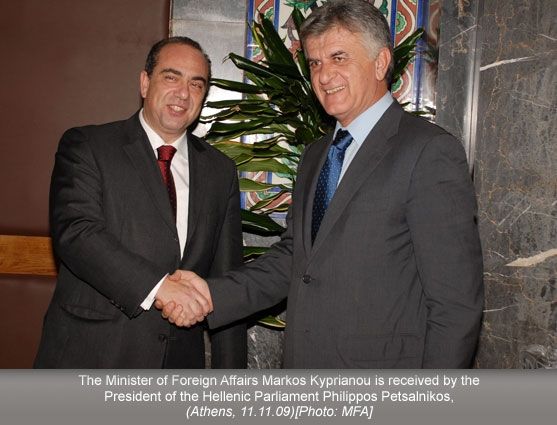
FOCUS ONLINE: Der griechische Parlamentspräsident Philippos Petsalnikos wirbt im FOCUS für gute Beziehungen zwischen Deutschland und seiner Heimat – trotz Provokationen und beleidigender Mails. Er verspricht radikale Reformen im Kampf gegen den Bankrott.
Manche Äußerungen deutscher Politiker seien „sehr negativ, ja provokativ für Griechenland“, sagte er in einem Interview mit FOCUS. Deshalb würden deutsche Bürger derzeit „sehr oft beleidigende E-Mails“ an die griechische Botschaft in Berlin schicken. „Es wäre schade wenn die guten Beziehungen verletzt würden. In Deutschland leben immer noch 350 000 Griechen“, so Petsalnikos, der mit einer Deutschen verheiratet ist. >>> flf | Samstag, 06. März 2010
NZZ ONLINE: Isländer stimmen über Milliarden-Zahlungen ab: Nein zum Abkommen mit Grossbritannien und den Niederlanden erwartet >>> sda/dpa | Samstag, 06. März 2010
Lien en relation avec cette vidéo:
TRIBUNE DE GENÈVE: La Grèce n'a actuellement pas besoin d'aide financière, selon Angela Merkel >>> AFP | Vendredi 05 Mars 2010

LE TEMPS: Entre les exigences de Bruxelles pour qu’il prenne des mesures d’austérité drastiques et l’inquiétude de l’opinion, le premier ministre socialiste a une marge de manœuvre bien réduite
Le ciel politique du flamboyant premier ministre, José Socrates, est empli de nuages menaçants. Au lendemain d’une grève des fonctionnaires – suivie jeudi à 80% –, et alors que Bruxelles exige de lui des mesures drastiques pour réduire le déficit public, la situation du leader socialiste est devenue difficilement tenable. Car, non seulement José Socrates va devoir annoncer d’ici peu des réformes très impopulaires (réduction des dépenses de santé, gel des salaires de la fonction publique, baisse des indemnités chômage…), mais il fait face à une série de scandales économico-médiatiques dans lesquels il serait impliqué.
Enquête parlementaire
La semaine prochaine, une commission d’enquête parlementaire sera constituée pour faire la vérité sur son rôle dans le rachat de la télévision privée TVI – l’une des deux plus importantes – par Portugal Telecom, le géant des télécommunications du pays, sous contrôle gouvernemental. Pour la première fois depuis le retour de la démocratie en 1974, un chef de l’exécutif sera appelé à comparaître personnellement dans une affaire qui pourrait le forcer à la démission. >>> François Musseau | Samedi 06 Mars 2010

LE MONDE: Les Canadiens ont certes goûté à la crise, avec des effets à long terme sur les finances publiques, mais leur pays, qui a émergé de la récession au troisième trimestre 2009, a affiché une croissance de 5 % au quatrième et conserve une bonne longueur d'avance sur ses collègues du G7. Le ministre des finances canadien, Jim Flaherty, s'est vanté de cette place en présentant, jeudi 4 mars, son cinquième budget, qui donne "priorité absolue" à un plan de relance de 46 milliards de dollars canadiens, (près de 33 milliards d'euros) dont 19 milliards restants pour 2010.
Contrairement à son voisin états-unien, le Canada a conservé un secteur financier robuste (qui a traversé la crise sans aide étatique et en accumulant des profits) et une demande intérieure soutenue qui a compensé, en partie, une baisse de 14 % des exportations en 2009. Pour l'avenir, M. Flaherty table sur une reprise mondiale pour conserver au Canada sa place de leader du G7 en matière de croissance. >>> Anne Pelouas, Montréal (Canada) Correspondance | Vendredi 05 Mars 2010
TRIBUNE DE GENÈVE: BERLIN | La chancelière allemande a fait cette déclaration à l'issue d'une rencontre avec le Premier ministre grec Georges Papandréou à Berlin.

La chancelière allemande Angela Merkel a estimé vendredi après une rencontre avec le Premier ministre grec Georges Papandréou à Berlin que la Grèce n'avait actuellement pas besoin d'aide financière et que la stabilité de la zone euro était "assurée". "La Grèce n'a pas demandé d'aide financière", a déclaré la chancelière lors d'une conférence de presse commune.
"La stabilité de la zone euro est assurée. Le résultat est que la question (d'une aide financière à la Grèce) n'est pas posée (....) Je suis même optimiste (et pense ) qu'elle ne sera pas posée." >>> AFP | Vendredi 05 Mars 2010
Subscribe to:
Posts (Atom)