August 23, 2019
August 22, 2019
500K Fewer Jobs Added Since 2018 Than Previously Reported | Velshi & Ruhle | MSNBC
August 18, 2019
Forget a 2008 Lehman Bros-style Crash – This Is How a ‘Normal’ Recession Could Start
There’s a hoary old proverb in the financial markets that a crisis happens precisely when the institutional memory of the last crisis has faded: when all the key chairs are occupied by people who aren’t scared any more, the same mistakes get repeated.
On that basis, in the face of grim economic news around the world, we ought to be reasonably safe from another Lehman Brothers-type meltdown, or even a repeat of the eurozone crisis. But what might be a little bit more worrying is that there are surprisingly few people left who remember how the normal kind of recession happens. » | Dan Davies | Friday, August 16, 2019
August 15, 2019
Brexit, Iran, Huawei: What John Bolton’s ‘Interim Deals’ Could Cost
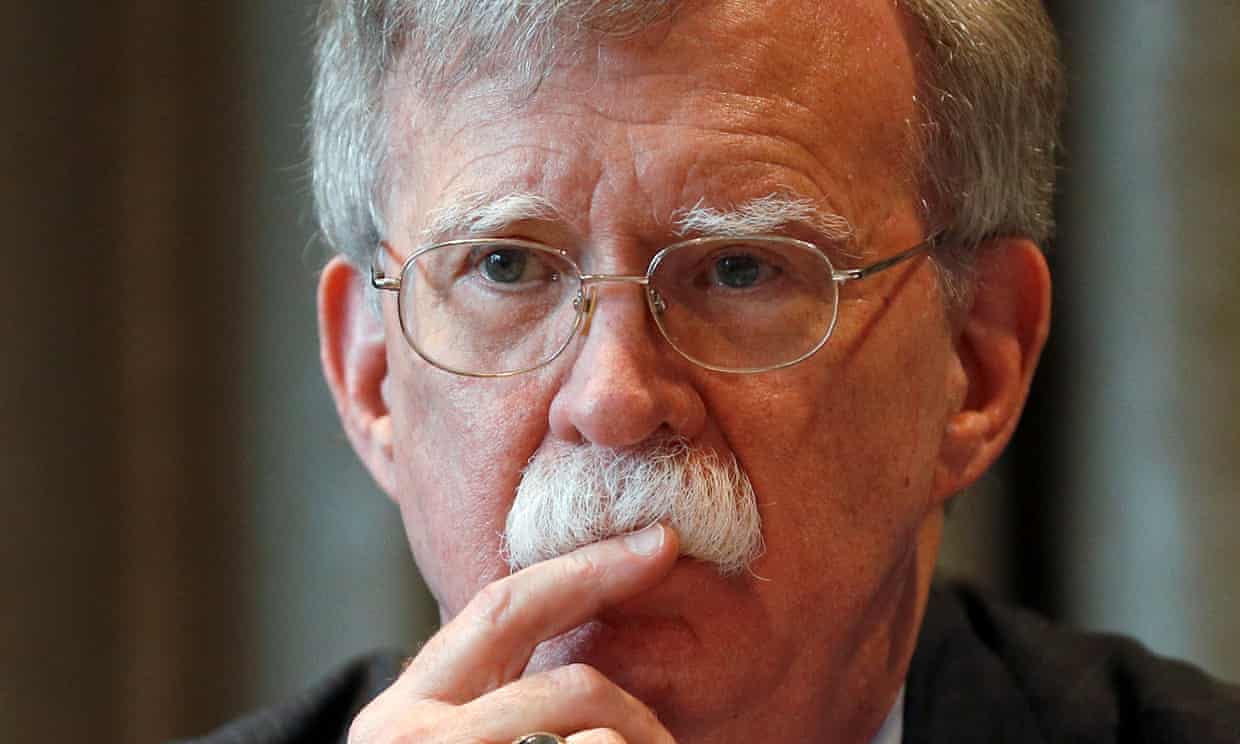
John Bolton, the national security adviser to Donald Trump and one of the pre-eminent advocates of “America first”, could not have been more solicitous to the Boris Johnson government – but his overtures may come with a sting in the tail for the UK.
The messages of solidarity poured out. We are with you, he vowed, saying Brexit was in the US national security interest, with or without a deal with the EU by 31 October. Laced with a few barbs at the expense of Brussels, he presented his credentials as a pioneer Brexiter, arguing he was a leaver before there were leavers.
But Bolton did not just vow friendship or repeat the oft-made promise that the UK will be at the front of the queue for any trade deal: he came with a specific proposal. Britain and the US could strike interim deals lowering trade barriers in specific areas, such as manufacturing, before a comprehensive trade deal could be signed some years down the line, he said. He was sure such deals could be greeted with unanimous bipartisan support by Congress, the body that sanctions US trade agreements. Some doubt the possibility of striking deals before everything is agreed, however.
The aim is to provide the UK with a safety net as it loses access to European markets in a no-deal scenario. It is not quite a bailout, but it underlines how much the Trump administration sees Britain’s exit from the EU as being in the US’s national security interest. » | Patrick Wintour, Diplomatic editor | Tuesday, August 13, 2019
Donald Trump Grapples with Self-Inflicted Economic Wounds as Markets Plunge | The Last Word | MSNBC
August 08, 2019
The Dramatic Drop in Sterling Is Only a Taste of What Is to Come
As our currency plummeted last week, politicians were remarkably quiet. In normal times, a catastrophic slide in the pound would send a shockwave through Westminster. An emergency cabinet meeting might have been called. The chancellor might have made an announcement, calming markets and reassuring the public.
But these aren’t normal times. Over the past three years, politics has been increasingly blind to the concerns of ordinary people. The Brexit debate is stuck on abstract constitutional issues such as the backstop. While they are important matters, the relentless focus of public discourse on them means that we are in danger of forgetting about the lives of real people. Westminster is gripped by a fanatical race towards a cliff-edge Brexit and nobody is stopping to think about the impact it would have on the everyday lives of the people we serve as politicians.
The falling pound is a perfect example. Consider for a moment the situation we find ourselves in. Three years on from the referendum, and sterling has now fallen by 15% against the euro. On average, the pound is now weaker than it was at the height of the financial crisis. » | Sam Gyimah | Thursday, August 8, 2019
August 07, 2019
Gold Rises to $1,500 an Ounce for First Time in Six Years
The price of gold has risen to $1,500 an ounce (£1,234.45 at market rates on Wednesday) for the first time in six years as investors seek shelter in low-risk assets amid concerns about the global economy.
The spot gold price rose 1.75% to $1,500.29, its highest level since 2013, taking the metal’s gains this year to 17%.
Gold is considered a safe haven asset and investors traditionally buy into the precious metal at times of economic or political instability. » | Sean Farrell | Wednesday, August 7, 2019
In 33 Years The Rich Will Own All the Wealth in America!
Robert Reich: The Myth of the Rugged Individual
August 06, 2019
The Guardian View on the China-US Trade Wars: The Global Economy Is At Risk
Events have moved disturbingly swiftly since Donald Trump surprised everyone last week by announcing plans for a fresh wave of tariffs on Chinese imports. Beijing retaliated by targeting US agricultural products and allowing its currency to depreciate against the US dollar. Mr Trump duly fired off a tweet accusing the Chinese of currency manipulation, a clear sign that he is preparing to ratchet up the tension still further. Financial markets have responded predictably to this major escalation in the economic cold war. Share prices fell and investors sought out the traditional safe haven assets: gold and the swiss franc.
When the US president announced his first wave of protectionist measures in March 2018 he boasted that trade wars were good and easy to win. That’s not the way that the markets see things. They see the world’s two biggest economies digging in for the long haul and Mr Trump intensifying global trade tensions in order to pressurise America’s central bank, the Federal Reserve, to cut interest rates. » | Editorial | Monday, August 5, 2019
China Accuses US of 'Deliberately Destroying' World Order
China stepped up the trade war rhetoric on Tuesday, accusing the US of “deliberately destroying international order” with “unilateralism and protectionism”.
A day after Washington branded China a currency manipulator in a rapidly escalating trade dispute, China’s central bank said it “deeply regretted” the move by the US and said such behaviour “seriously undermined international rules” and damaged the global economy.
In a strongly worded editorial in the People’s Daily, the official newspaper of the Chinese Communist party, China accused the US of “deliberately destroying the international order” and holding its own citizens hostage. » | Dominic Rushe , Lily Kuo in Hong Kong and agencies | Tuesday, August 6, 2019
UK Too Desperate to Secure US Trade Deal, Says Clinton's Treasury Secretary
The former US treasury secretary Larry Summers has said he does not believe that a “desperate” UK would manage to secure a post-Brexit trade deal with Washington, as Dominic Raab, the new foreign secretary, heads to the US to scope out the potential for such an agreement.
Summers, who was a senior official under Bill Clinton and Barack Obama, said the UK was in a weak position when it came to negotiating with trade partners.
He told BBC Radio 4’s Today programme on Tuesday: “Britain has no leverage, Britain is desperate … it needs an agreement very soon. When you have a desperate partner, that’s when you strike the hardest bargain.”
Despite warm words from Donald Trump about a trade deal, Summers said: “We have economic conflict with China and, even on top of that, the deterioration of the pound is going to further complicate the negotiating picture.
“We will see it as giving Britain an artificial comparative advantage and make us think about the need to retaliate against Britain, not to welcome Britain with new trade agreements.” » | Rowena Mason, Deputy political editor | Tuesday, August 6, 2019
August 05, 2019
Brexit Britain: Europe's View
China's Yuan Sinks amid Fears Beijing May Give Up on US Trade Talks
The simmering trade tensions between the United States and China have threatened to spark a full-blown currency war after Beijing allowed the yuan to drop below a level it had previously defended with sustained vigour.
China’s central bank allowed the yuan to sink below the sensitive seven-to-one dollar level for the first time since 2008 in what one expert called a “weaponisation” of the currency. In the wake of Monday’s news, Asian shares slumped to a six-month low.
Beijing has consistently advocated the need for a higher yuan despite accusations from Donald Trump that it was deliberately keeping its currency low in order to flood America with cheap products.
But Monday’s move suggests that Beijing does not see any prospect of reaching an agreement in its trade dispute with Washington in the light of the US president’s threat last week to impose more tariffs on Chinese goods. » | Martin Farrer | Monday, August 5, 2019
Political Theory – John Maynard Keynes
August 04, 2019
Whatever They Say about Brexit, Sterling’s Nosedive Tells Us the Truth
If you are reading this and earn your living in UK currency, you are already poorer today than you were before June 2016. And you will be poorer by the end of the year if a no-deal EU exit comes to pass. If you have savings in sterling, then you’re in even more trouble.
In the post-truth world we have been living in for the past three years, there’s one thing that cannot be blagged away, cannot be accused of bias, cannot be propped up by a gust of groundless optimism – the British pound. It is quite literally a sovereign, bowing to no ideology or political pressure. As elegantly and neutrally as a force of nature, it rises and falls as it divines the direction of the country’s economy. That direction, according to the pound’s nosedive over the past few weeks, is downwards.
You might not yet have noticed what economists call “the pass-through effect”, the impact of changes in the exchange rate on domestic prices for traded and non-traded goods. But it is here. We are all experiencing it now, in some way. It’s not just holidaymakers, many of whom are shocked that they are getting fewer euros than pounds at airport exchange bureaux or ATMs (in the past week, even dollars were informally trading at parity, a significant milestone in the pound’s depreciation). » | Nesrine Malik | Sunday, August 4, 2019
August 03, 2019
Trump: Things 'Going Along Very Well' with China as Markets Fall over Tariffs
Donald Trump has said things are “going along very well” with China, a day after financial markets around the world fell sharply following the president’s threat to impose a new tariff on $300bn (£248bn) of Chinese goods, in a rapid escalation of the trade war between Washington and Beijing.
The FTSE 100 was down more than 2% as markets across Europe tumbled on Friday, continuing a wave of selling pressure around the world in the aftermath of the president’s announcement on Thursday evening, which dashed hopes of a resolution to the US-China trade war.
Tweeting on Saturday, Trump sought to down play the tension, and insisted US consumers were not paying for import taxes he has imposed on goods from that country although economists say Americans are footing the bill. » | Guardian staff and agencies | Saturday, August 3, 2019
August 02, 2019
Dollar Is the Strongest Currency... No More? US Government Raises Spending by $320bn to Cover $22trn debt
Subscribe to:
Posts (Atom)