Showing posts with label Jean-Claude Trichet. Show all posts
Showing posts with label Jean-Claude Trichet. Show all posts
September 15, 2018
Trichet Calls for Action to Prevent New Financial Crisis
April 11, 2017
Trichet on Brexit and the Future of UK-EU Relations
October 29, 2011

Dans un entretien accordé au journal allemand Bild am-Sonntag, Trichet se dit toutefois confiant dans la capacité des gouvernements de la zone euro à rétablir une stabilité financière.
Selon lui, cela exige que le Pacte de stabilité soit global et qu'il soit mis en application d'une manière vigoureuse. » | Erik Kirchbaum, Pierre Sérisier pour le service français | samedi 29 octobre 2011
June 02, 2011
REUTERS FRANCE: AIX-LA-CHAPELLE [Aachen], Allemagne - L'Union européenne devrait envisager de renforcer son contrôle central en matière de politique économique si elle ne parvient pas à juguler la crise de la dette dans la zone euro, a déclaré jeudi le président de la Banque centrale européenne Jean-Claude Trichet. » | Sakari Suoninen, Natalie Huet pour le service français, édité par Dominique Rodriguez | Jeudi 02 Juin 2011
May 15, 2011
REUTERS DEUTSCHLAND: Berlin - EZB-Chef Jean-Claude Trichet hat Befürchtungen zurückgewiesen, der Euro sei angesichts der anhaltenden Schuldenkrise in einigen Mitgliedstaaten der Währungsunion in Gefahr.
"Es gibt keine Krise des Euro", schrieb der Präsident der Europäischen Zentralbank in einem vorab veröffentlichten Gastbeitrag für die Zeitung "Bild am Sonntag". "Was wir derzeit in einigen Ländern des Eurogebiets beobachten, ist in erster Linie eine Schuldenkrise der öffentlichen Haushalte." Mehrere Mitgliedstaaten des Euroraums müssten ihre Wirtschafts- und Finanzpolitik rigoros ändern, nachdem in der Vergangenheit Fehler gemacht worden seien. Grundlegende Reformen seien erforderlich, damit wirtschaftspolitische Regeln verbessert und von allen eingehalten würden. "Wir können stolz darauf sein, dass unsere Währung stabil und glaubwürdig ist." » | Sonntag, 15. Mai 2011
December 03, 2010

LE MONDE: Le président de la Banque centrale européenne, Jean-Claude Trichet, affirme, vendredi 3 décembre, sur RTL, que l'euro est "crédible" et n'est pas "en crise en tant que monnaie", au lendemain du conseil des gouverneurs de la BCE qui a prolongé ses mesures exceptionnelles.
"On a des problèmes d'instabilité financière qui sont dus à une crise budgétaire dans certains pays européens", a-t-il ajouté, en expliquant que la BCE avait décidé jeudi de "continuer à alimenter en liquidités, sur des durées d'une semaine, un mois et trois mois, de manière illimitée, l'économie européenne". >>> LEMONDE.FR avec AFP | Vendredi 03 Décembre 2010
May 31, 2010

LE FIGARO: Le président de la Banque centrale européenne appelle à plus de contrôle collectif des finances des Etats de la zone euro, dans une interview accordée au Monde. Il rejette «toutes les théories du complot», y compris une attaque anglo-saxonne contre l'euro.
«Nous sommes une fédération monétaire. Nous avons maintenant besoin d'avoir l'équivalent d'une fédération budgétaire», a défendu Jean-Claude Trichet, le président de la Banque centrale européenne (BCE) dans une interview au Monde daté de mardi. Il anticipe d'autre part une croissance meilleure que prévue en zone euro au deuxième trimestre.
Le banquier central tire les leçons de la crise : Il estime que la situation actuelle est due au non respect des règles budgétaires européennes. Et appelle à un renforcement sans précédent de l'intégration européenne, afin de renforcer le «contrôle et [la] surveillance de l'application des politiques en matière de finance publique». A plus court terme, il exhorte les Européens à adopter des «plans de retour progressif à la sagesse budgétaire, ce que vous appelez plans d'austérité».
Axel Weber, membre allemand du Conseil des gouverneurs de la BCE, a pour sa part souligné lundi que la zone euro a besoin meilleurs mécanisme de contrôle des Etats aidés, comme la Grèce. «Afin de renforcer les mesures préventives contre de tels cas, un accord sur la faillite (des Etats membres) devrait être sérieusement étudié», a-t-il aussi déclaré lors d'un discours à Mayence. >>> Par Guillaume Guichard | Lundi 31 Mai 2010
May 16, 2010
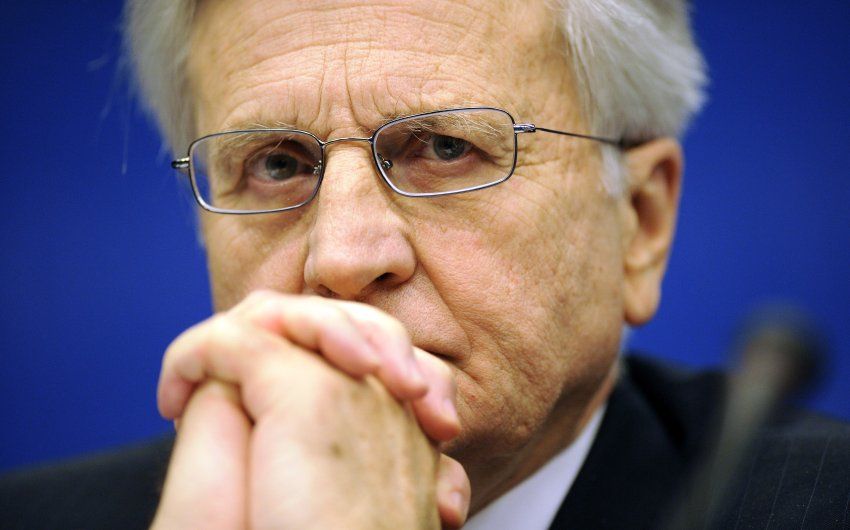
SPIEGEL ONLINE INTERNATIONAL: In a SPIEGEL interview, Jean-Claude Trichet, the 67-year-old president of the European Central Bank, discusses the largest financial rescue package in the history of Europe, the role and importance of speculators in the euro crisis and the weakness shown by politicians in the euro zone member states. >>> | Saturday, May 15, 2010
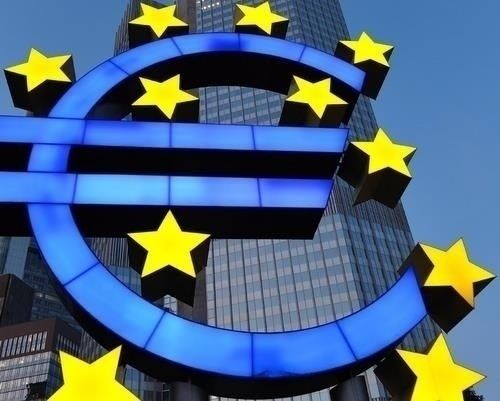
THE TELEGRAPH: Europe's top central banker has rubbished suggestions that the single currency is under attack by speculators, despite the euro plummeting to a 19-month low against the dollar.
In what will come as a boost to the much-criticised hedge fund industry, Jean-Claude Trichet, the president of the European Central Bank (ECB), said the poor state of Europe's public sector was to blame for the Continent's troubles.
Mr Trichet also rejected as "nonsense" suggestions that European governments had forced the ECB to act last week in the face of the sovereign debt crisis.
The ECB head told Der Spiegel, the German magazine, that Europe could be facing its toughest situation for 65 years. "Without a doubt, since September 2008 we have been in the most difficult situation since the Second World War, perhaps since the First."
Mr Trichet said the slump in the euro – which tumbled 1.5 cents against the dollar on Friday to $1.2358 – was the fault of European governments themselves.
"It is not a question of an attack on the euro. It is to do with the public sector and hence to do with financial stability in the euro area," he said. "It's clear that the chief responsibility of Europeans is to take appropriate measures to counteract the current tensions in Europe." >>> Jonathan Sibun | Saturday, May 15, 2010
May 14, 2010
WELT ONLINE: In der gegenwärtigen Euro-Krise zählt EZB-Präsident Jean-Claude Trichet auf eine aktive Rolle Deutschlands mit seiner Tradition der gesunden Staatsfinanzen. Er fordert von den einzelnen Staaten, die Maßnahmen "rigoros" umzusetzen und die "Sparanstrengungen zu beschleunigen". Eine Inflation drohe aber nicht.

Deutschland soll nach Einschätzung von EZB-Präsident Jean-Claude Trichet mit seiner Vorbildrolle Europa aus der Krise führen. Die Regierung in Berlin stehe als eine Art Euro-Polizei in der Pflicht und müsse anderen Mitgliedstaaten der Euro-Zone auf die Finger schauen.
"Deutschland ist die größte Volkswirtschaft im Euro-Raum und ein Land mit der Tradition gesunder Staatsfinanzen“, sagte Trichet dem „Handelsblatt“. "Ich zähle auf die aktive Rolle aller Länder, inklusive Deutschlands, die Funktion der Überwachung einzuführen.“ >>> dpa/Reuters/woz | Freitag, 14. Mai 2010
March 05, 2009
NZZ Online: Die europäische Zentralbank (EZB) hat ihren Leitzins um 50 Basispunkte auf den historischen Tiefststand von 1,5% gesenkt. Nach einer Pause im Februar geht damit die Serie der Zinssenkungen im Kampf gegen die Finanz- und Wirtschaftskrise im Euroraum weiter.

Die europäische Zentralbank (EZB) hat ihren Leitzins um 50 Basispunkte auf den historischen Tiefststand von 1,5% gesenkt. Der Schritt war von den Märkten erwartet worden. Nach einer Pause im Februar geht damit die Serie der Zinssenkungen im Kampf gegen die Finanz- und Wirtschaftskrise im Euroraum weiter. Im Kampf gegen die Wirtschaftskrise hat die EZB damit die Zinsen um insgesamt 275 Basispunkte auf 1,5% gesenkt. >>> mtz | Donnerstag, 5. März 2009
The Dawning of a New Dark Age (Taschenbuch) – Deutschland & Österreich >>>
The Dawning of a New Dark Age (Gebundene Ausgabe) – Deutschland & Österreich >>>
April 29, 2008
SPIEGELONLINE INTERNATIONAL: Never before have the central banks of the United States and Europe pursued such divergent strategies when it comes to dealing with a financial crisis. The increased value of the euro against the dollar reveals which strategy is working.
The world's two most powerful central bankers are two very different men, even when it comes to their outward appearance.
Jean-Claude Trichet, the president of the European Central Bank (ECB), has the bearing and style of a classic representative of Old Europe. He always wears the best suits, his gray hair is carefully parted and his voice is so unassuming that it sometimes comes across as more of a whisper. He is happy to swap the columns of numbers that are part of his job for a volume of modern French literature.
Ben Bernanke, Trichet's counterpart at America's central bank, the Federal Reserve (Fed), is an economics professor by trade and makes no secret of his dislike for suits. He once joked: "My proposal that Fed governors should signal their commitment to public service by wearing Hawaiian shirts and Bermuda shorts has so far gone unheeded." In his private life, Bernanke is an avid baseball fan.
The personalities of the two men are as different as their strategies and their approaches to their jobs. Trichet runs the ECB thoughtfully and with circumspection. The Fed, under Bernanke's leadership, is hands-on and decisive.
But which approach is more successful during an acute global financial crisis? And is it possible that the two key central bankers are in fact fueling the seemingly unending banking disaster?
The ECB remains calm -- sometimes to the point of doing nothing. Since the turbulence in the financial markets began last summer, it has left European key interest rates unchanged. The Fed, on the other hand, seems to take action to show it is doing something, sometimes to the point of hysteria. Since August of 2007, it has brought down the key interest rate at record speed, from 5.25 percent to 2.25 percent, to avert a recession in the United States.
But now it seems that all of the Fed's efforts have been in vain. Testifying before the US Congress, Bernanke was forced to admit that he expects the US economy to grow very little, if at all, in the first half of 2008. It "could even contract slightly," he said.
If a currency's value is a measure of confidence in an economy and its central bank, then the Europeans and their ECB are clearly emerging as the winners in the current crisis. Last week the euro climbed to a new record high of $1.60. What the Fed Could Learn from Europe's Central Bank >>> By Christian Reiermann | April 29, 2008
The Dawning of a New Dark Age (Paperback - UK)

The Dawning of a New Dark Age (Hardback - UK)
Subscribe to:
Posts (Atom)