Showing posts with label Islamic banking and finance. Show all posts

August 02, 2010

Islamic Bank of Britain Gets Cash Boost for Sharia-compliant Loans

THE INDEPENDENT ON SUNDAY: A fortnight after it was revealed by The Independent on Sunday that Lloyds banking group had abandoned its landmark Islamic mortgage offer, one of its rivals has outlined plans to expand the number of home loans offered which comply with sharia law.

The Islamic Bank of Britain has secured an extra £20m of investment from Qatar International Islamic Bank so that it can increase the number of sharia-compliant home loans and savings products. Under sharia, the payment and receipt of interest is banned, as is investment in areas such as arms manufacturing, alcohol and tobacco. >>> | Sunday, August 01, 2010

April 20, 2010

January 21, 2009

Disturbing News about Banking from Across the Pond

ISLAM IN ACTION: Michigan Bank Falls to Islam – This is a very disturbing article about the University Bank in Ann Arbor Michigan. The bank has recently implemented sharia banking, but to make matters worse they have even canceled their annual Christmas party and have stated that no alcohol will be served at after work gatherings. Several employees have quit the bank and hopefully they will sue the bank for religious discrimination. – Christopher Logan
ASSOCIATED PRESS: Michigan Bank Operates by Islamic Law

Big financial institutions have been battered by mortgages gone bad. But a tiny Michigan bank is getting attention in the industry by turning a profit on loans without even charging interest.

It also rules out some of the activity that got Western finance in trouble - subprime mortgages, credit default swaps and the like.

"When you look at the economic crisis we're in, if you were to follow Islamic or Sharia financing, you couldn't have this crisis," said John Sickler, corporate director for the bank, University Islamic Financial Corp. in Ann Arbor. >>> Jeff Karoub,Sebastian Abbot, Associated Press | Tuesday, January 20, 2009
Hat tip: Always On Watch

The Dawning of a New Dark Age – Paperback (US) Barnes & Noble >>>
The Dawning of a New Dark Age – Hardcover (US) Barnes & Noble >>>

December 11, 2008

Ehrenfeld / Abady – Islamic Banking: Is Treasury complicit?

THE WASHINGTON TIMES: If "cash is king," then Middle East coffers are irresistibly enticing. During a recent tour of Saudi Arabia and the Gulf states, Deputy Treasury Secretary Robert Kimmitt applauded the "growing role" of Arab banks in the U.S. economy. Treasury is seeking buyers for its newly acquired bailout assets because more than $1 trillion in cash is urgently needed to rescue the largest U.S. banks.

However, cash from the Arabian Gulf comes with a vital string attached: Islamic banking, erroneously viewed as an ancient practice. In fact, Islamic banking is a newly invented institution: "Neither classical nor medieval Islamic civilization featured banks in the modern sense, let alone 'Islamic' banks," notes Timur Kuran, professor of economics and law at the University of Southern California. According to the Dinar Standard, "assets managed by Islamic banks are in excess of $700 billion - predominantly concentrated in the Middle East."

Islamic banking took off in the 1970s, but was first concocted by Muslim Brotherhood founder Hassan al-Banna in the 1920s. The stated goal was to penetrate the Western finance system, corrupting it from within in hopes of creating a parallel system to re-establish a global Islamic empire governed by Islamic law (Shariah). Islamic rules of commerce (fiqh al-muamalat) forbid interest (riba) and investing in a prohibited (hara'am) enterprise. They also mandate tithes on wealth (zakat). However, the Koran fails to precisely define these concepts. Imams and ayatollahs differ, for example, on whether riba prohibits all interest or only usurious interest.

While the overhaul of American and Western banking regulations is urgent, Islamic banking cannot be the answer because Muslim clerics - not U.S. laws and regulators - make the rules. In 1969, the Saudis created the Organization of the Islamic Conference (OIC), which is now leading the charge for global expansion of Islamic banking and has established new regulatory, accounting and auditing organizations to govern such banks. Notably, the OIC's charter is to "liberate Jerusalem and Al-Aqsa [mosque] from Zionist occupation." >>> Rachel Ehrenfeld and Samuel A Abady | December 11, 2008

The Dawning of a New Dark Age (Paperback – USA)
The Dawning of a New Dark Age (Hardcover – USA)

October 25, 2008

Islamic Bankers See Sharia System Strengthening

THE GUARDIAN: JEDDAH, Saudi Arabia - The global financial crisis is an opportunity for Sharia-compliant Islamic banking to further its position internationally, bankers said at a forum in Saudi Arabia on Saturday.

Islamic banks have been barely bruised by the global credit crisis so far, although falling property and commodity prices and slowing economies are starting to affect the sector.

But bankers at the forum, on how the world finance crisis could affect Islamic banking, saw the sector strengthening.

"It is a must for Islamic finance to seize the opportunity that came with this global financial crisis," Ahmad Ali, president of the Jeddah-based Islamic Development Bank (IDB) said at the discussion organised by IDB.

"Global investment banks should be set up that realise the Islamic economy and offer the world a new vision and different way to manage assets, invest wealth and create products." >>> By Asma Alsharif / Reuters | Saturday, October 25 2008

The Dawning of a New Dark Age (Paperback & Hardback) – Free delivery >>>

October 04, 2008

Non-Muslims Turn to Islamic Bank as a Safe Option

THE BIRMINGHAM POST: Growing numbers of non-Muslims are turning to Islamic banking as customers spooked by turmoil in the Western banking system increasingly see the sector as a safe haven.

The Birmingham-headquartered Islamic Bank of Britain said it had seen significant growth in non-Muslim customers since the onset of turbulence on financial markets as Islamic banks, bound by strict religious principles, are largely seen as insulated from the credit crisis.

Islam’s prohibition on the charging or paying of interest - riba - as well as rules on the kinds of investments they can make are among the reasons Islamic banks are coming through the crisis unscathed.

Islamic Bank of Britain head of marketing Steven Amos said: “Our core business will always be Muslims but the numbers of non-Muslims are really picking up.

“We’ve had massive interest and it’s down to the number of reasons why we’re insulated from the credit crunch.

“There were two reasons for the credit crunch. The first is liquidity - banks lending to each other on the money markets - but Islamic banks do not borrow or lend on money markets because interest is not allowed.

“The second reason Islamic banks are insulated is to do with assets - everything has to involve an underlying asset or service and if you are going to trade in an asset you have to own it first.”

The explosion in complex derivative products over the last few years has left Western banks reeling from exposure to toxic assets often far-removed from their everyday activities.

In contrast the more risk-averse Islamic finance system did not embrace this kind of deal.

“Conventional banks didn’t know what they were buying in these derivatives but we have no exposure to subprime as we just don’t deal in it full stop.

“That is one of the fundamental reasons we are insulated.”

Stipulations that you must own the asset you are trading in also mean practices such as short-selling are not a feature of Islamic banking. Non-Muslims Turn to Islamic Bank as a Safe Option >>> By Anna Blackaby, Business Staff | October 3, 2008

The Dawning of a New Dark Age – Dust Jacket Hardcover, direct from the publishers (UK) >>>
The Dawning of a New Dark Age – Paperback, direct from the publishers (UK) >>>

February 06, 2008

Islamic Banking: Is It Really Kosher?

NO SHARIA.BLOGSPOT.COM: Muslim scholars say the Qur’an prohibits collecting interest on loans. But many banks, both global and local, have found clever ways to meet religious strictures. It’s a system that may be hypocritical, but also profitable.

The coverage can be a little bit breathless: “La finance Islamique en plein boom,” Le Figaro reported in September. Yes, Islamic banking, structured along the lines that religion decrees, is in full boom. But is it really banking? And is it really kosher?


Islam prohibits the payment of interest on loans, so observant Muslims require specialized alternative arrangements from their banks. Many of the largest global financial companies, including Deutsche Bank and JPMorgan Chase, have established thriving subsidiaries that strive to meet these requirements. As a result, optimists speculate that the common pursuit of lucre—divinely sanctioned, filthy, or otherwise—will bring bickering civilizations together. They may be right.


The Islamic aversion to interest collection comes from the Qur’an. Not that the term “interest” is ever used: the Arabic injunction forbids something called riba. The Qur’an offers no exact definition of what riba meant in seventh-century Arabia, the time and place of the Prophet Mohammed—let alone what the term should mean today. In particular, the passages are ambiguous on the question of whether riba refers to all kinds of interest collection, or only usurious interest—that is, lending practices that are, according to some ill-defined standard, unfair and exploitative. What is clear in the divine financial critique is that, whatever riba may be, Jews are doing it. At one point God warns that they will face a “painful day of doom” if they keep it up.


This ambiguity was a practical problem for the early Muslim jurists, who formalized religious rules in a code called sharia. They were divided on the subject, but as time went on, the weight of consensus came to rest on the side of prohibiting all interest collection. Islamic Banking: Is It Really Kosher? >>> By Aaron MacClean, The American

Mark Alexander (Paperback)
Mark Alexander (Hardback)

January 30, 2008

Idiots in the Banking Sector Eager to Play Dhimmi

THE STAR: A controversial study looking at Islamic banking by the Canada Mortgage and Housing Corp. has ignited protest from some sectors of the Muslim community.

But despite opposition from the Muslim Canadian Congress, the federal housing authority said yesterday it is going forward with the study looking at banking that adheres to Islam's guiding body of rules, or sharia.

Tarek Fatah, founder of the Muslim Canadian Congress, which bills itself as a progressive Muslim group, said in an interview he was "shocked" to learn that "a Crown corporation is using taxpayers' money" for faith-based banking.

Fatah calls sharia banking the "biggest con job ever. What are we going to have next, Buddhist banking?" he asked.

The congress released a letter yesterday written to CMHC chief executive officer Karen Kinsley, urging the housing authority to abandon the $100,000 study.

"Religion has no place in the banking or mortgage industry," the letter said.

The group says the vast majority of Canadian Muslims already use conventional mortgages. Muslim leader calls sharia loans a `con job': Congress wants CMHC to end its banking study >>> By Tony Wong and Tonda Maccharles

Mark Alexander (Paperback)
Mark Alexander (Hardback)

January 17, 2008

Banking on Piety

Photobucket
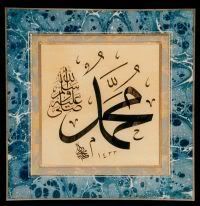
Image of Muhammad’s name in calligraphic art form courtesy of Google Images

ARABIAN BUSINESS.COM: There is no such thing as an Islamic Sukuk; these are conventional bonds that are coated with an Islamic shell." To say Hassan Heikal, the CEO of the leading home-grown investment bank in the Middle East, EFG-Hermes, is sceptical about Islamic finance is an understatement. On the other side of the spectrum, Dr Abdul Moman Al-Olaby, a professor who was one of the pioneers in the industry agrees that some Sharia-compliant structures are questionable, but says "Sharia-compliant finance is our jewel, and even in its infancy, it is well positioned to compete among global banking giants."


Dr Ibrahim Warde, a professor of international business at Tufts University in the USA, and author of Islamic Finance in the Global Community, has been studying the industry for the past decade. As an academic, he takes a more nuanced approach, and tells Arabian Business "the initial hope of the sector was that it would be a completely different approach to finance and it would have many economic and social benefits, and would be based on the principle of sharing profits and losses." Critics today claim that "it evolved into a mimicking of conventional finance" and some question if it is a "new model", but supporters defend the approach on the grounds that they are leading the much needed modernisation of the financial sector.


While the debate will undoubtedly continue, it is undeniable that the cat is out of the bag. Sharia-compliant finance is a growth sector all over the world, and has now become a US$600bn industry. Given the immense wealth of the Arab world and the billion-plus global Muslim population, market dynamics forced the creation of Sharia-compliant finance. From Singapore to London, from Doha to New York, bankers are developing new products, chasing new clients, and laying the groundwork for global expansion.

In this report, Arabian Business examines the origins of Sharia finance, modern banking products, and the rise in corporate finance. We also speak to some of the players behind the burgeoning Takaful (insurance) market, see the Qatari innovation of Sharia-compliant private equity, and look at the scholars and boards endorsing the various structures. Banking on piety >>> By Christina Corbett and Mohammed Aly Sergei

Mark Alexander (Paperback)
Mark Alexander (Hardback)

December 05, 2007

Islamic Investment Instruments

THE NEWS: KARACHI: Many countries in the world are promoting Islamic finance, including Islamic investment instruments (3Is), to cater to the growing demand for Islamic modes of financing and banking.

“Introducing innovative Islamic products in the financial sector has become necessary, as there is increasing demand for Shariah-compliant products, especially the 3Is, in both developed and developing countries,” said Joseph Tan, an economist at Global Research, Standard Chartered Bank.

There is now growing demand for the 3Is in the United States, the United Kingdom, Malaysia, Singapore, Pakistan, many of the Middle Eastern countries and India for the 3Is. The current world market for Islamic financial products is estimated around 300 billion US dollars

Experts say Islamic investment products are Shariah compliant. The 3Is are attractive for investors who want a handsome return on their investment or want to acquire loans in cash or kind without the string of Riba (interest) attached to transactions.

Riba has no place in Islamic banking and other Islamic modes of financing. With a Muslim population of almost 95 per cent, according to the 1998 census, Pakistan introduced Islamic Banking Policy in December 2001. In Pakistan, the banking spread of Islamic banks is higher than that of the conventional banks. The banking spread in conventional banking on an average is 7.2 per cent, and in Islamic banking it is 8.7 per cent. Islamic Investment Instruments >>> By Salman Siddiqui

Mark Alexander (Hardback)
Mark Alexander (Paperback)

December 04, 2007

Frank Gaffney Jr: Shariah’s Trojan Horse

TOWNHALL.COM: Suddenly, a new national debate is beginning about the national security, economic and other implications of Persian Gulf potentates using their petrodollars to buy up strategic American assets. Most recently, the Emir of Dubai’s purchase at fire-sale prices of 4.9 percent of the largest U.S. bank, Citigroup, has caused a level of unease not seen since he tried to buy his way into a large number of this country’s port facilities.

Almost completely unremarked thus far has been a parallel – and in many ways far more insidious – effort to penetrate, influence and dominate America’s capital markets: so-called “Shariah finance.” Some estimates suggest that there are approaching $1 trillion now being invested around the world under this rubric. If present trends continue, all other things being equal, such funds may grow to many times that amount within a few years.

Shariah is, of course, the term used by adherents to the totalitarian ideology practiced by the Saudi Wahhabis, the Iranian mullahs and the Taliban to describe the all-encompassing theocratic code they use to justify repressive rule at home and to extend their dominance elsewhere. While it is often depicted by its promoters as Koranic in character, in fact, it is largely man-made, the product of dictates and rulings by caliphs and scholars over many centuries.

For non-Muslims, Shariah is best known for its sanction for the brutalization of women, homosexuals and Jews. Beheadings, amputations, flagellation and stoning are among the prescribed punishments for those who transgress this barbaric code, punishments plucked from primitive tribal practices in the Arabian deserts dating back to medieval times. Shariah’s Trojan Horse >>> By Frank J. Gaffney Jr.

Frank Gaffney Jr. is the founder and president of the Center for Security Policy and author of War Footing: 10 Steps America Must Take to Prevail in the War for the Free World (Hardcover)

Mark Alexander (Hardback)
Mark Alexander (Paperback)