Showing posts with label tax havens. Show all posts
Showing posts with label tax havens. Show all posts
June 29, 2017
BBC Panorama: Tax Havens of the Rich and Powerful Exposed
November 08, 2013
'Web of Financial Secrecy': UK Wins Title of Biggest Tax Haven for Rich
February 04, 2013
RT.COM: Switzerland will now assist international tax authorities in disclosing information on bank accounts held by foreigners who avoid taxation at home.
Joint efforts by the EU, the US and number of other countries have led to Switzerland introducing new banking laws on February 1. The new regulation now allows foreign tax services to send group requests for bank account information of their citizens. Banks, nominal account holders, agents or trust managers will now be obliged to provide the information. » | Friday, February 01, 2013
May 21, 2011

Teams of private bankers working for powerful banks court wealthy people from distant shores with this sales pitch: Move your cash to our country. We will keep it safe and secret.
That was the modus operandi of UBS, the Swiss banking giant that was forced to admit holding billions of dollars in covert accounts for Americans trying to avoid U.S. taxes.
It is also a tactic used by big American banks to solicit deposits from wealthy citizens in Third World countries, according to tax-evasion experts.
Even as the U.S. Internal Revenue Service crusades against Americans using offshore banks to hide money, these tax experts say, the United States itself serves as a massive haven for international tax cheats.
“We’re the biggest tax haven in the world,” says Robert Goulder, editor-in-chief of U.S.-based Tax Notes International. “People joke about the Cayman Islands. The biggest haven is an island, all right. It’s either Manhattan or Great Britain.” » | Michael Hudson | Wednesday, May 18, 2011
April 03, 2009
THE TELEGRAPH: • New Financial Stability Board as global overseer • Tax havens and hedge funds to be punished • Heavy scrutiny for banks
Gordon Brown and his fellow world leaders have pledged the biggest crackdown on tax havens, hedge funds and banks in modern history as the price to be paid for the multi-trillion dollar bail-out of the world economy.
"The era of banking secrecy is over", the Prime Minister declared, as the Group of 20 leading nations agreed to impose a new range of regulations on banks and non-bank financial institutions as a punishment for contributing to the crisis.
Harsh fines and sanctions will be levied on tax havens that refuse to publish details of their accounts; hedge funds will have to provide more detailed accounts in the future; and bankers will have their bonuses more heavily controlled and taxed throughout the world, the communique pledged.
The range of new regulations will be implemented by national governments in the coming months, officials said, after the G20 agreed on more significant and far-reaching reforms than had been expected.
In what will be interpreted as a victory for the French and German factions, which had emphasised the importance of regulation over new fiscal giveaways, the G20 also ordered the creation of a new Financial Stability Board dedicated to monitoring leverage and inter-connectedness of international financial institutions. >>> By Edmund Conway Economics Editor | Friday, April 3, 2009
THE TELEGRAPH: G20 Summit: Blacklisted Tax Havens Face Sanctions
Tax havens that refuse to sign anti-secrecy agreements face expensive sanctions under an unprecedented global effort to catch illegal tax evaders.
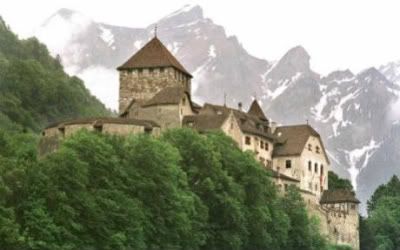
Switzerland, Singapore, the Cayman Islands, Monaco, Luxembourg and Hong Kong are among 45 territories blacklisted on Thursday by the Organisation for Economic Co-operation and Development and now threatened with punitive financial retaliation for their banking secrecy.
Among the sanctions being considered by the G20 are the scrapping of tax treaty arrangements, imposing additional taxes on companies that operate in non-compliant countries, and tougher disclosure requirements for individuals and businesses that use shelters.
Of the offending jurisdictions, 40 "have committed to the internationally agreed tax standard" but have yet to implement it. Only Costa Rica, Malaysia, Philippines and Uruguay have refused to sign up altogether. Jersey, Guernsey and the Isle of Man are fully compliant already.
Illegal tax evasion through offshore shelters has been a long-standing irritation for Gordon Brown, President Barack Obama and French President Nicolas Sarkozy. An estimated $7 trillion of assets are held offshore and, according to pressure group Tax Justice Network, developed countries lose $180bn a year in evaded taxes. >>> By Philip Aldrick, Banking Editor | Friday, April 3, 2009
March 05, 2008
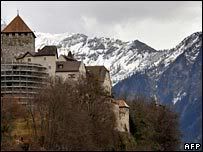
BBC: The bankers in their grey suits and silk shirts looked a bit bemused.
The annual press conference of LGT, the Liechtenstein bank at the centre of the tax evasion controversy, is usually a dull and dry affair.
But it wasn't this year. The room was packed.
And every question was about the scandal in which German intelligence purchased a data disc stolen from the bank, filled with details of Germans who allegedly tried to evade paying tax back home.
Fourteen other countries, including Britain, are conducting inquiries into their own citizens on the disc for tax evasion.
The head of the LGT, His Serene Highness Prince Max von und zu Liechtenstein, is a member of the principality's ruling family.
Speaking afterwards, when I pressed him on the £100m Britain expects to get back from UK taxpayers who used LGT to evade paying tax, he told me Liechtenstein was being treated unfairly - and that Britain, too, was a keen player on offshore finance markets.
"There is tax competition going on on a global basis. The British have positioned themselves very well in a number of areas - not only in their [dependent] territories, but also in the UK," he said.
The British government says it is keen to clamp down on people using other havens to hide their money.
But other critics also say Britain is being inconsistent, with tax havens such as Bermuda or the Cayman Islands operating from British dependent territories.
"Because of the number of places that the UK allows to operate as tax havens, our role in providing the secrecy spaces that these locations provide, which harbour crime, is greater than Liechtenstein's," says Richard Murphy, a campaigner on tax issues.
"We're the biggest tax haven operator in the world. They've been seen as useful. They've brought money into London, Switzerland and other financial centres, and for that reason, London has tolerated them." Is Time Running Out for Tax Havens? >>> By Ray Furlong, Vaduz
Mark Alexander (Paperback)

Mark Alexander (Hardback)
March 04, 2008
THE INDEPENDENT: The European Union will declare war today on Liechtenstein, Monaco, Andorra and Switzerland. Weary of losing billions of tax euros, the EU's 27-strong high command of economics and finance ministers, Ecofin, is meeting in Brussels to agree a strategy aimed at bringing the continent's tax havens under control.
Their weapon of choice will be a strengthened version of the EU's 2005 savings tax directive, which has proved pathetically easy for armies of accountants, lawyers and specialist tax planners to outflank.
Urged on by Peer Steinbruck, the German Finance Minister, the new directive will seek to close the loopholes. Mr Steinbruck says tax evasion costs Germany about €30bn (£23bn) a year in lost revenue; the UK loses a similar sum; the EU may lose €100bn (£77bn) in all.
The stakes are high. But tax experts remain sceptical about the prospects for this new offensive. Mike Warburton, senior tax partner at Grant Thornton accountants, commented yesterday that, while he and his firm condemned tax evasion, which is illegal, "tax avoidance is the second oldest profession in the world, and just as difficult to control. The tax havens will survive. There are stacks of money out there. If they close down the ones in Europe, the money will move to Dubai and Singapore". Europe vs the super-rich >>> By Sean O'Grady, Economics Editor | Tuesday, 4 March 2008
Mark Alexander (Paperback)
Mark Alexander (Hardback)
Subscribe to:
Posts (Atom)