Showing posts with label executive pay. Show all posts
Showing posts with label executive pay. Show all posts
October 08, 2020
While Millions Lost Jobs, Some Executives Made Millions in Company Stock
THE NEW YORK TIMES: Even as millions of people have lost their jobs during the pandemic, the soaring stock market since the spring has delivered outsize gains to the wealthiest Americans. And few among the superrich have done as well as corporate executives who received stock awards this year. » | Peter Eavis | Thursday, October 8, 2020
January 04, 2019
Fat Cat Friday Should Shatter the Myth That Britain’s Bosses Deserve Their Pay
Please raise a glass – if you’re not doing Dry January, of course – to our nation’s exceptionally talented CEOs and their superhuman work ethic and skills. For the average executive to have earned the equivalent of a worker’s average annual salary by 4 January is surely testament to an unimaginable amount of hard work and graft. They must truly deserve the 11% hike in their salaries since last year, unlike millions of good-for-nothing slackers like nurses and teachers who have endured years of stagnating pay. » | Owen Jones | Friday, January 4, 2019
November 24, 2013
Swiss Voters Reject High-Pay Initiative
THE WALL STREET JOURNAL: ZURICH—Switzerland stepped back from a movement to control corporate pay levels, overwhelmingly rejecting an initiative that would have restricted executive salaries to 12 times that of the lowest paid employee.
Roughly 66% of Swiss voters Sunday opposed the 1:12 Initiative for Fair Pay, according to results from 25 of the country's 26 cantons reported by Swiss television. Another 34% supported the referendum item, which was named for the organizers' belief no one in a Swiss company should earn more in a month than someone else makes in a year.
The rejection of the 1:12 initiative marks a move away from Swiss efforts to more tightly govern how companies compensate their employees that has been driven by a growing wealth gap between the country's executive class and everyday workers. » | Neil MacLucas | Sunday, November 24, 2014
Related »
November 22, 2013
'Fat Cat' Backlash: Swiss Executive Pay Debate Gets Ugly

In Switzerland's current, polarized debate about executive salaries, Bern businesswoman Pia Tschannen could be considered a defector -- a woman in cahoots with the Young Socialists, the Social Democrats and the trade unions -- because she is campaigning for the 1:12 initiative, which is being put to referendum on Sunday.
The initiative's aim is to ensure managers cannot earn more in a month than a normal employee earns in a year. It would mean that nobody would be able to earn much more than 500,000 Swiss francs (€400,000) annually. "Ever higher salaries for managers imply that a company's success depends solely on one person. I don't believe that," says Tschannen.
In comparison, board members at Commerzbank, Germany's second biggest bank, were outraged at the government's insistence their pay be limited to €500,000 when the bank was bailed out with government money. Given Switzerland's historical association with Calvinism -- which is supportive of economic success -- the campaign has gathered surprisingly widespread support beyond the traditional left-wing. For a while, polls suggested advocates of the initiative were in a dead heat with their rivals, though support has now dropped. War on the 'Fat Cats' » | Christian Teevs | Friday, November 22, 2013
April 23, 2013

THE GLOBE AND MAIL: When Justin Welby became Archbishop of Canterbury last month, he made it clear the Church of England would become more active on issues involving business ethics. And his first move is to go after executive bonuses.
Archbishop Welby, who is also the spiritual head of Anglicans worldwide, is no stranger to business. He is a former oil company executive and he sits on a British parliamentary committee that is reviewing the conduct of banks in the wake of the financial crisis. He also once wrote a paper titled “Can Companies Sin?” and concluded they could.
In one of the first major announcements since he was enthroned, the Church of England announced last week that it would use its hefty investment clout to rein in executive bonuses, which it said had become excessive owing to a culture of entitlement and greed at many companies. Drawing on the Bible and a variety of studies, the church said it will vote against bonuses that exceed 100 per cent of base salary.
“Awards of more than 100 per cent of base salary can only be justified if an executive director has delivered extraordinary results through exceptional performance to the significant benefit of shareholders,” the church said in the new policy. It added: “Businesses are vehicles for wealth creation, without which there can be no wealth distribution. However, businesses cannot contribute to their full potential to a good society and human flourishing if they have no regard for the society in which they operate, and if individuals in business have regard only for themselves.” » | Paul Waldie | London | The Globe and Mail | Monday, April 22, 2013
March 03, 2013
BBC: Swiss voters have overwhelmingly backed proposals to impose some of the world's strictest controls on executive pay, final referendum results show.
Nearly 68% of the voters supported plans to give shareholders a veto on compensation and ban big payouts for new and departing managers.
Business groups argued the proposals would damage Swiss competitiveness.
But analysts say ordinary Swiss are concerned about a growing economic divide in the country.
The vote came just days after the EU approved measures to cap bankers bonuses.
'Fat cat initiative'
The final results showed that all 26 Swiss cantons backed the proposals.
In all, 1.6 million voters said "Yes" against 762,000, who rejected the idea.
The BBC's Imogen Foulkes, in Berne, says multibillion dollar losses by Swiss banking giant UBS, and thousands of redundancies at pharmaceutical company Novartis, have caused anger in Switzerland - because high salaries and bonuses for managers continued unchanged.
The new measures will give Switzerland some of the world's strictest corporate rules, our correspondent adds. » | Sunday, March 03, 2013
January 23, 2012
December 14, 2011

Pity Wall Street's bankers. Once the highest-paid bosses in the land, they are now also-rans. The real money is in healthcare and drugs,according to the latest survey of executive pay.
There are no bankers in the top 10 of this year's GMI survey of CEO pay. In fact, they have been out since 2007, when Goldman Sachs boss Lloyd Blankfein competed for the top slot with Richard Fuld, boss of soon-to-be-bust Lehman Brothers, and Angelo Morzillo, head of Countrywide, once the largest sub-prime home loan firm.
With the bankers still recovering from their tussle with hubris, old age and infirmity were 2010's boom businesses – at least in terms of pay. Leading the pack was John Hammergren, chief executive of McKesson Corporation. The firm's 52-year-old chairman, chief executive and president took home $145,266,971 in 2010. » | Dominic Rushe | Wednesday, December 14, 2011
Related »
THE GUARDIAN: Exclusive survey shows America's CEOs enjoyed pay hikes of up to 40% last year – with one chief executive earning $145m
Chief executive pay has roared back after two years of stagnation and decline. America's top bosses enjoyed pay hikes of between 27 and 40% last year, according to the largest survey of US CEO pay. The dramatic bounceback comes as the latest government figures show wages for the majority of Americans are failing to keep up with inflation.
America's highest paid executive took home more than $145.2m, and as stock prices recovered across the board, the median value of bosses' profits on stock options rose 70% in 2010, from $950,400 to $1.3m. The news comes against the backdrop of an Occupy Wall Street movement that has focused Washington's attention on the pay packages of America's highest paid.
The Guardian's exclusive first look at the CEO pay survey from corporate governance group GMI Ratings will further fuel debate about America's widening income gap. The survey, the most extensive in the US, covered 2,647 companies, and offers a comprehensive assessment of all the data now available relating to 2010 pay. » | Dominic Rushe in New York | Wednesday, December 04, 2011
THE GUARDIAN: America's top 10 highest-earning CEOs and their salaries – in pictures »
November 22, 2011
THE DAILY TELEGRAPH: Democracy is at stake unless the huge and growing pay gulf between the very rich and ordinary workers can be narrowed.
Tottenham Jobcentre Plus is shut. Boards mask its charred frontage, and a notice screwed to the door announces that the building “has closed due to fire damage and will remain closed until further notice”. Clients are directed to a government website or to a “Temporary Service Arrangements fact sheet”. There is no guidance on how that document might be procured.
In a country with more than a million unemployed 16- to 24-year-olds, this centre, just down the road from where the riots of 2011 began, stands as a monument to dole-queue Britain. A young man with a toddler in his arms hovers outside. He has just arrived from Ghana with an HND in marketing, he says, and he needs a National Insurance number in order to find a job. Someone told him he should start here. They were wrong.
In the borough of Haringey, which includes Tottenham, the percentage of citizens claiming Jobseekers’ Allowance is 6.7, against a national average of 3.8. A contrasting portrait of a Britain whose Midas touch eludes sinking communities is revealed today as the independent High Pay Commission publishes the results of a year-long inquiry into corporate excess.
It reports that, in the past three decades, top executives have awarded themselves increases of more than 4,000 per cent, with the chief executive of Barclays earning £4,365,636, or 169 times more than the average worker. The chief executive of Lloyds, one of the banks bailed out by the taxpayer, gets £2,572,000, which represents a 3,141 per cent hike over the same period.
The top 0.1 per cent of British earners are not only as rich as Croesus, the Lydian king synonymous with great wealth. Most are, by virtue of that fortune, citizens of another country. This realm, dubbed “Richistan” by the American writer Robert Frank, is home to a global elite whose US branch earned more by 2004 than the entire take-home pay of Canada. » | Mary Riddell | Monday, November 21, 2011
My comment:
This is all going to end in communism if nothing serious and meaningful is done about it. Ordinary folk will NOT tolerate this forever more. History shows this to be so. The riots in London which shocked us all will look like a picnic in the park if things go on as they are. This is NOT capitalism! This is a malignant deviation from it. Capitalism isn't working; and nor is democracy. The end of all this will not be a pretty sight. It's five to midnight. The end is nigh. – © Mark
This comment also appears here.

A year-long inquiry by the High Pay Commission finds the pay of some top executives has soared by more than 4,000 per cent in the last 30 years, undermining productivity and ''damaging'' trust in British business.
The report criticised ''stratospheric'' pay increases which have seen wealth flow upwards to the top 0.1 per cent of people in the UK.
Average wages in the UK today are a ''modest'' £25,900 - up from £6,474 in 1980 - a three-fold increase.
The commission called for a number of reforms, including a ''radical simplification'' of executive pay, putting employees on remuneration committees, publishing the top 10 executive pay packages more widely, forcing companies to publish a pay ratio between the highest paid executive and the company median, and making firms reveal the total pay figure earned by executives.
The commission also said a new national body to monitor high pay should be established.
The report, Cheques With Balances: Why Tackling High Pay Is In The National Interest, showed that decisions to award huge pay packages are set by a ''closed shop'', shrouded in highly complex detail, effectively hidden from shareholders, staff and the public.
''Stratospheric increases in pay are damaging the UK economy - distorting markets, draining talent from key sectors and rewarding failure. Read on and comment » | Tuesday, November 22, 2011
My comment:
This is NOT capitalism! Capitalism rewards risk-takers. What risks do these executives take? They are in secure positions, and are rewarded with monopoly-figure salaries and bonuses even if they achieve little or nothing. This is unfair, corrosive, and a disincentive for others to take any risks or make any effort to better themselves. Faced with this scenario, why should anyone bother to make the effort to pull himself up by the bootstraps? This is a total disincentive to effort. And that's a very destructive situation for a capitalist economy to be in.
Further, it cannot be overemphasised that societies with such inequalities of wealth are a breeding ground for socialism, and even for communism. If you think that socialist/communist revolutions cannot happen in this day and age, and in this country, think again! Now do we really want to continue with this breeding ground for such a scenario? I think not. It is therefore high time to turn the screws on these obscene, vulgar fat cats. Tax them, until the pips squeak if necessary. The alternative scenario might well not be a pretty sight. – © Mark
This comment also appears here.
November 14, 2011

As the Business Secretary said he shares the anger of the anti-capitalist protesters at St Paul's in London, another group was setting up camp in Exeter.
Cable said the demonstrators were right to point out that those who caused the financial crisis have not paid the price while ordinary people suffer.
He set up a review of spiralling executive pay in September and yesterday he said he was prepared to back up the plans with new laws.
The Business Department is working on proposals to give shareholders more powers to limit sky-high payouts to bosses who have failed to boost their businesses.
Mr Cable stepped in after it emerged that the average salary for a chief executive of one of Britain’s 100 biggest firms has quadrupled from £1million to £4.2million over the past 12 years – without a corresponding uplift in share prices.
He said: ‘I think that’s what causes a lot of public anger and indignation and you know we’ve seen some of that spilling over into protests in recent weeks.
‘I have sympathy with the emotions that lie behind it. Some of their recommendations aren’t terribly helpful, but that’s not the point.
‘I think it does reflect a feeling that a small number of people have done extraordinarily well in the crisis, often undeservedly, and large numbers of other people who have played no part in causing the crisis have been hurt by it.’
The Government’s consultation exercise is designed to ensure greater transparency on management pay and perks and ensure a closer link between salaries and performance.
Asked if he would change the law to force companies to adhere to new rules that may result from it, Mr Cable said: ‘It depends on the consultation. If it does require legislation of course we’ll introduce it.’ » | Richard Hartley-Parkinson and Tim Shipman | Monday, November 14, 2011
May 15, 2011
 THE INDEPENDENT: A new investigation shows pay inequality is accelerating in Britain, with top bosses set to earn 215 times the average wage by 2020. It also demolishes the arguments they put forward to support their astonishing incomes
Britain's bosses are pocketing an increasing portion of the nation's income, according to a report from the High Pay Commission to be published tomorrow. As the majority of people in the country face the largest drop in household income for three decades, a tiny minority at the top are awarding themselves a growing slice of the UK's wealth.
The top one thousandth of the British working population currently receives 5 per cent of the country's earnings, a ratio equivalent to that in the 1940s, the report says. If these trends continue, income for the highest paid will account for 14 per cent of the country's total by 2030 – the same proportion as in 1900.
The independent commission was set up in November to scrutinise the rising pay of those at the top. Its first report concludes that during the decade Labour was in power, income at the top grew by 64.2 per cent, while that of an average earner increased by 7.2 per cent over the same period.
The study accuses businesses and governments of having "failed to tackle the dramatic growth in pay at the top" despite growing public anger at the gulf between soaring rewards for executives and tightening circumstances for the rest of the country.
The conclusions will be a blow to David Cameron's attempts to emphasise that "we're all in this together". The Government has appeared flat-footed in its attempts to persuade senior executives and bankers to curb the pay and bonuses they award themselves, particularly as the effects of the recession are still being keenly felt by the rest of the country. » | Emily Dugan | Sunday, May 15, 2011
October 19, 2010
THE GUARDIAN: If business leaders had to explain why they are worth their extravagant salaries, we might see an end to corrosive inequality
When an economy is booming, unjustifiable inequalities in pay can easily escape our attention. In these straitened times, with big cuts in public services about to hit the most vulnerable, it is time to look more carefully at how work is rewarded in our society. We need to realise that recognising the significance of incentives should not lead to acceptance of the daylight robbery that passes for executive compensation today. A good place to start is by looking at corporate governance.
The facts about income inequality in the UK are nothing less than mind-boggling. The average income of a FTSE 100 chief executive, according to the most recent Guardian survey of executive pay, is over £3m per year, including bonuses and pension contributions. This is more than 100 times median household income. It is not uncommon for CEOs to run 200 or 300 times as much as the median pay of their employees or, in the case of Terry Leahy's final year at Tesco, for a CEO to be paid 500 times the average take-home pay of his colleagues.
Moreover, executive pay continues to march relentlessly upwards, unconnected to skill, judgment or underlying profitability. While the FTSE lost a third of its value in the year to September 2009, executive pay rose 10% during the same period. According to the Work Foundation, the ratio of average CEO pay to average UK earnings rose from 10:1 in 1980 to 75:1 in 2006 (and has continued to grow since). In short, the gains of economic growth are becoming increasingly concentrated in a small number of hands, while the wages of ordinary people have stagnated.
Should we care? New Labour's answer, famously encapsulated by Peter Mandelson, is that we should be "intensely relaxed about people getting filthy rich". Looking at runaway top-pay with a clear eye on its social and political consequences, Mandelson's claim looks as short-sighted as it is wrong-headed. Read on and comment >>> Martin O’Neill | Tuesday, October 19, 2010
Whatever happened to conscience? No responsible chief executive would feel good about siphoning off the cream for himself and leaving the worker bees with the crumbs. But these days, it seems that 'responsible' and 'CEO' are mutually exclusive concepts.
Taken to the extreme, this situation could eventually lead to revolution. History shows this to be so. Revolutions occur where extreme wealth and extreme poverty collide. The British are very complacent people, especially by comparison with the French, who have currently taken to the streets. But even a worm will turn. The élite shouldn't push their luck. – © Mark
This comment also appeared here.
July 25, 2010
September 14, 2009
THE INDEPENDENT: The pay of executives at the helm of Britain's top companies rose 10 per cent last year despite their organisations suffering huge losses on the stock market, it emerged today.
The full and part-time directors of the FTSE 100 companies took home more than £1bn between them last year, according to The Guardian's annual survey of boardroom pay.
The directors' salary increases were more than three times the 3.1 per cent average pay rise for ordinary workers in the private sector and more than double the rate of inflation last year.
Their bumper pay hikes came at a time when many of their companies were imposing pay freezes and redundancies on staff in a bid to cut costs.
The survey also revealed that the 10 most highly paid executives together earned £170m last year - up from £140m in 2007.
Liberal Democrat Treasury spokesman Vince Cable said: "The Guardian's analysis shows the breathtaking cynicism involved in a lot of executive pay deals, which are unrelated to either personal or corporate performance and involve people who are very well off helping themselves to larger salaries when private sector wages in many companies are being cut."
The increases in executives' basic pay helped compensate for falls in bonuses related to the performance of their companies.
Overall pay for directors of FTSE companies, including bonuses, fell by an average of 5 per cent, with the average chief executive of a bluechip company now earning a basic salary of £791,000.
But taking into account bonus payments, share awards and the value of perks ranging from cars and drivers to school fees and dental work, the average pay package rises dramatically, the newspaper said.
Nearly a quarter of FTSE chief executives received total 2008 pay packages worth more than £5m, and 22 directors now have basic salaries of more than £1m. >>> Rosamond Hutt, Press Association | Monday, September 14, 2009
THE GUARDIAN: Full and part-time directors of FTSE 100 shared between them more than £1bn
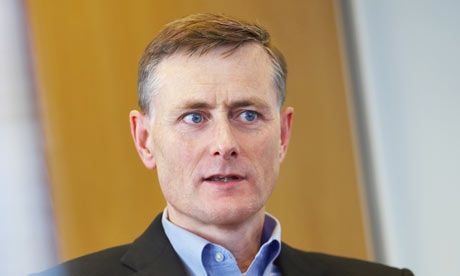
Executives at Britain's top companies saw their basic salaries leap 10% last year, despite the onset of the worst global recession in decades, in which their companies lost almost a third of their value amid a record decline in the FTSE.
The Guardian's annual survey of boardroom pay reveals that the full- and part-time directors of the FTSE 100, the premier league of British business, shared between them more than £1bn.
Bonus payouts were lower, but the basic salary hikes were more than three times the 3.1% average pay rise for ordinary workers in the private sector. The big rise in directors' basic pay – more than double the rate of inflation last year – came as many of their companies were imposing pay freezes on staff and starting huge redundancy programmes to slash costs.
The Guardian data also shows that a coterie of elite bosses at the helm of multinational corporations are seeing their overall pay packets soar ever higher. The 10 most highly paid executives earned a combined £170m last year – up from £140m in 2007. Five years ago, the top 10 banked some £70m.
The Liberal Democrat Treasury spokesman, Vince Cable, said: "The Guardian's analysis shows the breathtaking cynicism involved in a lot of executive pay deals, which are unrelated to either personal or corporate performance and involve people who are very well off helping themselves to larger salaries when private sector wages in many companies are being cut." >>> Julia Finch and Simon Bowers | Monday, September 14, 2009
June 10, 2009
THE NEW YORK TIMES: WASHINGTON—The Obama administration on Wednesday appointed a compensation overseer with broad discretion to set the pay for 175 top executives at seven of the nation’s largest companies, which have received hundreds of billions of dollars in federal assistance to survive.
The mandate given to the new compensation official, Kenneth R. Feinberg, a well-known Washington lawyer, reflects the federal government’s increasingly intrusive role in the corporate affairs of deeply troubled companies. From his nondescript office in Room 1310 of the Treasury building, Mr. Feinberg will set the salaries and bonuses of some of the top financiers and industrialists in America, including Kenneth D. Lewis, the chief executive of Bank of America; Vikram S. Pandit, the head of Citigroup, and Fritz Henderson, the chief executive of General Motors.
The compensation of executives at some companies receiving aid provoked a firestorm of political outrage earlier this year. In revising a previous proposal to set pay limits, the administration has decided to take an approach that will leave the success or failure of the effort to curtail high compensation at the assisted companies in the hands of Mr. Feinberg. (Mr. Feinberg himself will not receive any government compensation.) >>> By Stephen Labaton | Wednesday, June 10, 2009
Subscribe to:
Posts (Atom)