June 24, 2010

Australia’s First Woman Prime Minister Sworn In

Photobucket
Julia Gillard became Prime Minister of Australia after a leadership balllot at Parliament House in Canberra. Photograph: The Times

THE TIMES: Australia’s new Prime Minister has been sworn into office and immediately vowed to end division over a controversial mining tax, resurrect a carbon trade scheme and call an election within months.

The British-born Julia Gillard said that she was “truly honoured” to become the country’s first woman Prime Minister after a surprise coup among the Labor leadership resulted in Kevin Rudd, whose popularity was in terminal decline, stepping aside overnight.

Within hours of being elected leader of the Australian Labor Party after the shock caucus meeting in Canberra early this morning, Ms Gillard was sworn in as the country’s 27th Prime Minister and immediately set her agenda for the coming months.

“I asked my colleagues to make a leadership change because I believed that a good Government was losing its way,” Ms Gillard said of the tumultuous turn of events.

“I love this country and I was not going to sit idly by and watch an incoming Opposition cut health, cut education and smash rights at work.”

Ms Gillard promised to lead a “strong and responsible government that will take control of our future, improving and protecting the essential public services and basic rights our people depend on”. Read on and comment >>> Sophie Tedmanson, Sydney | Thursday, June 24, 2010

Rudd Quits To Give Australia First Woman PM

SKY NEWS: Kevin Rudd has stepped down as Australian prime minister, allowing his deputy Julia Gillard to become the country's first female leader. Sky's Ian Woods reports.


Related: Kevin Rudd Gets Dumped >>>
Kevin Rudd Dumped as Julia Gillard Becomes Australian Prime Minister

THE TELEGRAPH: Australia has its first female prime minister after Kevin Rudd stood down on Thursday, handing the leadership to his deputy Julia Gillard.


Mr Rudd was convinced to step aside after it became obvious during an emergency caucus meeting that he did not have the support of enough MPs to continue serving as prime minister.

The British-born Ms Gillard was reportedly backed by at least 75 of the Labour Party's 115 MPs, sending a clear and emphatic message to Mr Rudd that it was time to go.

The threat to Mr Rudd's leadership emerged on Wednesday night, after senior Labour powerbrokers told him that he had lost their support and Ms Gillard revealed that she would challenge him.

The prime minister was urged to step down, but a defiant Mr Rudd announced that he would go to a vote.

After a night of frantic phonecalls to gauge support, Mr Rudd decided not to stand against Ms Gillard, handing her the prime ministership unopposed. >>> Bonnie Malkin in Sydney | Thursday, June 24, 2010

Related article here
Greedy Bankers Make Sure You’ll Have to Slog Away Till You’re Seventy Plus (But Bankers Will Probably Be Exempted from the Work-longer Scheme)

THE TELEGRAPH: Millions of employees who are not saving for their retirement will be enrolled in company schemes under a radical shake-up of pensions which eventually could see most people working into their seventies.

In a landmark announcement intended to herald a new era of shorter but wealthier retirements, the Government will encourage people to work for longer by making it illegal for companies to force staff to give up work at 65.

At the same time, the age at which employees can claim the state pension will rise to 66 as soon as 2016 for men — 10 years earlier than the last government had decreed.

The Coalition is to consult on the most appropriate pace at which to increase the retirement age even higher in line with rising life expectancy.

The outcome is likely to be that, by the second half of the century, most people will work into their seventies.

In return, workers would receive more generous state pensions boosted by membership of company schemes, into which employees will be enrolled unless they opt out. Those reliant on state pensions will benefit from the restored link between pensions and earnings announced in this week’s Budget. Pensions shake-up could see most people working into their seventies >>> Andrew Porter and Rosa Prince | Wednesday, June 23, 2010

June 23, 2010

New York Hikes Cigarette Tax Again

Analysis: VAT and Cuts Spell Trouble for Clegg

THE TIMES: Ministers from both sides of the coalition were quick to talk up the Lib Dem Budget wins, including the £1,000 increase in the starting rate of income tax and the £150 one-off payment for poor families.

But the Lib Dems could be forgiven for a tinge of self loathing every time this is described as a “progressive” budget, as they weigh the concessions made to them against the package of horrors they must now defend.

The pictures of Nick Clegg standing in front of the anti-Tory “VAT bombshell” posters last night were gruesome enough. The Treasury graphs showing the increased burden felt by the poorest in society are even worse.

But the real challenge for the Deputy Prime Minister, and Danny Alexander, the hastily appointed Chief Secretary to the Treasury, is that a sizeable number of Lib Dems disagree with the single biggest decision underpinning yesterday’s statement - the scale and speed of the cuts.

George Osborne revealed yesterday he wants to extinguish the structural deficit and be in surplus by the end of the Parliament with a combination of £8billion tax rises, £32billion spending cuts and £11billion welfare cuts by 2014.

The Chancellor called this “unavoidable” action needed to calm the market. But Lib Dems - and some in the markets - dispute this. The markets worry the scale of the action make tip Britain back into recession. Lib Dems point out many other countries maintain their AAA rating without paying off “every last penny” of the structural debt - money which could go to help the most vulnerable in society. Read on and comment >>> Analysis, Sam Coates, Chief Political Correspondent | Wednesday, June 2010

June 22, 2010

Budget 2010: VAT Rise and Benefits Cuts to Tackle Britain's Deficit

THE TELEGRAPH: VAT will rise and benefits will be cut to wipe out Britain’s budget deficit within five years, George Osborne has announced.


The Chancellor used his emergency Budget to announce that VAT will rise from 17.5 per cent to 20 per cent from January 4.

He will also cut £11 billion a year from benefits and welfare payments.

High-earners will be hard hit by the measures. Anyone earning more than £49,700 a year will be almost £1,600 a year worse off, Treasury figures indicated.

The average earner will be £400 a year worse off.

Mr Osborne said the wide range of cuts and tax rises were needed to pay off the deficits Labour ran up.

“This is the unavoidable Budget,” he said.

“It is tough but it is fair. I am not going to hide hard choices from the British people.

He added: “Today, we take decisive action to deal with the debts we have inherited.”

He insisted that all income groups will share in the pain to come. “When we say we are all in this together, we mean it,” he said. >>> James Kirkup, Political Correspondent | Tuesday, June 22, 2010

Umfrage: Europäer sehen sich von wachsender Armut umgeben

WELT ONLINE: Viele EU-Bürger glauben, dass in ihrem jeweiligen Land die Armut zugenommen hat. Vor allem Griechen und Franzosen sehen ihre Heimat verarmen.

Photobucket
Armut in Deutschland: Ein Mann sucht in einem Abfalleimer in Köln nach Verwertbarem. Foto: Welt Online

Immer mehr Europäer glauben, in ihrem Land habe die Armut in den vergangenen zwölf Monaten zugenommen. Wie EU-Sozialkommissar Laszlo Andor in Brüssel unter Berufung auf eine neue Eurobarometer-Umfrage mitteilte, sind bei Griechen, Franzosen und Bulgaren sogar mehr als vier Fünftel der Befragten dieser Auffassung.

In Deutschland gaben 57 Prozent der Befragten an, die Armut habe zugenommen. Das sind etwas weniger als im EU-Schnitt von 60 Prozent. Andor sagte, Armut stelle in der EU ein großes Problem dar. Die gegenwärtige wirtschaftliche und finanzielle Lage verschärfe die Situation. >>> KNA/cn | Dienstag, 22. Juni 2010
Weißrussland stoppt Gastransit in den Westen

WELT ONLINE: Der Gasstreit eskaliert: Weißrussland will die für Westeuropa wichtigen Transitleitungen für russisches Gas abdrehen.

Photobucket
Weißrussland dreht die Gaspipeline in den Westen zu. Bild: Welt Online

Im Gasstreit mit Russland hat die weißrussische Regierung angeordnet, den Transit von Gas nach Europa zu stoppen. Der autoritäre weißrussische Präsident Alexander Lukaschenko habe die Sperrung der Pipelines verfügt, meldete die Agentur Interfax aus der weißrussischen Hauptstadt Minsk.

Der russische Staatskonzern Gazprom schulde Weißrussland 260 Millionen US-Dollar (rund 212 Millionen Euro) für das Durchleiten von Gas nach Westen, sagte Lukaschenko. Von der Blockade wäre besonders das EU-Mitglied Litauen betroffen, da das baltische Land zu 100 Prozent über diesen Weg versorgt wird. >>> dpa/AFP/dma | Dienstag, 22. Juni 2010
Emergency Budget 2010: Osborne Promises to Balance Books in Five Years

Photobucket
George Osborne holds Gladstone's original budget box as he leaves 11 Downing Street for Parliament today. Photo: The Independent

THE INDEPENDENT: A stern-faced Chancellor George Osborne delivered his "tough but fair" emergency Budget plans to Parliament, promising to balance Britain's books within five years.

In a statement issued after briefing Cabinet colleagues, Mr Osborne said the Budget aimed to protect children and pensioners and ensure the richest bear the largest share of the burden.

He then posed briefly on the steps of 11 Downing Street, flanked by his equally grim-faced Treasury team, before heading to the House of Commons to unveil his plans.

In his statement, Mr Osborne said: "My Budget is tough but it is fair. This is an unavoidable Budget because of the mess we have to clear up. So the coalition Government will take responsibility for balancing Britain's books within five years.

"We are going to do this fairly, protecting children and pensioners and ensuring the richest contribute the most. And it means getting enterprise going, because it is business, not Government, that will create the jobs of the future." >>> Press Association | Tuesday, June 22, 2010
Toshiba Launches Dual Touch-screen Laptop

THE TELEGRAPH: Toshiba's Libretto W100 multimedia internet device features two touch-screens.

Photobucket
Toshiba's new dual touch-screen laptop, the Libretto W100. Photo: The Telegraph

Toshiba has unveiled a new dual-screen, touch-screen mini laptop designed for surfing the internet, sending and receiving emails and keeping up to speed with social networking sites on the move.

The Libretto W100 runs Microsoft's Windows 7 operating system, and has two 7in, LED-backlit touch-screens. Toshiba says its compact size and clamshell form factor provides "unrivalled flexibility".

"One screen can be used for content creation, like Word documents or emails, while the other could be used to browse the web, social networks or multimedia programmes," said Toshiba, the company that invented the laptop 25 years ago. "Additionally, the device can also be used vertically thanks to an integrated accelerometer." >>> Claudine Beaumont, Technology editor | Monday, June 21, 2010
Coalition Warns of ‘Hardest’ Budget

Photobucket
George Osborne will try to distinguish his measures from anything that Labour could portray as a Thatcherite attack on the poor. Photo: The Times

THE TIMES: George Osborne will claim today that the harshest Budget for 30 years will squeeze the rich more than it hits the poor. The Chancellor will seek to sell his package of record spending cuts and tax rises as being stamped by fairness as he tries to win public support for a four-year austerity drive.

Nick Clegg moved to pre-empt any revolt by Liberal Democrats last night by insisting that his party’s values were at the heart of Mr Osborne’s assault on the deficit. “This is one of the hardest things we will ever have to do,” he wrote in an e-mail to party members, an acknowledgement that the pain to come will put the coalition under immense strain.

Mr Osborne’s Budget statement is a watershed moment, when households learn how much they will have to suffer to help to pay off the country’s debts. Read on and comment >>> Roland Watson, Political Editor | Tuesday, June 22, 2010

June 21, 2010


Smoking Bans and Economics Hit Famed Cuban Cigars

REUTERS: Production of finest tobacco leaf down 14 percent / Cigar production, export earnings off sharply / Industry draws on inventory

HAVANA - Global economic woes and the worldwide spread of smoking bans are taking their toll on Cuba's famous cigar industry, with the just-completed harvest of the country's finest tobacco down 14 percent over 2009, local media said on Monday.

In westernmost Pinar del Rio, home of Cuba's most famous tobacco, the harvest came in at 22.4 million leaves, down from 26 million in 2009, according to Guerrillero, the province's Communist party weekly.

The area's tobacco is used as wrapper leaf and part of the filling in Cuba's prized cigar brands, including Cohiba, Montecristo, Trinidad and Partagas.

"There was a reduction in planting due to limitations in resources caused by the economic crisis," the weekly said.

Cuba's premium cigars dominate the world market with 70 percent of sales. >>> Marc Frank; Editing: Jeff Franks and Will Dunham | Monday, June 21, 2010
Chinese Central Bank Set to Allow Yuan to Rise

Photobucket
A bank clerk stacks up renminbi banknotes. Photo: The Times

THE TIMES: China signalled on Saturday it was ready to allow its currency to resume its rise, ending a 23-month-long peg to the US dollar and stifling critics who claim the country’s exports have benefited from the state-engineered weakness of the renminbi.

In a carefully worded statement, deliberately issued on a weekend evening when global markets were closed, the People’s Bank of China indicated that it was ready to allow its currency to resume its natural rise.

It said: “The global economy is gradually recovering. The recovery and upturn of the Chinese economy has become more solid with enhanced economic stability.”

The typically opaque statement, released just days before the G20 summit in Canada, continued: “It is desirable to proceed further with reform of renminbi exchange rate regime and increase the renminbi exchange rate flexibility.”

Among the most remarkable aspects of the statement was its lack of detail. China is anxious to avoid being seen as bowing to pressure from the United States, especially as members of Congress have heightened their criticism of what they say is Beijing’s manipulation of its currency. >>> Jane Macartney, Beijing | Saturday, June 19, 2010

June 20, 2010

Spending Fiesta Is Over for Spain

THE SUNDAY TIMES: The country threatens Europe with a new debt crisis as its once vibrant economy falters, inflicting a painful human toll

Photobucket
Job losses has already provoked protests and is likely to worsen. Photo: The Sunday Times

Each day Joaquim Vizcaino, a 26-year-old Madrid University graduate, goes on the internet to look for a job. In the past six months he has had only one day’s work, as a driver, and he is getting desperate.

His girlfriend Letizia pays the £600-a-month rent on their two-room flat in the sprawling suburbs of Madrid and has supported him since he lost a job in marketing. Now she is beginning to lose patience.

“She keeps on telling me to go out and get a job,” he said with a grin as he drove her car to a doctor’s surgery on Friday for blood tests to find out why he has been losing weight. It might be stress: “I can’t even get a job as a waiter.”

Spain’s 20% unemployment — it is double that among the 16 to 25-year-olds — is surpassed in Europe only by Lithuania’s and is inflicting a painful human toll on what was once called the “Iberian tiger”, one of the most vibrant and dynamic countries of the European Union.

“For many years we lived extremely well,” said Ramon Tamames, a distinguished professor of economics at Madrid University, referring to a decade of extraordinary growth fuelled by low-cost loans from Europe.

“They were some of the best years in Spain’s history,” he added. “Now the party is over.” Read on and comment >>> Matthew Campbell | Sunday, June 20, 2010

Related / Lien en relation avec l’article ici

June 19, 2010

Reichste Frau Europas will ihre Tochter klagen

KRONEN ZEITUNG: Die 87 Jahre alte L'Oréal-Hauptaktionärin Liliane Bettencourt geht im Familienstreit um ihre angebliche Unzurechnungs-fähigkeit in die Offensive. Die reichste Frau Europas will nun ihre einzige Tochter Françoise klagen. Diese soll hinter einer illegalen Abhöraktion gegen ihre Mutter stecken.

Françoise Bettencourt-Meyers wirft ihrer Mutter hingegen vor, nicht ganz bei Sinnen zu sein und mit Geld um sich zu werfen. Allein der mit ihr befreundete Fotograf François-Marie Banier erhielt Geschenke im Wert von 993 Millionen Euro.

Vor einigen Tagen war bekannt geworden, dass ein Hausangestellter über Monate hinweg mit einem Diktiergerät die Privatgespräche der alten Dame belauscht hat. Die Aufzeichnungen ließ er der Tochter zukommen. Diese will sie als Beweis für die Unzurechnungsfähigkeit ihrer Mutter verwenden. >>> | Samstag, 19. Juni 2010

Verbunden mit diesem Artikel / Liens en relation avec l’article / Related articles hier/ici/here
Germany and France Examine 'Two-tier' Euro

THE TELEGRAPH: Germany and France are examining ways of creating a "two-tier" euro system to separate stronger northern European countries from weaker southern states.

A European official has told The Daily Telegraph the dramatic option was being examined at cabinet level.

Senior politicians believe their economies need to be better protected as they could not cope with another crisis on a par [with] the one in Greece.

The creation of a "super-euro" zone would initially include France, Germany, Holland, Austria, Denmark and Finland.

The likes of Greece, Spain, Italy, Portugal and even Ireland would be left in a larger rump mostly Mediterranean grouping.

The official said French and German officials had first spent months examining how to exclude poor-performing states from the euro but decided it was not feasible.

A two-tier monetary system in the 16-member euro zone is being examined as a "plan B".

"The philosophy is the stronger countries might need to move away from countries they can't afford to bail-out," said the official. "As a way of containing the damage, they may have to do something dramatic, though obviously in the short term implementation is difficult.

"It's an act of desperation. They are not talking about ideal solutions but the lesser of evils. Helping Greece could be done relatively cheaply but Spain they can't afford to let fail or bail-out.

"And putting more pressure on the people of France and Germany to save other countries is politically unfeasible." >>> Alex Spillius in Washington and Bruno Waterfield in Brussels | Saturday, June 19, 2010
'Reckless' BP Blamed by Partner for Oil Spill

THE TELEGRAPH: Oil giant BP came under further pressure on Saturday after one of its partners said the company's "gross negligence or wilful misconduct" were to blame for the disastrous oil spill in the Gulf of Mexico.

Anadarko Petroleum, which owns a quarter of the ruptured Deepwater Horizon well, has refused to accept any blame for the explosion that killed 11 workers and sparked America's worst environmental disaster.

The company's chairman and chief executive Jim Hackett insisted in a statement that BP should foot the entire bill for the environmental and economic damage caused by the blow out.

Mr Hackett said: "Frankly, we are shocked. BP's behaviour and actions likely represent gross negligence or wilful misconduct."

He said that "mounting evidence clearly demonstrates" that the disaster that led to the explosion and sinking of a drilling rig and the deaths of 11 workers "was preventable and the direct result of BP's reckless decisions and actions." >>> Patrick Sawer | Saturday, June 19, 2010

June 18, 2010

Strauss-Kahn "très confiant" pour l'économie de l'Espagne à moyen terme

Photobucket
Dominique Strauss-Kahn et le premier ministre espagnol José Luis Rodriguez Zapatero lors d'une conférence de presse, vendredi 18 juin. Photo : Le Monde

LE MONDE: Le directeur général du Fonds monétaire international (FMI) Dominique Strauss-Kahn s'est déclaré vendredi "très confiant" dans les perspectives de l'économie espagnole à "moyen-long terme", après un entretien à Madrid avec José Luis Rodriguez Zapatero.

Dominique Strauss-Kahn a estimé que l'Espagne se redresserait "à condition que les efforts qui doivent être faits soient faits". "Ce que je vois aujourd'hui, c'est que ces efforts sont en cours", a-t-il ajouté à propos des mesures de réduction des déficits publics et réformes structurelles annoncées par le gouvernement espagnol. >>> LeMonde.fr | Vendredi 18 Juin 2010
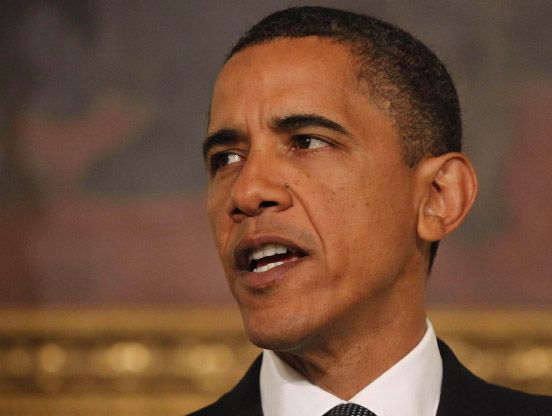
G-20-Länder: Obama warnt vor zu raschem Sparkurs

FRANKFURTER ALLGEMEINE ZEITUNG: Post vom amerikanischen Präsidenten: Barack Obama hat in einem Brief die Regierungschefs anderen großen Industrienationen vor übertriebenen Sparmaßnahmen gewarnt. Die Kürzung öffentlicher Ausgaben könne die Erholung der Weltwirtschaft erheblich gefährden. Deutsche Ökonomen reagierten skeptisch auf die Vorwürfe.

Der amerikanische Präsident Barack Obama hat die großen Industrie- und Schwellenländer davor gewarnt, die Erholung der Weltwirtschaft durch übereilte Sparmaßnahmen zu gefährden. Mittelfristig müssten die Schuldenquoten stabilisiert werden. Man dürfe jedoch nicht „die Fehler der Vergangenheit wiederholen, als der Konjunkturstimulus zu früh zurückgezogen wurde, was neue wirtschaftliche Not und Rezession zur Folge hatte“, schrieb Obama in einem Brief an die Staats- und Regierungschefs der zwanzig wichtigsten Volkswirtschaften (G 20).

Damit deuten sich gut eine Woche vor dem G-20-Gipfeltreffen im kanadischen Toronto transatlantische Differenzen über die Fiskalpolitik an. In Europa hat Deutschland als erstes großes Land ein Sparpaket vorgelegt, das den Abbau der Defizite um 80 Milliarden Euro in den kommenden vier Jahren vorsieht. >>> Von Philip Plickert | Freitag, 18. Juni 2010
Electric Car's Role in America's Energy Future