April 19, 2010

Goldman Sachs: The Bank that Thought It Ruled the World

THE TELEGRAPH: Goldman Sachs was ‘doing God's work' - but it is now being investigated for fraud. Harry Wilson reports.

'Long-term greedy” was the phrase that Sidney Weinberg, Goldman Sachs’s legendary managing partner from the 1930s to the 1960s, used to describe the American investment bank’s overarching strategy. Such a pious mission statement from a corporate titan would make a modern audience balk. However the phrase neatly encapsulates the way that Goldman Sachs has operated over the past 80 years, a period in which it has risen from being a little-known, slightly scrubby broker to the world’s most profitable, powerful and controversial financial institution.

When Lloyd Blankfein, Goldman Sachs’s current chairman and chief executive, was caught saying last year that the bank was doing “God’s work”, the contrast between Goldman Sachs’s own view of its business and what the rest of the world thought of it was vividly demonstrated.

His comments came just weeks after the firm was memorably described in an article in Rolling Stone magazine as a “vampire squid wrapped around the face of humanity relentlessly jamming its blood funnel into anything that smells like money”. Doing God’s work is the last thing most think Goldman Sachs is up to. >>> | Monday, April 19, 2010
Must Germany Bail Out Portugal Too?

THE SUNDAY TELEGRAPH: Portugal, not Greece, poses the greater existential threat to Europe's monetary union.

Photobucket
The historic part of Lisbon, the Portugeuse capital, recreated after an earthquake devastated the City in 1755. Photograph: The Telegraph

The long-drawn saga in Athens can perhaps be deemed a case apart. Greece lied. Its budget deficit was egregious at 16pc of GDP last year on a cash basis. It wasted its EMU windfall, the final chance to bring public debt back from the brink of a compound spiral.

You cannot blame the euro for this, although EMU undoubtedly created a risk-free illusion that lured both Athens and creditors deeper into the trap – and now prevents a solution. Nor would an orderly default under IMF guidance along Uruguayan lines necessarily imperil Europe's banks. The Bundesbank hints that letting Greece go would prove a healthier outcome for EMU in the long run, upholding discipline.

However, Portugal did not cheat (much) and did not start as an arch-debtor. It did mishandle the run-up to EMU in the 1990s, failing to offset a fall in interest rates from 16pc to 3pc with fiscal tightening. Boom-bust ensued. But that was a long time ago. Portugal has since settled down to a decade of sobriety. The reward never came.

Brussels admitted last week that Portugal's external accounts have switched from credit in the mid-1990s to a deficit of 109pc of GDP. This has been caused by the incentive structures of EMU itself. "The more broadened access to credit induced a significant reduction in the saving rate, while consumption kept growing faster than GDP. This development led to an increase in Portuguese indebtedness," it said.

The IMF's January report said "The large fiscal and external imbalances that arose from the boom in the run-up to adoption of the euro have not been unwound, resulting in the economy becoming heavily indebted and growing banking system vulnerabilities. The longer the imbalance persists, the greater the risk the adjustment will be sudden and disruptive." The IMF noted the "heavy reliance" of banks on foreign wholesale funding, equal to 40pc of total assets. >>> Ambrose Evans-Pritchard | Sunday, April 18, 2010

April 17, 2010

Volcanic Ash Cloud Leaves Shops Facing Shortages of Fruit, Vegetables and Medicine

THE TELEGRAPH: UK retailers face significant disruption to their supply chains due to a ban on air freight following the volcanic ash crisis.

Store groups face potential shortages of medicine, cut flowers and exotic fruit and vegetables due to the closure of British airspace, that was expected to have ended in England and Wales by 7am on Saturday.

Clothing retailers also face a backlog as their stock sits in holding pens around the world waiting to be flown from manufacturing hubs to the UK.

The ban on air freight has meant that fruits such as figs, papaya and coconuts, fresh flowers and pharmaceutical products – all of which are delivered by air – are not reaching their destinations in the UK. Air freight accounts for 25pc of the UK's international goods movements by value.

The Freight Transport Association (FTA) said yesterday that it fears the cost to business – and consumers – will escalate as the volcanic cloud casts its shadow further. >>> James Hall Retail Editor | Friday, April 16, 2010

April 16, 2010

SEC Charges Goldman Sachs with Fraud in Subprime Mortgage Meltdown

LOS ANGELES TIMES: The civil charges relate to Goldman Sachs' creation of collateralized debt obligations -- a complex, mortgage-backed security. 'The product was new and complex but the deception and conflicts are old and simple,' a Securities and Exchange Commission official says in a statement.

Reporting from New York
Goldman Sachs is being charged with fraud by federal regulators for its work in creating subprime mortgage bonds before the financial crisis.

The Securities and Exchange Commission announced on Friday morning that it was bringing civil charges against Goldman and one of the bank's vice presidents in Manhattan federal court. >>> Nathaniel Popper | Friday, April 16, 2010

THE GUARDIAN: Goldman Sachs charged with $1bn fraud over toxic sub-prime securities: Securities and exchange commission charges Goldman Sachs with conflict of interest in sub-prime mortgage asset sales >>> Andrew Clark | Friday, April 16, 2010

THE TELEGRAPH: Dow hit by Goldman fraud charges: The Dow Jones ended a six-day rally on Friday, hit by civil fraud charges against Goldman Sachs and investor disappointed over trading at Google. >>> AP | Friday, April 16, 2010
Morgan Stanley Fears German Exit from EMU

THE TELEGRAPH: Morgan Stanley has warned that the Greek debt crisis is setting off a chain of events that may prompt German withdrawal from the eurozone, with grim implications for investors caught off-guard.

"The backstop package for Greece and the ECB's climb-down on its collateral rules set a bad precedent for other euro area states and make it more likely that the euro area degenerates into a zone of fiscal profligacy, currency weakness, and higher inflationary pressures over time," said Joachim Fels, head of research, in a note to clients.

The US bank said a bail-out for Greece may be necessary to avoid a crisis for Europe's financial system, but warned that it also "sows the seeds for potentially even bigger problems further down the road".

Mr Fels said weak states cannot easily leave EMU because they would pay a stiff penalty in higher rates, would be stuck with euro debt contracts, and might need controls to stem capital flight. It is a different calculus for Germany, which would see lower rates and might view EMU exit as the only way to ensure monetary stability. >>> Ambrose Evans-Pritchard | Thursday, April 15, 2010
Tragic Flaw: Graft Feeds Greek Crisis

THE WALL STREET JOURNAL: ATHENS—Behind the budget crisis roiling Greece lies a riddle: Why does the state spend so lavishly but collect taxes so poorly? Many Greeks say the answer needs only two words: fakelaki and rousfeti.

Fakelaki is the Greek for "little envelopes," the bribes that affect everyone from hospital patients to fishmongers. Rousfeti means expensive political favors, which pervade everything from hiring teachers to property deals with Greek Orthodox monks. Together, these traditions of corruption and cronyism have produced a state that is both bloated and malnourished, and a crisis of confidence that is shaking all of Europe.

A study to be published in coming weeks by the Washington-based Brookings Institution finds that bribery, patronage and other public corruption are major contributors to the country's ballooning debt, depriving the Greek state each year of the equivalent of at least 8% of its gross domestic product, or more than €20 billion (about $27 billion).

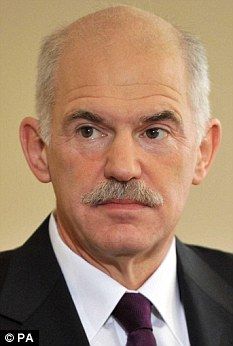
"Our basic problem is systemic corruption," Greece's Prime Minister George Papandreou said after he took office late last year, vowing to change a mentality that views the republic as a resource to plunder. He later berated the chief of public prosecutions, saying Greeks believe "there is impunity in this country." The chief prosecutor said that wasn't so.

Greece moved closer to a bailout Thursday, requesting aid talks with the International Monetary Fund and the European Union. Many investors and economists say aid would buy Greece time, but wouldn't solve its underlying problems. >>> Marcus Walker | Thursday, April 15, 2010
AM Report: Volcano Hits Friendly Skies

April 15, 2010

Barack and Michelle Obama Double Income in 2009 to $5.5m

THE TELEGRAPH: President Barack Obama and his wife Michelle earned $5.5 million (£3.5 million) in 2009, more than twice their income in 2008, despite the economic recession.

Photobucket
According to the White House, the increase in earnings was due to the sales of Mr Obama's books. Photograph: The Telegraph

Mr Obama has managed to develop a political career far more lucrative than those of his predecessors.

After the first year of his first term, President George W. Bush earned $894,800 and in his last year $936,111.

In his final year in office, President Bill Clinton netted just $417,467.
The Obamas' tax return, released by the White House on Thursday - the day all Americans have to file their tax returns - showed that the Obamas earned $5.5 million last year and paid nearly $1.8 million (£1.16 million) in federal income tax.

In 2008, the Obamas made just under $2.5 million. The White House said that the increase was due to increased sales of Mr Obama's books. >>> Toby Harnden in Washington | Thursday, April 15, 2010
The Right-Wing Revolutionaries: Tea Party Movement Mirrors a Deeply Divided America
Photobucket
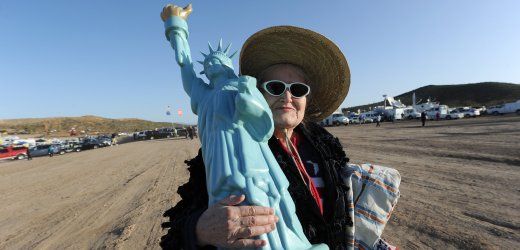
Photograph: Spiegel Online International

SPIEGEL ONLINE INTERNATIONAL: US President Barack Obama came to power promising to unite the nation. Now he has divided it even more than his predecessor George W. Bush. The burgeoning conservative Tea Party movement is calling for Obama to be removed from office.

The auditorium in Tulsa, Oklahoma is silent for a moment, as the Walkers, a happy couple in their mid-50s, walk onto the stage. They manage an electronics store in the area, and they say that after being married for decades, they still love each other just as much as they did on the first day. They are here to demonstrate that love to the audience -- with a passionate kiss.

It's meant to be an homage to the old, forgotten America, the land of high-school sweethearts and beauty queens, where honesty, decency and loyalty still meant something. A land where the promise of the American dream -- that anyone could make it to the top -- still reigned supreme. There are 5,000 people -- ordinary people -- in the audience, including Democrats, Republicans and independents.

The Walkers are seated on two folding chairs, placed a respectable distance apart -- the old America was a chaste place, after all. They kiss a few times to the sound of country music. Then, suddenly, it gets very loud in the room.

Radio and TV talk-show host Glenn Beck is standing on the stage. He has just arrived from the Doom Room, which is what he calls the studio where he records his broadcasts. From there, he spreads a message of fear and dread of a new America, a place that no longer has anything in common with the land that the Walkers know and love. It is a country of poverty, deprivation and an omnipotent government, a cross between the Soviet Union and Hitler's Nazi Germany.

'I'm a Guy Just Like You'

People believe what Beck says. Beck is their hero, savior and guru. He has made millions by capitalizing on people's fears of the future. "Tulsa," he shouts into the cheering, grateful crowd, "I'm a guy just like you."

He now has two shows, a weekly radio show that airs on more than 300 stations nationwide, and a television show on Fox News, "Glenn Beck," which has 3 million viewers. He weeps, raves and yells on these shows. Every day, he warns his listeners and viewers that America has moved yet another step along the road to becoming a socialist dictatorship. His enemies are the "progressives," or the American left, who see Europe as their role model, says Beck.

The Europe he means is currently celebrating the reinvigorated US president, who achieved two historic victories in the space of a few days. After the controversial healthcare reform bill, which President Barack Obama recently managed to push through Congress, he signed a treaty to reduce strategic nuclear weapons in Prague last Thursday, a successor to the Strategic Arms Reduction Treaty (START) signed in 1991. It was a step that its signatories pledged would make the world a safer place.

It is a double triumph for Obama, in both domestic and foreign policy, and yet he has met with more hostility in his own country than almost any other president in history. According to a Gallup poll conducted in late March, Obama's Democrats have dropped to their lowest approval rating in almost two decades. Some 60 percent of Americans believe that America is on the wrong path and is headed for decline. What unites the world is dividing the country. America's Choice >>> Marc Hujer and Thomas Schulz | Wednesday, April 14, 2010
Rescue Plan for Greek Economy Is Thrown Into Doubt Amid Claims It Breaches the Maastricht Treaty

MAIL ONLINE: The Greek rescue operation was thrown into doubt yesterday after a German academic said he was planning to launch a court challenge.

Joachim Starbatty, a leading economist and professor at Tuebingen University, said that Athens’s aid package breached the European Union’s Maastricht Treaty.

The move came amid renewed market jitters over whether Greece will actually receive the planned £40billion bailout.

A leading member of the European Central Bank added to nerves by warning that soaring government debt in the region could have ‘severe consequences’ for the stability of the euro. >>> Sam Fleming | Thursday, April 15, 2010
Chinese Economic Growth Surges Again

Photobucket
Shanghai, China. The country's economic growth is set to outstrip that of Japan. Photograph: The Guardian

THE GUARDIAN: China's economic growth surged to 11.9% in the first quarter, possibly giving Beijing room to allow its currency to rise, but analysts warned it faces growing pressure to cut back on stimulus policies and keep the world's third-largest economy from overheating.

The strong performance might allow a loosening of politically volatile currency controls by offsetting possible losses in export industries. Analysts expect Beijing to allow the yuan to rise some time this year, though President Hu Jintao and others have rejected US and other foreign pressure for a change, saying China will move at its own pace.

Inflation stayed low at 2.2%, below the government's target of 3% for the year, easing pressure for immediate interest rate hikes or other steps to cool the boom. But analysts said Beijing needs to act soon to head off mounting pressure for prices to rise.

"The tightrope is between pulling away stimulus which is still supporting the economy and tightening quickly enough to keep prices from getting out of control," said Tom Orlick, an analyst in Beijing for Stone & McCarthy Research Associates.

The latest data showed China is on the verge of overtaking Japan as the second-largest economy behind the United States. China's gross domestic product last year was $4.9tn (£3.2tn), just behind Japan's $5.1tn. Tokyo has yet to report first-quarter figures. >>> Agencies | Thursday, April 15, 2010

China Sells Petrol to Iran While Talking at UN about Sanctions

THE GUARDIAN: China argues the issue of Iran's uranium enrichment is not as urgent as Washington claims, and that there is still time for diplomacy

China has deepened economic ties with Iran, boosting direct sales of petrol to the Islamic republic as the Chinese government negotiates new sanctions at the UN security council, it has emerged.

Iran announced today at the UN discussions in New York that it has produced five kilograms of 20% enriched uranium, defying security council demands to stop enrichment. Iran says it needs the enriched uranium to make medically useful isotopes, but western governments fear the achievement will enable Tehran to develop the capacity to make weapons-grade fuel.

General James Cartwright, the vice chairman of the US joint chiefs of staff, said yesterday that Iran could build a bomb in a year, although it would probably take three to five years.

China has argued that the issue is not as urgent as Washington claims, and that there is still time for diplomacy.

A Chinese state oil company has sent two recent shipments of petrol to Iran, according to Reuters news agency. The sale by Chinaoil was the first by a Chinese company since January 2009 of refined oil products to Iran directly, rather than through intermediaries. Another Chinese company, Sinopec, is about to sell petrol to Iran for the first time in six years, filling a gap left by European and Russian firms that left the Iranian market amid fears of punitive action by Washington.

Iran-China trade has more than doubled to about $30 billion (£19.38m) over the past decade, fuelling Chinese reluctance to agree to sanctions against Tehran over its nuclear programme. >>> Julian Borger, diplomatic editor | Wednesday, April 14, 2010
Coca Colla: The New 'Real Thing' in Bolivia

THE GUARDIAN: Bolivian president approves Coca-based dark soft drink / Coca-Cola company yet to comment on red-labelled beverage

Photobucket
Coca Colla being distributed in La Paz this week. The drink is named after the Bolivian Colla people. Photograph: The Guardian

A certain US soft drinks giant may disagree, but Bolivia has come up with a fizzy beverage it says is the real thing: Coca Colla.

The drink, made from the coca leaf and named after the indigenous Colla people from Bolivia's highlands, went on sale this week across the South American country.

It is black, sweet and comes in a bottle with a red label – but similarities to Coca-Cola end there. One is a symbol of US-led globalisation and corporate might; the other could be considered a socialist-tinged affront to western imperialism.

The first batch of 12,000 bottles, priced about $1.50 (96p) for half a litre, were distributed in the capital, La Paz, as well as Santa Cruz and Cochabamba.

The familiar-sounding name and packaging may rile the Atlanta-based soft drinks manufacturer, but Coca Colla could also cause groans in Washington.

It is made from the coca leaf, a mild stimulant that wards off fatigue and hunger, and has been used in the Andes for thousands of years in cooking, medicine and religious rites.

Coca is also the raw ingredient of cocaine, the powerful narcotic that is the primary target of the US-led "war on drugs".

Bolivia tried to wipe out the leaf at Washington's behest. But that was before Evo Morales, an Aymara Indian and coca grower, was elected president, championing coca as a crop with legitimate uses. >>> Rory Carroll | Wednesday, April 14, 2010

April 14, 2010

Grèce : Nouvelle série de grèves contre la rigueur et l'austérité

Photobucket
La Grèce est confrontée à une quatrième vague de grèves depuis le début de l'année, en réaction aux mesures draconiennes prises par le gouvernement pour réduire le déficit. Photo : Le Point

LE POINT: Une nouvelle série de grèves et d'arrêts de travail a débuté mercredi en Grèce avec des mouvements de chauffeurs de taxi et d'avocats contre un projet de réforme fiscale qui doit être voté jeudi par le parlement. "Notre revendication reste la même : la non-inclusion de notre secteur dans la logique du projet fiscal", souligne un communiqué de la Fédération nationale des taxis et voitures de location (POE.IATA, 30.000 adhérents) qui a déjà organisé deux grèves, en février et mars, pour les mêmes raisons.

Les grévistes de la région d'Athènes, qui regroupent quelque 15.000 taxis, devaient manifester en début d'après-midi dans le centre de la capitale. Les avocats ont eux aussi lancé une grève de trois jours, la deuxième en un mois, contre la loi qui réforme l'imposition des professions libérales. Les vendeurs des marchés populaires ont de leur côté observé une grève de 24 heures pour protester contre l'obligation d'utiliser des caisses enregistreuses prévue par le gouvernement. >>> AFP | Mercredi 14 Avril 2010
Political Risk Looms for Merkel: Greece Aid Promise Spurs Grumbling Ahead of Key State Vote for Ruling Coalition

Photobucket
Jürgen Rüttgers, conservative premier of North Rhine-Westphalia, campaigns ahead of a vote that will test Germany's ruling center-right alliance. Photograph: The Wall Street Journal

THE WALL STREET JOURNAL: BERLIN—Europe's ever-louder promises of help for Greece may have calmed financial markets for now, but they pose a problem for German Chancellor Angela Merkel, who faces growing criticism at home as her resistance to a Greek bailout softens.

Ms. Merkel's center-right coalition will be tested in crucial regional elections on May 9 that could wipe out its thin majority in Germany's upper house of parliament, making it harder for the government to pass its major economic policies into law.

Loaning taxpayer money to Greece at a time when German authorities are strapped for cash to maintain schools and roads at home could potentially add to broader voter dissatisfaction with the performance of the ruling coalition, political analysts say.

So far the election campaign in North Rhine-Westphalia, Germany's most populous state, has centered on domestic issues including jobs, education and the appeal and flaws of local candidates. Opinion pollsters say Greece isn't playing a major role. But the center-right, which is lagging in polls, can't afford extra controversy, analysts say.

"If Greece is bailed out shortly before the election, it could lead to an awkward debate for Merkel, with voters questioning why there's money for Greece but not for them," says Gero Neugebauer, a political scientist at Berlin's Free University.

Ms. Merkel's conservative Christian Democrats and their junior coalition partners, the pro-business Free Democrats, who hold a governing majority in North Rhine-Westphalia, are lagging in opinion polls, which show them with about 45% of the vote. >>> Markus Walker | Wednesday, April 14, 2010
Starbucks CEO on China as Market

Luxury Cars Face Fuel-Economy Challenges

«Zehntausende pro Jahr, und nicht Hunderttausende» : Tories wollen Einwanderung in Grossbritannien einschränken

NZZ ONLINE: Die britischen Tories haben im Wahlprogramm ihren europaskeptischen Kurs festgeschrieben. Die Partei verspricht in ihrem Manifest, dass es unter einer konservativen Regierung über alle EU-Angelegenheiten ein Referendum geben werde.

«Wir werden nicht zulassen, dass Grossbritannien in ein föderalistisches Europa schlittert», heisst es in dem Programm, das Parteichef David Cameron am Dienstag in London vorstellte.

Darin versprachen die Tories zudem, die jährliche Zahl der Einwanderer aus Nicht-EU-Ländern zu begrenzen. Die Zahl solle auf das Niveau der 90er Jahre gedrückt werden - «Zehntausende pro Jahr, und nicht Hunderttausende».

Die traditionell euroskeptischen Tories versicherten auch, dass Grossbritannien unter einer Tory-Regierung niemals den Euro einführen würde. Zudem wollen sie die Bürger generell mehr an der Regierung beteiligen. >>> sda/dpa | Dienstag, 13. April 2010

David Cameron s'engage à «rendre le pouvoir au peuple»

Photobucket
David Cameron, lors de la présentation du programme officiel de son partipour les élections législatives,mardi à Londres. Photo : Le Figaro

LE FIGARO: Le chef des conservateurs britanniques veut s'attaquer aux déficits et limiter le rôle de l'État.

De correspondant du Figaro à Londres

Pas d'annonces surprises ni de grandes promesses coûteuses. David Cameron a quelque peu rompu avec la tradition des grands discours électoraux lors de sa présentation du programme conservateur mardi à Londres. Après avoir longuement laissé la parole à ses principaux futurs ministres, le chef des tories a précisé sa vision du gouvernement s'il réussissait à obtenir une majorité des députés à la Chambres des communes lors des législatives, dans trois semaines.

Promettant de rendre «le pouvoir au peuple», le jeune leader des conservateurs a présenté le manifeste de son parti, un épais livre de 130 pages intitulé: «Invitation à rejoindre le gouvernement de Grande-Bretagne.» «Les projets contenus dans ce manifeste vont changer la Grande-Bretagne pour le meilleur, mais seulement avec votre implication», a-t-il dit. >>> Par Cyrille Vanlerberghe | Mercredi 14 Avril 2010
Soros: Griechenland droht „Todesspirale"

DIE PRESSE: Der Investor George Soros ist der Meinung, dass die Zinsen, die Griechenland für das Rettungspaket der EU zahlen muss, zu hoch sind. Er sieht die Gefahr einer Schuldenspirale nicht gebannt.

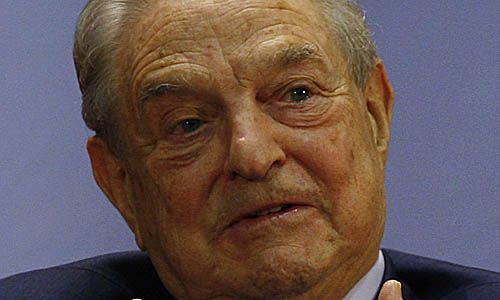
Der bekannte Investor George Soros sieht für Griechenland die Gefahr einer Todesspirale. Die Zinsen, die Europa für das 30-Milliarden-Euro-Hilfspaket für die Griechen vorsieht, seien zu hoch. Griechenland muss für Kredite mit drei Jahren Laufzeit fünf Prozent Zinsen zahlen. >>> APA | Mittwoch, 14. April 2010
Pröll warnt vor "griechischem Szenario" für Österreich

DIE PRESSE: Ohne massive Budgetmaßnahmen würde Österreich in drei Jahren selbst vor einem "griechischen Szenario" stehen, warnt Finanzminister Pröll. Alle Gesellschaftsschichten werden die "monetären Lasten zu schultern haben".

VP-Finanzminster Josef Pröll warnt davor, dass Österreich ohne massive einnahmen- und ausgabenseitige Budgetmaßnahmen in drei Jahren selbst vor einem "griechischen Szenario" stehen würde. Um das zu verhindern, werde er als Finanzminister mit aller Kraft daran arbeiten, dass im Herbst das Budget gelingt, so Pröll am Dienstagabend bei einer Diskussionsveranstaltung anlässlich der 5. Ökologiegespräche der Raiffeisen Leasing GmbH in Wien. Alle werden betroffen sein >>> APA | Mittwoch, 14. April 2010

April 13, 2010

The Americans Have Lost Their Way

Photobucket
Rep. Paul Ryan, shown here in March, has proposed reductions in future Medicare and Social Security benefits for people under 55, a politically difficult idea. Photo: USA Today

USA TODAY: WASHINGTON — Erskine Bowles realized how tough his task will be leading President Obama's war on the federal budget deficit when he told his 90-year-old mother of his appointment.

She was proud of him. Then she said, "Don't mess with my Medicare."

It won't be the last threat Bowles gets this year as he directs an 18-member, bipartisan commission through an ocean of red ink that has never been deeper or more foreboding.

Under Obama's budget plan, the USA's debt in 2020 would be nearly the size of the entire economy then. Interest costs would be $900 billion, five times today's level.

The White House, Congress, budget experts and typical Americans are growing anxious about the nation's mounting debt, which is helping to fuel the rise of the anti-tax, anti-big government Tea Party movement.

Yet the only solutions capable of raising enough money are politically dangerous for the president and Congress: tax increases and major reductions in Medicare, Medicaid and Social Security.

Neither Democrats nor Republicans want to take the first step.

The debt hasn't stopped conservatives from saying tax increases should be off the table when the panel debates how to close Washington's budget gap — an estimated $1.5 trillion this year alone, equal to the entire federal budget in 1995. Nor has it stopped liberals from saying Medicare, Social Security and other entitlements must be protected.

Bowles, outgoing president of the University of North Carolina and a White House chief of staff under Bill Clinton, says neither taxes nor benefits can be off-limits.

"We can't do this without a lot of pain," he says. Nation's soaring deficit calls for painful choices >>> Richard Wolf, USA Today | Tuesday, April 13, 2010