Showing posts with label Euro crisis. Show all posts
Showing posts with label Euro crisis. Show all posts
October 03, 2012

SPIEGEL ONLINE INTERNATIONAL: The finance industry is to blame for the growing divide between the rich and poor in the United States, says Nobel Prize-winning economics professor Joseph Stiglitz. In an interview with SPIEGEL, he accuses the industry of preying on the poor and buying government policies that help them get richer.
At Columbia University, which is located just blocks from Harlem in Manhattan's West Side, wealth and poverty are closer together than they are in many places in New York City. This is where American economist and 2001 Nobel Prize winner Joseph Stiglitz works as a professor. The Gary, Indiana native has spent years examining social inequality. His first personal experience with the issue came when, as a young boy, he asked why his nanny wasn't caring for her own children. Later, as the World Bank's chief economist, he studied the phenomenon on a global level. In June, he published a book on the topic entitled "The Price of Inequality: How Today's Divided Society Endangers Our Future," which has just been released in German as well. In a SPIEGEL interview, Stiglitz discusses how wealth disparity is dividing America and how Europe can best overcome the euro crisis. » | Interview conducted by Alexander Jung and Thomas Schulz | Tuesday, October 02, 2012
July 20, 2012

THE DAILY TELEGRAPH: The misery caused by Italy's financial crisis could spark a "civil war" in the southern island of Sicily, the mayor of regional capital Palermo said on Friday.
"Because of an explosive mix of despair felt by many families and the stranglehold of organised crime, a civil war could even break out," mayor Leoluca Orlando told the economic daily Wirtschaftsblatt.
"Sicily is the Greece of Italy," said Orlando, a member of the anti-corruption Italy of Values party and a staunch anti-Mafia champion.
"We've managed to stay afloat only because we're a part of Italy," he added.
"Many businesses are shutting, families on low incomes can no longer pay their electricity bills," said Orlando, who has been mayor since May. » | Source: AFP | Friday, July 20, 2012
THE DAILY TELEGRAPH: Monti plans 'Greek-style' takeover of Sicily to avert default: Italian premier Mario Monti is mulling emergency action to take direct control of Sicily’s regional government before the island spirals into a full-blown financial crisis, fearing contagion to the rest of Italy. » | Ambrose Evans-Pritchard | Wednesday, July 18, 2012
Verbunden »
November 07, 2011
September 17, 2011
June 23, 2011
The Greek debt crisis has far reaching consequences and it's not just the cities and the commercial centres, but far off islands are also feeling the pinch.
Greek Island of Aegina, famous for its pistachio farming, is struggling as production continues to dwindle.
Members of co-operatives have come down from 600 to 230, and this year sales are down so payouts are much lower.
Amid the hardship, a German suggestion to sell off Greek islands to pay off the debts has angered the residents and farmers in this picturesque island.
Al Jazeera's Tim Friend reports from Aegina.
June 21, 2011

In the past 14 months, politicians in the euro-zone nations have adopted one bailout package after the next, convening for hectic summit meetings, wrangling over lazy compromises and building up risks of gigantic dimensions.
For just as long, they have been avoiding an important conclusion, namely that things cannot continue this way. The old euro no longer exists in its intended form, and the European Monetary Union isn't working. We need a Plan B.
Instead, those in responsible positions are getting bogged down in crisis management, as they seek to placate the public and sugarcoat the problems. They say that there is only a government debt crisis in a few euro countries but no euro crisis, citing as evidence the fact that the value of the European common currency has remained relatively stable against other currencies like the dollar.
But if it wasn't for the euro, Greece's debt crisis would be an isolated problem -- one that was tough for the country, but easy for Europe to bear. It is only because Greece is part of the euro zone that Athens' debts are a problem for all of its partners -- and pose a threat to the common currency.
If the rest of Europe abandons Greece, the crisis could spin out of control, spreading from one weak euro-zone country to the next. Investors would have no guarantees that Europe would not withdraw its support from Portugal or Ireland, if push came to shove, and they would sell their government bonds. The prices of these bonds would fall and risk premiums would go up. Then these countries would only be able to drum up fresh capital by paying high interest rates, which would only augment their existing budget problems. It's possible that they would no longer be able to raise any money at all, in which case they would become insolvent.
But if the current situation continues, the monetary union will invariably turn into a transfer union, a path the inventors of the euro were determined to prevent. » | Spiegel Staff | Monday, June 20, 2011

Even BBC correspondents, who often content themselves with parroting European Commission press releases, have grasped that something is wrong.
Little wonder, when Greece’s debt is now growing faster than its economy; making it a mathematical certainty that it will not pay its creditors. The international markets know it: long-term Greek government debt is trading at around two-thirds of its nominal value.
Indeed, the only people who still believe (or pretend to believe) that Greece can remain solvent are the eurozone finance ministers, who have just agreed another bailout.
In a statement of stunning complacency, they praised Athens for a ‘significant and necessary adjustment effort’ which would contribute to ‘avoiding a default’.
They took the same line a year ago, when they offered Greece €110 billion to get through what they insisted was simply a short-term cash crisis.
Now, despite those assurances, they are set to release another €80 billion.
Such bailouts are not useless, but actively harmful: the last thing an over-indebted country needs is more loans.
Why, then, are the eurozone governments doing it?
They know that the bailouts are unpopular with their own constituents.
Every week, German newspapers bulge with stories about wealthy Greeks avoiding tax.
Why, Germans ask, should we have to pay more tax so that Greeks can pay less? Why should we have to work until 67 so that they can retire at 63?
For many Greek professionals, paying your dues to the taxman has become a lifestyle option. Read on and comment » | Daniel Hannan, Conservative MEP for South East England | Tuesday, June 21, 2011

The International Monetary Fund has warned European leaders that their hesitant response to Greece's debt crisis risks triggering the world's second global financial meltdown in three years.
As EU finance ministers scrambled to build a second bailout of Greece in the space of a year, but delayed throwing Athens a €12bn lifeline until next month, the IMF delivered its bluntest public criticism to date of the way EU leaders have handled the crisis.
"Policymakers are yet again facing uncomfortable dilemmas, raising uncertainty about the final outcome," the fund said in its annual assessment of the eurozone. "With deeply intertwined fiscal and financial problems, failure to undertake decisive action could rapidly spread the tensions to the core of the euro area and result in large global spillovers … a disorderly outcome cannot be excluded."
The warning came as the Greek prime minister, George Papandreou, was trying to secure agreement from MPs for a package of measures to cut the country's huge debts that would mean deep wage cuts and sweeping privatisation. Tonight, he faces a crucial parliamentary vote of confidence that could yet derail the delivery of the rescue funds.
After meeting the ministers in Luxembourg, John Lipsky, the IMF's acting head, warned that the Greek crisis would "be felt much more strongly around the world" if it was allowed to draw in core eurozone banks. He indirectly signalled that Europe's attempts to get to grips with the crisis over the past 18 months had been disjointed, indecisive, and unproductive. » | Ian Traynor in Brussels, Larry Elliot | Tuesday, June 21, 2011
June 16, 2011
June 15, 2011

Mr Soros, who spoke out as European finance ministers met today to discuss the crisis, said the officials were "basically buying time" rather than tackling the problems. He added: "This is the normal thing for authorities to do. In this case, I'm afraid they are making a mistake."
Credit markets were thrown into fresh turmoil as Greek debt became the lowest rated in the world following a savage downgrade by Standard & Poor's on Monday.
The yield on 10-year Greek government bonds spiked to a record high of more than 17pc as investors demanded a higher return to cover the risks of holding the debt.
Greek debt is now the lowest rated in the world – below Ecuador and Grenada – with many investors now expecting an uncontrolled default.
The emergency meeting of eurozone finance ministers was called by Jean-Claude Juncker, chairman of the group, and comes ahead of a summit in Brussels next week. The group has set a deadline of June 20 to agree a new aid package for Greece, the country's second in 14 months. Read on and comment » | Louise Armitstead | Tuesday, June 14, 2011
June 05, 2011
In return for a $114 billion EU-IMF rescue package Portugal will have to implement austerity measures -- already a key issue of its current election.
The country which is experiencing its highest unemployment rate in 30 years - 12.6 per cent -- must implement tax hikes, a freeze on pensions and wages, as well as introduce a big reduction in welfare benefits.
Al Jazeera's Sonia Gallegos reports from Lisbon.
May 08, 2011
George Papandreou, the Greek prime minister, is denying his country is getting ready to leave the Eurozone.
Rumours that Athens was quitting the single currency has lead to a fall in the value of the Euro.
Finance Ministers from the Eurozone's biggest economies have been holding talks on Greece's debt crisis.
Greece's sovereign debt stands at $470bn. That is more than a year-and-a-half of its entire economic output.
The European Union and the International Monetary Fund agreed a loan of $160bn in May last year. The terms were eased in the spring.
But the financial markets consider the high repayments as unsustainable, leading to growing fears of a default. That could spell disaster for the Eurozone.
Al Jazeera's Tim Friend has more.
May 26, 2010
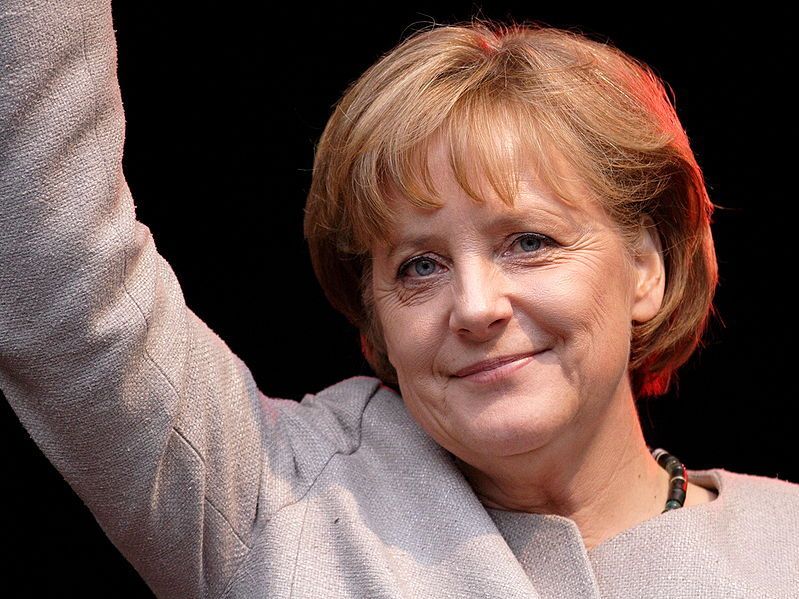
THE GUARDIAN: José Manuel Barosso's public criticism of German chancellor signals growing political friction across eurozone
The head of the European commission today launched a strong attack on the German chancellor Angela Merkel's handling of the euro's crisis of confidence.
José Manuel Barroso, the president of the European commission, who is believed to be supported by a majority of the 27 member states, described Merkel's campaign to reopen the Lisbon treaty as "naïve". He said that the bill of almost €900bn for rescuing Greece and shoring up the euro would have been much cheaper had Berlin acted more swiftly, and accused the German government of failing to lead public opinion in defence of thebeleaguered single currency.
Barroso's surprisingly public criticism, in an interview with Germany's conservative newspaper the Frankfurter Allgemeine Zeitung, signalled the high-level political friction in the EU over how to restore faith in the single currency.
Barroso's staff, as well as the governments of many other EU member states, think the mixture of hard line and prevarication shown by Merkel since the crisis erupted in February have made a bad situation worse. They say that swift action in February would have deterred the financial markets and contained the crisis to Greece and its sovereign debt. >>> Ian Traynor | Tuesday, May 25, 2010
FRANKFURTER ALLGEMEINE ZEITUNG: Im Gespräch: José Manuel Barroso – „Manchmal haben Krisen auch ihr Gutes“ >>> FAZ | Dienstag, 25. Mai 2010
May 20, 2010
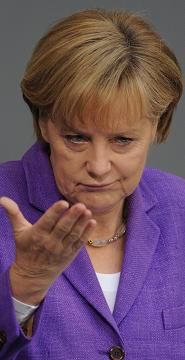
TIMES ONLINE: Shocked European ministers are preparing for emergency talks to shore up the euro after markets fell in reaction to panic measures in Germany.
Angela Merkel stunned EU capitals by warning that the euro was in danger and triggered fears of a fresh financial meltdown by announcing a ban on risky trading practices by speculators. The German Chancellor’s actions opened up new cracks in the single currency, drawing sharp criticism from France and prompting Brussels to issue an appeal for unity.
Shares in London plunged by nearly 3 per cent, with similar falls in Paris, Berlin and Madrid. The euro plummeted to a new low against the dollar before making a slight recovery.
European finance ministers, who have just hammered out a massive rescue plan for Greece, will hear controversial calls from Germany at a meeting tomorrow for changes to the Lisbon treaty to give Brussels powers to co-ordinate national budgets.
Ms Merkel believes that the EU should have stronger powers to organise the “orderly insolvency” of countries such as Greece that set giveaway budgets with no means of paying for them. After announcing a ban on speculative share trading in Germany’s top financial institutions and the bonds of eurozone countries until next March, she warned: “This challenge is existential and we have to rise to it. The euro is in danger. If we don’t deal with this danger, then the consequences for us in Europe are incalculable . . . If the euro fails, then Europe fails.” Read on and comment >>> David Charter, Berlin | Thursday, May 20, 2010
May 19, 2010

THE SYDNEY MORNING HERALD: The Australian dollar plunged more than 2.5 US cents in less than 18 hours, compounding a series of significant falls over the past days that have seen the value of the currency hit its lowest level since last September against its US counterpart - down more than 8 per cent since the start of the month.
This morning, the Aussie dollar traded as low as 85.15 US cents, well down on the 87.67 US cents it was buying at yesterday's close and a world away from the 92.7 US cents it was buying at the start of May.
At the local close, the local currency had bounced back - a little - to 85.88 US cents, still down 1.79 US cents from yesterday.
Investors were offered many reasons to sell the commodity currency: Germany's move to ban some types of short-selling, a sinking euro, worries about Europe's future, falling stocks and commodities, and poor consumer mood data from Australia.
Data out today showed the biggest drop in consumer confidence since the global financial crisis. That news reinforces the market's view that interest rates will not rise any time soon - and low interest rates discourage foreign investors from buying Australian assets, effectively depleting demand for the local currency. Read on (+ video of business and markets report) >>> Gabrielle Costa | Wednesday, May 19, 2010
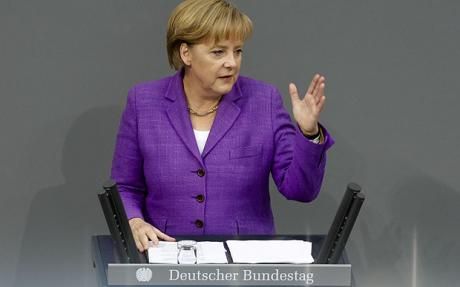
THE TELEGRAPH: World stock markets tumbled as investors digested Germany's unilateral ban on short-selling but the euro rallied from fresh four-year lows on talk of central bank intervention.
European bourses, which followed Asian shares lower, slid further when the Dow Jones opened down 1pc. The FTSE 100 sank 2.5pc, Germany's DAX lost 2.2pc, and France's CAC fall 2.4pc. Japan's closed down 0.5pc and Hong Kong 1.8pc.
The euro, which has been volatile, spiked more than than a cent against the dollar to above $1.23 at 2pm on rumours that the Swiss National Bank or European Central Bank had entered the market.
"Euro is popping all over as talk is going around that the ECB may be considering intervention," said Brian Dolan, chief strategist at Forex.com in Bedminster, New Jersey.
"It looked like the Swiss were in earlier, though that hasn't been confirmed, so we're left to speculate. But the market is exceptionally short euro, and with it bouncing today, the wind would be at their back." >>> | Wednesday, May 19, 2010
Subscribe to:
Posts (Atom)