THE GUARDIAN: Former PM criticises ministers for ‘moral outrage’ of ‘systematically shredding’ social security system
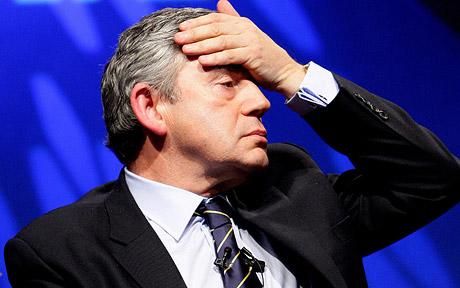
Britain is in the throes of a hidden poverty “epidemic”, with the worst-affected households living in squalor and going without food, heating and everyday basics such as clean clothes and toothpaste, the former UK prime minister Gordon Brown has said.
Brown accused the government of creating a wall of silence around “obscene” levels of destitution in the UK and criticised ministers for “systematically shredding” a social security system that had once provided a safety net for the poorest.
He said it was a “moral outrage” that the government was unwilling to tackle a social emergency that had created millions of forgotten and voiceless victims, one he compared in an article for the Guardian with the Post Office scandal in terms of the scale of ministerial neglect. » | Patrick Butler, Social policy editor | Thursday, February 8, 2024
Showing posts with label Gordon Brown. Show all posts
Showing posts with label Gordon Brown. Show all posts
February 08, 2024
June 10, 2011

A confidential document presented to the Cabinet in January 2006 asks: "We've spent all this money, but what have we got for it?"
It warns that the efficiency of the public sector needed to improve rapidly and insisted that "spending growth will slow". The document drafted by civil servants also says that "ineffective spending" must be "closed down".
However, Gordon Brown discarded the advice and embarked on a £90 billion increase in spending when he became prime minister.
The expenditure meant that the economy was left facing a record deficit as the effects of the recession were felt.
The document is among 19 papers disclosed today by The Daily Telegraph that were obtained from the personal files of Mr Balls, the shadow Chancellor. They follow the divulgence yesterday of dozens of documents detailing Mr Balls's central role in a plot to topple Tony Blair. Read on and comment » | Robert Winnett, James Kirkup and Holly Watt | Friday, June 10, 2011
April 19, 2011
 THE DAILY TELEGRAPH: David Cameron will block Gordon Brown's attempts to head up the International Monetary Fund after criticising his handling of the financial crisis.
In a direct attack on the former Prime Minister, Mr Cameron said his predecessor was not the "most appropriate person" to lead the IMF because he would not admit the UK had a "debt problem".
Mr Brown is reportedly hoping to take on the £270,000-a-year role but he must first be nominated by the Government.
“If you have someone who didn’t think we had a debt problem (running the IMF) they may not be the best person to decide whether other countries have that problem," he said on BBC Radio 4's Today programme.
He added that the role needed to be filled by “someone who understands the dangers of excessive spending.”
And in a clear signal that Britain would block Mr Brown if stood for the job, Mr Cameron suggested the position should be filled by a candidate from “China, India or south east Asia.” » | Andrew Porter and James Kirkup | Tuesday, April 19, 2011
April 30, 2010
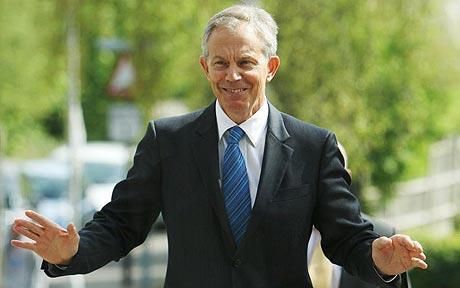
THE TELEGRAPH: Tony Blair has denied that Gordon Brown had been a "failure" as Prime Minister, despite Mr Brown's apparent admission that Labour was heading for defeat in the General Election
Visiting Harrow in north-west London, Mr Blair insisted Labour still had "every chance of succeeding" in the general election.
Questioned about whether Mr Brown had failed in his time at Number 10, he said: "No I don't think he's failed at all."
Asked about the prospect that the party could come third in the share of the vote on May 6, the former PM replied: "I don't believe that will happen. I believe Labour has every chance of succeeding." General Election 2010: Tony Blair denies Gordon Brown has 'failed' >>> Robert Winnett, Andrew Porter and Murray Wardrop | Friday, April 30, 2010
March 12, 2010
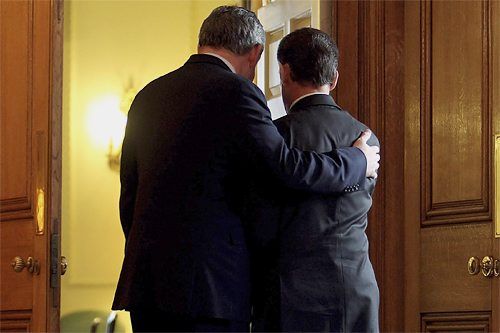
NZZ ONLINE: Nach dem verpassten Rüstungsgeschäft für die Lieferung von Tankflugzeugen für die US-Luftwaffe durch den EADS-Konzern hat es Vorwürfe aus Frankreich und Grossbritannien gegeben. Der britische Premier Brown und Frankreichs Präsident Sarkozy warfen den USA Protektionismus vor.
Der französische Staatspräsident Nicolas Sarkozy und der britische Regierungschef Gordon Brown haben den USA im Streit um einen verpassten Rüstungsauftrag für den europäischen EADS-Konzern Protektionismus vorgeworfen.
«Nicht die richtige Art»
«Das ist nicht die richtige Art, wie die USA ihre europäischen Verbündeten behandeln sollten», sagte Sarkozy am Freitag nach einem Besuch bei Brown. Der Brite erklärte, er sei wegen der entstandenen Situation enttäuscht. >>> ddp/sda/Reuters | Freitag, 12. März 2010
March 11, 2010
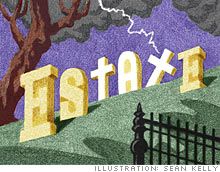
DAILY EXPRESS: LABOUR wants to hammer every home owner in Britain with a spiteful 10 per cent death tax, it emerged yesterday.
The levy would be charged on all estates up to the current inheritance tax threshold of £325,000.
Any amount above the existing threshold is already taxed at 40 per cent. But the extra charge would add a huge £32,500 on top of the tax bill for such properties.
It means people with an estate valued at £500,000 would find their relatives hit with a bill of £102,500 after their death. >>> Sarah O’Grady | Thursday, March 11, 2010
December 27, 2009
THE SUNDAY TIMES: A GROUP of leading economists has attacked the government for its “irresponsible” failure to set out “even the rudiments” of a convincing plan to reduce Britain’s £178 billion budget deficit and warns of “alarming complacency” in the face of the country’s fiscal challenges.
In a letter to The Sunday Times, the economists, including Tim Congdon, Patrick Minford and Gordon Pepper, warn of “heightened risk” of a downgrade of Britain’s sovereign debt rating.
The signatories, several of whom are on the “shadow” monetary policy committee, say that the integrity of UK fiscal and monetary policy is at stake because of the huge budget deficit.
They warn that international investors could see the Bank of England’s £200 billion quantitative easing programme, mainly the purchase of UK government bonds (gilts) as “driven by a politically-motivated desire to ease the government’s funding difficulties”. >>> David Smith, Economics Editor | Sunday, December 27, 2009
December 03, 2009
LE MONDE: Michel Barnier se serait bien passé de cette empoignade. Le prochain commissaire au marché intérieur craint de voir son début de mandat empoisonné par l'opposition entre le Royaume-Uni et la France au sujet de la régulation financière. Entre Paris et Londres, le ton est monté de plusieurs crans depuis la nomination du Français par le président de la Commission européenne, José Manuel Barroso, à un poste stratégique en ces temps de crise, puisqu'il chapeaute les services financiers.
Les Britanniques s'inquiètent du sort de la City de Londres, la principale place financière européenne. Ils ont tout fait pour empêcher M. Barroso de nommer à cette fonction une personnalité soucieuse de pousser les feux de la régulation. Ils n'ont ensuite pas apprécié que Nicolas Sarkozy présente leur pays, dans un commentaire accordé au Monde, comme le "grand perdant" de la récente répartition des postes bruxellois. Et jette ensuite de l'huile sur le feu en affirmant que ce sont "les idées françaises de régulation qui triomphent en Europe".
Cette "guéguerre" complique la formation des cabinets des commissaires, à Bruxelles. Déjà flanqué, à la demande du premier ministre britannique, Gordon Brown, d'un directeur général britannique, M.Barnier refuse de recruter un conseiller proche des intérêts de la City. Ce qui déplaît à Londres, lequel a fait pression sur Catherine Ashton, la toute nouvelle haute représentante de l'Union européenne pour la politique étrangère, afin qu'elle renonce à ce st.ade à recruter un Français dans son cabinet. >>> Philippe Ricard et Marc Roche | Jeudi 03 Décembre 2009
October 04, 2009
MAIL ONLINE: Labour last night faced humiliation with the prospect of Britain missing out on a place in a new elite club of economic superpowers.
Reports in the United States claim President Barack Obama is keen to establish a top table of global economies which would leave Britain on the sidelines.
The proposal will put further pressure on Chancellor Alistair Darling and Prime Minister Gordon Brown as Britain also faces dismissal from the International Monetary Fund (IMF).
The so-called Group of Four (G4) would comprise the biggest global economies: America, Japan, China and the Eurozone countries.
It would have enormous clout over international economic affairs, an arena in which Britain has for many years punched above its weight.
Ironically, if the G4 were made up entirely of individual countries and not the Eurozone, the UK would gain admittance as its national economy is in fourth place internationally.
The proposal has yet to be finalised but international financial sources last night dismissed Britain’s hopes that the Eurozone place at the table could be broadened to comprise the whole European Union.
A key qualification for membership is the ability to deliver on monetary commitment and currency pledges. The Eurozone shares a currency but the EU does not.
Conservative MP Graham Brady, a member of the Treasury Select Committee, said: ‘This is especially embarrassing for a Prime Minister who presided over Britain’s economy since 1997 and used to pride himself on his economic mastery.’
The snub would mean the loss of Britain’s independent voice in high-level economic diplomacy for the first time since the economic summits of the mid- Seventies, held in the wake of the 1973 oil crisis. >>> Dan Atkinson, Mail On Sunday Economics Editor | Saturday, October 03, 2009
September 24, 2009
THE TELEGRAPH: Gordon Brown appeared to have failed in his attempt to gauge Wall Street's feelings on the thorny issue of bonuses and capital levels ahead of the G20 after he was unable to attract any heavyweight bankers to a specially convened meeting in New York.
Although invitations to a number of Wall Street's biggest banks are known to have been sent, only one senior US banker, 52-year Citigroup veteran Bill Rhodes – who stepped down as chairman of Citigroup North America in July but remains on its board – attended yesterday's economic roundtable. That compares poorly to the two previous such meetings the Prime Minister has hosted in the city during the credit crisis, when big names including star hedge fund manager George Soros and JP Morgan Chase chairman Jamie Dimon showed up.
Instead, the meeting largely drew US representatives of British-based banks, with the nine attendees including Barclays Americas chairman Archibald Cox, whose role is essentially networking, HSBC US boss Paul Lawrence, and David Stileman, Standard Chartered's US chief executive. Business minister Baroness Vadera, one of the PM's closest economic aides, was also present.
One attendee, who asked not to be named, said that the Prime Minister did more listening than he did talking, while another banker who was invited but chose not to go said that the UK's stance on bonuses may explain the lightweight attendance. Mr Brown said last week "there is no going back to the bonus structures of the past". >>> James Quinn, US Business Editor | Wednesday, September 23, 2009
September 16, 2009
Isn’t it high time we kicked this fiscally imprudent government out of office? Gordon Brown and his inner circle have shown us just how totally incompetent they are.
It is going to take us Brits years to get ourselves out of the mess that this Labour government, and Blair’s, have got us into. Shameful politics! Shameful economics! – © Mark
THE TELEGRAPH: Social security payments will cost almost £200 billion in four years time, accounting for one pound in every four that the Government spends.
Combined with a debt interest bill of more than £63 billion, items Gordon Brown once called “the costs of failure” will absorb more than a third of all Government spending.
Leaked Treasury documents have revealed the Government’s own bleak forecasts for rising welfare payments and debt interest costs.
The figures, which were not revealed in this year’s Budget, show the scale of the damage that will done to the public finances by rising unemployment and the soaring national debt.
The papers show that the Treasury expects to pay out £193.4 billion on social security benefits in 2013/14. Paying interest on the Government’s outstanding debts will cost £63.4 billion.
Total Government spending in the same year will be £758.3 billion. Welfare and debt interest will be 33.8 per cent of that total.
Around 6 million people in Britain are estimated to claim some sort of employment-based benefits, and the figure is set to rise.
Official figures released on Wednesday showed that unemployment reached has 2.47 million, the highest since 1995. Most economists expect the total to peak at around 3 million early next year.
In his 2000 Budget, Mr Brown described money spent on debt and welfare as “the costs of failure” and lauded Labour’s record in reducing those payments.
He said: "Our promise was to reduce the costs of failure – the bills for unemployment and debt interest – in order to reallocate money to the key public services."
Now, Mr Brown’s own figures reveal how those costs are set to grow dramatically. >>> James Kirkup, Political Correspondent | Wednesday, September 16, 2009
August 13, 2009
TIMES ONLINE: The City watchdog was accused of giving banks a green light to continue paying multimillion-pound bonuses yesterday when it backed away from introducing tough rules to curb excess pay.
The Financial Services Authority’s proposals on City pay embarrassed Gordon Brown, who had promised to sweep aside the bonus culture in the financial sector. Opposition politicians branded the FSA’s new proposals a capitulation. The Treasury also indicated that they did not go far enough.
Some of the most onerous provisions in the FSA’s original proposals from March have been softened. Under the new guidelines the banks must link risk and reward. But they will have more freedom to structure bonus packages than was previously suggested and many bank executives and some smaller City firms are excluded from the plan altogether.
The row came as unemployment rose to a 14-year high and the Bank of England admitted that the recession was deeper than previously thought and that recovery would be slow, partly because banks were still not lending enough money.
It will be exacerbated by the disclosure that Royal Bank of Scotland, in which taxpayers have a 70 per cent interest, has hired two bankers on multimillion-pound packages. One of them, Antonio Polverino, who has been headhunted from Merrill Lynch, will earn £7 million in his first year. Watchdog 'gives green light' for huge City bonuses >>> Philip Webster, Political Editor, and Katherine Griffiths, Banking Editor | Thursday, August 13, 2009
July 06, 2009

THE WALL STREET JOURNAL: LONDON -- Six months after the U.K. government scrambled to launch new bailout measures for Britain's foundering banks and economy, several of those efforts are languishing with few takers.
In January, for example, the British government created a guarantee program meant to revive the dormant market for asset-backed securities. The program aims to spur purchases of banks' asset-back securities, or bundled consumer loans, by guaranteeing them for buyers.
The guarantees were made available in April, but since then, none of the major U.K. banks has issued a security with such a guarantee. Bankers say it is too expensive; the government says the program is under review. So far, no changes to its terms have been made, and the program is set to expire in October.
The flop is among several misfires by the U.K. government in recent months among programs that haven't drawn interest from the banks and businesses they were intended to help. An effort to give firms trade insurance, for example, has seen only limited participation. The same is true of a loan guarantee for small businesses, which has been disregarded because it requires owners to put their own collateral on the line.
The snubbed bailout programs are a testament to the difficult balancing act governments face when attempting to aid their financial sectors and economies: They don't want to give banks and businesses a free ride, but fail to accomplish anything if their terms are not attractive enough. >>> By SARA SCHAEFER MUÑOZ and ALISTAIR MACDONALD | Monday, July 06, 2009
April 23, 2009
THE TELEGRAPH: Gordon Brown has been accused of launching a "class war" against Middle Britain as he introduced a new 50 per cent top rate of tax to make the wealthy pay for the catastrophic state of public finances.
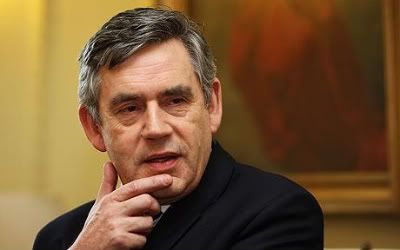
Casting aside more than a decade of New Labour ideology, the government broke a key election manifesto promise by announcing an increase in income tax for those earning more than £150,000.
Alistair Darling, the Chancellor, also announced that the highest earners will lose valuable tax breaks on pension savings, as part of a package of measures that will see the tax grab from high earners raising up to £5.5 billion a year - an average of £18,333 annually per person.
The surprise new measures - which mean Britain will have the highest top rate of any major economy in the developed world - came as Mr Darling was forced to lay bare the true extent of Britain's levels of borrowing in his Budget.
In the worst economic forecast since the Second World War, he said he planned to borrow another £700 billion over the next five years, taking the national debt to £1.4 trillion.
Mr Brown and Mr Darling were accused of indulging in party politics at a time of national crisis by seeking to exploit the divide the Tories' on tax policy.
It was also suggested that the Prime Minister was returning to Old Labour policies designed to shore up Labour's core vote ahead of an election next year that he is on course to lose.
Labour MPs in the party's heartlands will welcome the move and ministers will argue that taxing those on very high salaries is popular among many voters.
But in raising the top rate of tax the government risk alienating the middle class voters that swept Tony Blair to power in 1997. >>> By Andrew Porter, Political Editor | Thursday, April 23, 2009
March 26, 2009
TIMESONLINE: President Obama was huddled in talks yesterday with congressional Democrats over proposals that would pare his $3.6 trillion budget, raising question marks over how he would fund promises on healthcare, climate change and tax cuts.
Although the President was braced for ferocious opposition from Republicans, who warn that his spending plans will bankrupt America, he also faces growing hostility from a group of fiscally conservative Democrats alarmed by forecasts of a $9.3 trillion (£6.3 trillion) deficit over ten years. Barack Obama's Pledges in peril as Blue Dogs Take a Bite at Budget >>> Tom Baldwin in Washington | Thursday, March 26, 2009
MAIL Online: Brown Spooked by the Markets: PM Accused of Heading Down 'the Road to Hell'
In London: Investors won't buy our bonds / In Europe: PM accused of heading down 'the road to hell'
Gordon Brown is in retreat on his Budget plans amid signs of City alarm over the soaring level of Government borrowing.
He pulled back from another debt-fuelled giveaway to kickstart the economy after Tuesday's intervention from the Governor of the Bank of England.
Downing Street insisted there was no rift between Mr Brown and Mervyn King over his bombshell claim that Britain cannot afford another 'fiscal stimulus'.
But the Governor appeared to have spooked the markets when it emerged that a routine sale of Government bonds fell short yesterday.
City experts blamed doubts over Mr Brown's economic policy for the Treasury's failure to find buyers for £120million worth of debt, or 'gilts'.
It was the first time since 2002 that the Government has been unable to sell its debt, and this will be seized on by those who have warned that there is insufficient demand for the volume of debt being sold by the Treasury.
Officials played down the significance of the shortfall, but economists said investors were beginning to doubt the Government's credit rating.
The Tories turned up the pressure on Mr Brown by insisting there was now a question mark over his ability to fund the crippling levels of debt needed to keep the economy afloat.
And the European Union added to his woes when its acting president warned that President Barack Obama's call for more borrowing and spending, backed by Mr Brown, was 'the road to hell'. >>> By Benedict Brogan and James Chapman | Thursday, March 26, 2009
THE TELEGRAPH: An MEP's withering attack on Gordon Brown in which he likens him to a "Brezhnev era apparatchik" has become a surprise hit on the internet.
Daniel Hannan, the Conservative MEP for South East England, publicly lambasted the Prime Minister over his economic record after he addressed the European Parliament on the global financial crisis on Tuesday.
With Mr Brown looking on, he told fellow MEPs that Britain was entering the recession in a "dilapidated condition", with an "almost unbelievable" deficit.
In a blistering riposte to the Premier's calls for a concerted international effort to tackle the crisis, he accused the former Chancellor of trying to "spread the blame" and called him a "devalued Prime Minister".
The three-and-a-half minute speech, which drew cheers and laughter from fellow MEPs in Strasbourg, was not covered on mainstream broadcasts.
But it was posted on the video sharing website YouTube shortly after the sitting and attracted 90,000 viewers within 24 hours after being picked up by US news outlets and political blogs.
In the most critical passage, he told the Prime Minister: “When you repeat, in that wooden and perfunctory way, that our situation is better than others, that we are well placed to weather the storm, I have to tell you, you sound like a Brezhnev-era apparatchik giving the party line.
"You know and we know, and you know that we know, that it's nonsense."
Accusing Mr Brown of losing his moral authority by failing to live up to his own rhetoric, he said that 11 years of his stewardship had left the entire country in "negative equity".
Every British child is now born owing around £20,000,” he said.
“Servicing the interest on that debt is going to cost more than educating the child.”
He added that Mr Brown, who hopes to strike a "global new deal" at the summit of G20 leaders in London next month, was “pathologically incapable” of taking responsibility. >>> By John Bingham | Wednesday, March 25, 2009
March 25, 2009
THE TELEGRAPH: Gordon Brown, the Prime Minister, has launched a damning attack on the behaviour of bankers in a speech to Wall Street financiers in New York.
The Premier accused bankers of operating “outside” everyday human values and principles in the run-up to the global economic crisis. He said that “avarice” had developed over the past few decades and now needed to be tackled.
Mr Brown is on a global economic mission ahead of next week’s G20 summit in London. Speaking in New York, he said that new international standards governing banking – and banking bonuses – would now have to be agreed by world leaders.
At a breakfast for business leaders, Mr Brown said that values such as “honesty, integrity and working hard” may have been absent from the financial system in recent years.
“The principles and values we apply in our everyday lives, you have got to ask did we apply them to the running of our financial institutions?,” he said.
“There is a sense that the global economy was outside these standards that we applied in our everyday lives… a world without standards is going to be a world without stability”.
The Prime Minister warned the Wall Street financiers that the major challenge they now face was to ensure honesty in financial dealings. He described it as an “epoch-making era”.
“Markets depend on morality in the end,” he said. “We are building for the first time not just a global economy but a global society.”
Among those attending the breakfast at the five-star Plaza hotel were the president of Citibank, directors of Morgan Stanley, the president of Nasdaq and the president of Goldman Sachs. >>> By Robert Winnett, Deputy Political Editor in New York | Wednesday, March 25, 2009
March 20, 2009
The Dawning of a New Dark Age (Paperback & Hardback) – Free delivery >>>
March 09, 2009
THE TELEGRAPH: John Howard, the former Australian prime minister, has warned that Gordon Brown's policy of imposing large debt levels will load "nasty medicine" onto future generations.
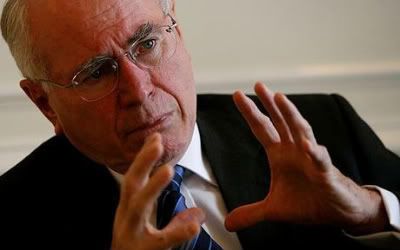
His comments come after Nicolas Sarkozy, the French President, said cutting VAT in the UK was a "mistake" and warned that running up large debts in Britain could "ruin the country".
In an interview with The Daily Telegraph, Mr Howard said that spending billions to try to survive the recession merely stored up problems for future generations, he said.
He said: "Medicine will have to be taken and it is a question of making sure that we don't load all the bad nasty medicine onto future generations.
"It is common-sense that if you get too deeply into debt the burden you put on future generations is enormous."
Mr Howard, who was led the right wing Liberal Government from 1996 to 2007 and a close ally of Tony Blair when he was Prime Minister, said he was worried that governments seemed to think that there was no alternative to this form of "deficit spending" to survive the recession.
He said: "There is a danger that governments generally will think that the solution is to go ever deeper into debt. That troubles me because I don't think it is.
"My sense is that over the last month or six weeks the sense of restraint how far you go into debt seems to have disappeared and that troubles me.
"There is a mood developing that it does not matter how much you are going into debt. I am not sure that is a sensible thing." >>> By Christopher Hope, Whitehall Editor | Monday, March 9, 2009
The Dawning of a New Dark Age (Paperback – Australia) >>>
The Dawning of a New Dark Age (Hardback – Australia) >>>
Subscribe to:
Posts (Atom)