Showing posts with label OECD. Show all posts

March 17, 2025

Trump’s Trade War Will Damage Growth OECD Warns | BBC News

Mar 17, 2025 | Economic organisation has said that President Donald Trump’s tariffs will be bad for global economic growth and living standards.

The leading economic think tank the OECD has shared its forecast saying the global economy will only grow by 3.1% this year.

The biggest changes will be felt in the United States's neighbours Mexico and Canada.


This is a self-inflicted wound. What comes will be a trumpcession. – © Mark Alexander

May 21, 2019

Trump's China Trade War Risks Damaging US Economy, Says OECD


THE GUARDIAN: Intensification of tariff dispute also likely to knock almost $600bn off world economy

Donald Trump has been warned by the west’s most influential economics thinktank that further escalation of the US-China trade war would unleash significant damage for the American economy, as well as the rest of the world.

The Paris-based Organisation for Economic Co-operation and Development(OECD) said that an intensification of the dispute between Washington and Beijing would likely knock as much as 0.7% off the level of global GDP by 2021-22.

Under such a scenario, the hit to the world economy from higher tariffs could be quantified at almost $600bn (£472bn).

Issuing a downbeat assessment of the global economy as the standoff between the world’s two biggest economies continues to simmer, the OECD said the world’s economic momentum had weakened markedly and that growth was set to stay at a subpar rate as the tensions over trade persist. It said both the US and China stood to lose out from the imposition of higher tariffs. » | Richard Partington, Economics correspondent | Tuesday, May 21, 2019

May 23, 2012

Eurozone Crisis 'Threat' to Global Economy

The eurozone financial crisis could threaten the global economy, according to Organisation for Economic Development and Co-operation. The 17-nation eurozone will see its economies shrink by 0.1 per cent, before rebounding to 0.9 per cent next year, the Paris-based organisation said in its latest report released on Tuesday. Nick Spicer reports from Berlin.

March 29, 2012

UK Is Back in Recession, Says OECD

Britain has plunged back into a recession, as the economy continued to shrink in the first three months of the year, according to a leading global authority.


Read the article and comment here | Emma Rowley | Thursday, March 29, 2012

December 05, 2011

Income Inequality Growing Faster in UK than Any Other Rich Country, Says OECD

THE GUARDIAN: Top 10% have incomes 12 times greater than bottom 10%, up from eight times greater in 1985, thinktank's study reveals

Income inequality among working-age people has risen faster in Britain than in any other rich nation since the mid-1970s owing to the rise of a financial services elite who through education and marriage have concentrated wealth into the hands of a tiny minority, according to a new report by the OECD.

Economists from the thinktank, which is funded by developed world taxpayers, say the annual average income in the UK of the top 10% in 2008 was just under £55,000, about 12 times higher than that of the bottom 10%, who had an average income of £4,700.

This is up from a ratio of eight to one in 1985 and significantly higher than the average income gap in developed nations of nine to one.

However, the report makes clear that even in countries viewed as "fairer" – such as Germany, Denmark and Sweden – this pay gap between rich and poor is expanding: from five to one in the 1980s to six to one today. In the rising powers of Brazil, Russia, India and China the ratio is an alarming 50 to one.

The OECD warned about the rise of the top 1% in rich societies and the falling share of income going to poorer people.

This trend is especially pronounced in Britain, where the dramatic rise in inequality has been fuelled by the creation of a super-rich class. The share of the top 1% of income earners increased from 7.1% in 1970 to 14.3% in 2005.

Just prior to the global recession, the OECD says the very top of British society – the 0.1% of highest earners – accounted for a remarkable 5% of total pre-tax income, a level of wealth hoarding not seen since the second world war [sic]. » | Randeep Ramesh, social affairs editor | Monday, December 05, 2011

November 04, 2011

Tax Evasion Crackdown Will Raise £62bn for G20 Nations, Says OECD

THE GUARDIAN: Paris thinktank says action against world's wealthiest people could plug gaps in public finances as G20 leaders agree new measures to stop tax evasion

A tougher crackdown on tax evasion by the world's wealthiest individuals could provide cash-strapped G20 governments with up to $100bn (£62bn) in much-needed tax revenue, the Organisation for Economic Cooperation and Development said on Thursday night.

The Paris-based thinktank told the leaders of developed and developing countries that they could fill black holes in their public finances and improve social cohesion by co-operating to remove tax loopholes and by exchanging information.

A survey of 20 rich and poor countries conducted by the OECD showed that earlier measures to deter tax evasion had resulted in 100,000 individuals paying a total of $14bn in unpaid tax on assets worth between $120-150bn.

Jeffrey Owens, director of the OECD's centre for tax policy and administration, said: "That is just the tip of the iceberg. There is probably $1tn in assets held offshore." » | Larry Elliott and Patrick Wintour in Cannes | Thursday, November 03, 2011

May 26, 2010


UK Warned It Must Raise Interest Rates This Year

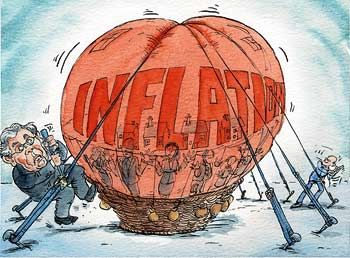
TIMES ONLINE: The Bank of England must raise interest rates by the end of this year to keep inflation in check, the Organisation for Economic Co-operation and Development warned today.

The Bank of England is struggling to curb inflation which is currently 3.7 per cent — far above the Government’s inflation target of 2 per cent.

The interest rate has been at a historic low of 0.5 per cent since March last year. The OECD said that interest rates should start rising this year, and be at 3.5 per cent by the end of next year to keep inflation in check. This would cause misery for hundreds of thousands of mortgage borrowers who would see their monthly payments soar.

“The authorities face the challenge of preserving credibility, with headline inflation and some measures of inflation expectations exceeding the targeted rate,” the Paris-based group of 30 developed economies said in its twice-yearly report today.

“The gradual drift up of some measures of inflation expectations implies a need to increase interest rates earlier than previously thought and no later than the last quarter of 2010.” Read on and comment >>> Susan Thompson, Rebecca O’Connor | Wednesday, May 26, 2010

May 11, 2010

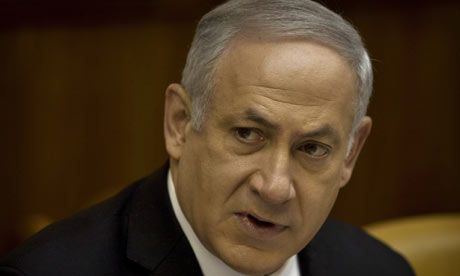
Israel Admitted to the OECD

THE TELEGRAPH: Israel has won a rare victory on the international diplomatic stage, gaining acceptance in an exclusive club of prosperous economies after a 16-year effort to join the Organisation for Economic Cooperation and Development - and in the face of stiff Palestinian opposition.

The Paris-based OECD said it had invited Israel, as well as Estonia and Slovenia, to become members after they met specific criteria as developed, open economies. Once formally invested as members, the three will swell the ranks of the OECD to 34 members, including the United States, a strong backer of Israel's bid.

The new members "will contribute to a more plural and open OECD that is playing an increasingly important role in the global economic architecture," OECD Secretary-General Angel Gurria said in a statement.

Just months ago, Mr Gurria expressed concern about high levels of poverty and unemployment, especially among the minority Arab populations, during a visit to Israel.

However, it did not appear to have hampered membership. Mr Gurria said Israel, Estonia and Slovenia had been "receptive to OECD recommendations." >>> | Tuesday, May 11, 2010

November 14, 2008

Pound Sinks to Record Low against the Euro

THE INDEPENDENT: First property. Then shares. Now sterling is slumping. Sean O'Grady explains what the decline means for us

In July, £1 would still buy $2; lower than its recent record of $2.11 set last November, but healthy enough for shopping trips to New York to make sense. Yesterday, sterling was trading at about $1.48, a six-year low. Macy's and Sachs of Fifth Avenue may soon notice a sharp decline in the number of British accents at the tills.

Our currency has also been bouncing along the bottom against the euro, which is now worth about 84p, its highest since the single currency was launched in 1999.

Suddenly the idea of parity – £1 = €1 – hoves into view. Broadly speaking, sterling has had a more violent battering in recent months than it endured after it famously fell out of the European Exchange Rate Mechanism on "Black Wednesday", 16 September 1992. The pound has fallen 25 per cent against the dollar and 15 per cent versus the euro this year. It has, you might say, had a bit of a pounding.

The reasons for sterling's weakness are not difficult to see. To some extent, it is simply an adjustment to the way the pound has been overvalued for years: its fair value is about $1.50, according to the Organisation for Economic Co-operation and Development.

What's more, the UK is evidently headed for recession and the Bank of England is predicted to cut interest rates to historically low levels, maybe even below 1 per cent over the course of next year – the lowest level since the Bank was granted its charter in 1694. Such meagre prospective rewards for investors and the general belief that sterling assets have further to fall has prompted a sharp sell-off in the currency. >>> Sean O'Grady | November 14, 2008

THE TELEGRAPH: Europe Is in Recession after Bank Meltdown

Europe has fallen into its first recession in 15 years, after the global banking crisis and a decline in exports brought growth to a shuddering halt.

The Eurozone economy - made up of the 15 countries that use the euro - contracted by 0.2pc in the third quarter and it follows a 0.2pc fall in GDP in the second quarter.

The contraction underlines the escalation of the financial crisis that began in the US sub-prime mortgage market into a full-blown economic downturn. The Organisation for Economic Co-Operation and Development and the International Monetary Fund have both warned in the past two weeks that the US, Europe and Japan will also be in recession next year for the first time since World War II.

"The latest data and survey evidence indicate that the fourth quarter is likely to see a sharper fall in GDP as the financial crisis bites harder," said Howard Archer, chief economist at Global Insight. The European Central Bank is likely to slash rates from 3.75pc to 2pc by the middle of 2009, according to Mr Archer.

The move would represent a u-turn for the ECB's policy makers who in July increased rates to combat the threat of inflation. Inflation in the region slowed to 3.2pc in October from 3.6pc in September.

Germany, the biggest economy in Europe, confirmed yesterday it was in recession, with a 0.5pc contraction in GDP. The country has been hard hit because of its position as the world's largest exporter, as economies around globe slow. The UK and US economies both contracted in the third quarter. >>> By Amy Wilson | November 14, 2008

The Dawning of a New Dark Age (Paperback & Hardback) – Free delivery >>>

February 23, 2008

Liechtensteiners Fury at German Tax Snoop

Photobucket
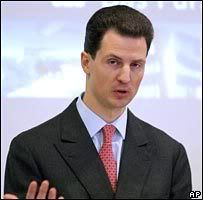
Photo of Prince Alois of Liechtenstein courtesy of the BBC

BBC: Walking around Liechtenstein for the first time, there are two things that strike me most about this place: manure and money.

The smell of manure - that comes from the farmland that surrounds this rural principality.

The money… well, you can see that from all the shiny banks and investment firms that jostle for space in the capital, Vaduz.

These are the companies that have made Liechtenstein one of the richest states in Europe.

Secretive

Liechtenstein also has the reputation of being one of the most secretive tax havens in the world.

Just ask the Organisation for Economic Co-operation and Development.

This financial watchdog says Liechtenstein is one of only three states left on its blacklist of "uncooperative tax havens" (the others are not a million miles away - Monaco and Andorra).

Liechtenstein this week attacked the authorities in Berlin for buying information on German businessmen clients that have bank accounts in the tiny Alpine principality.

Germany has launched a tax evasion investigation using the data, which was supplied by an anonymous informant who was reportedly paid 5m euros (£3.75m; $7.3m). Liechtenstein fury at German tax snoop >>> By Steven Rosenberg

Mark Alexander (Paperback)
Mark Alexander (Hardback)