Showing posts with label credit crunch. Show all posts

November 17, 2011

Sir Mervyn King: Britain on the Brink of Second Credit Crunch, Bank of England Governor Warns

THE DAILY TELEGRAPH: Britain is on the brink of a second credit crunch, the Bank of England warned as it slashed its growth forecasts for the economy and raised the prospect of a double-dip recession.

The eurozone crisis has left UK banks unable to raise the funding they need to make loans to businesses, evoking the spectre of the crunch that followed the collapse of Lehman Brothers.

And on one critical measure — the cost of insuring banks against going bust — lenders are already facing tougher conditions than at the height of the crunch, the Bank said.

Sir Mervyn King, the Bank’s Governor, said that because of the eurozone crisis, households, companies and banks face a period of extraordinary uncertainty, including a possible slide back into recession. “There is weakness over the next few quarters. No one can know what precisely the outcome will be,” he said.

“In the last three years, we have seen extraordinary events. Who knows what’s going to happen tomorrow, let alone next month?”

The banks can only issue loans to companies and home owners if they can find sufficient funding on the markets. According to the Bank of England’s inflation report, banks’ funding in the three months to September fell to levels not seen since Lehman Brothers, the US investment bank, crashed in September 2008. Read on and comment » | Philip Aldrick, Economics Editor and James Kirkup | Wednesday, November 16, 2011
December 01, 2009

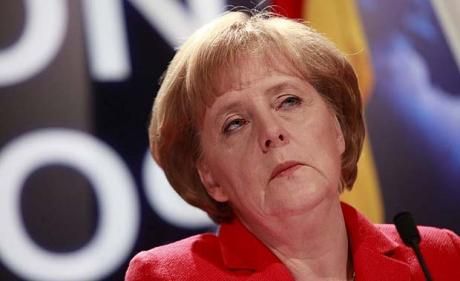
Angela Merkel Alarmed by Worsening Credit Crisis

THE TELEGRAPH: The German government is rushing through a fresh package of measures to shore up ailing banks and prevent a second wave of the debt crisis suffocating large parts of manufacturing industry.

German Chancellor Angela Merkel: fears of new crisis. Photograph: The Telegraph

"We are in a very critical situation," said Chancellor Angela Merkel in her weekly radio address. "We are going to discuss with leaders of the financial institutions what can be done to head off a credit crunch."

The move comes days after the Bundesbank revealed that German banks face a further €90bn (£82bn) of likely write-downs over the next year.

Leaders of the new coalition are to meet industrialists and bankers tomorrow to thrash out an emergency plan. The proposals include a €10bn scheme to purchase toxic securities from banks. The idea is anathema in Germany and faces stiff opposition from Mrs Merkel's Bavarian and liberal partners.

The renewed sense urgency follows a flurry of warnings from economists and business groups over the risks of a credit contraction. >>> Ambrose Evans-Pritchard | Monday, November 30, 2009

October 15, 2009

A Year After the Crunch, It's Boom Time Again for Bankers

A year after the global economy was brought close to collapse by reckless lending, investment banks are preparing to announce huge profits. Photo: Times Online

TIMES ONLINE: Investment bankers are about to enjoy a record bonus season as confidence surges in the financial markets.

Just 12 months after the global economy was brought close to collapse by reckless lending — forcing banks to turn to taxpayers for help — stock markets in London and New York are enjoying one of the strongest bull runs in decades and investment banks are preparing to announce huge profits.

In Britain, job losses slowed in the three months to August. Unemployment rose by 88,000 to 2.47 million, the lowest rise since July last year, and youth unemployment fell slightly. China reported strong trade figures and oil hit a high for the year.

Goldman Sachs, which employs 5,500 people in London, is expected to report a sharp rise in third-quarter profits today. Analysts estimate that, barring a major setback, the average London worker at Goldman will receive about $748,000 (£467,000) in salary and bonuses — 13 per cent higher than 2007 and more than double the 2008 average. >>> Patrick Hosking and Christine Seib | Thursday, October 15, 2009

January 17, 2009

Crunch 'Cost Arabs $2.5 Trillion'

BBC: The global economic crisis has cost Arab countries $2,500bn (£1,690bn) in the last four months alone, according to Kuwait's foreign minister.

Sheikh Mohammed al-Sabah told reporters in Kuwait City that oil-rich Gulf Arab states had postponed or cancelled 60% of development projects.

He did not give details for his figures, which were released days before an Arab Economic Summit.

Stock market falls and a low oil price have contributed to the losses. >>> | Saturday, January 17, 2009

The Dawning of a New Dark Age – Paperback (US) Barnes & Noble >>>
The Dawning of a New Dark Age – Hardcover (US) Barnes & Noble >>>

December 18, 2008

Archbishop Welcomes Credit Crunch 'Reality Check'

THE INDEPENDENT: The credit crunch is a welcome "reality check" for a society that has become driven by unsustainable greed, the Archbishop of Canterbury said today.

Rowan Williams also hit out at Gordon Brown's plans to combat recession by boosting spending, likening them to an "addict returning to the drug".

The head of the Church of England's outspoken comments came as he delivered a scathing assessment of "moral" failings in Britain's economy.

Interviewed on BBC Radio 4's Today programme, he insisted the country had been "going in the wrong direction" for decades by relying on financial speculation to generate wealth quickly rather than "making things".

The UK had backed itself "into a corner", and must now rediscover "patience" and re-think the way it viewed material gain, he said.

Asked whether that meant the global financial crisis wracking the economy had been beneficial, Dr Williams replied: "It is a sort of a reality check, isn't it - which is always good for us.

"A reminder that what I think some people have called fairy gold is just that - that sooner or later you have to ask: 'What are we making or what are we assembling or accumulating wealth for?'." >>> By James Tapsfield, PA | December 18, 2008

The Dawning of a New Dark Age (Paperback & Hardback) – Free delivery >>>

September 28, 2008

Redolent of the Wall Street Crash of 1929: Banker Leaps to His Death in Front of Express Train

MAIL Online: The City was in shock last night after the apparent suicide of a millionaire financier haunted by the pressures of dealing with the credit crunch.

Kirk Stephenson, who was married with an eight-year-old son, died in the path of a 100mph express train at Taplow railway station, Berkshire.

Mr Stephenson is believed to have taken his own life after succumbing to mounting personal pressures as the world’s financial markets went into meltdown.

The death of the respected 47-year-old City figure evokes memories of the 1929 Wall Street crash in America… Credit Crunch Banker Leaps to His Death in Front of Express Train >>> By Christopher Leake | September 27, 2008

The Dawning of a New Dark Age – Dust Jacket Hardcover, direct from the publishers (UK) >>>
The Dawning of a New Dark Age – Paperback, direct from the publishers (UK) >>>

December 03, 2007

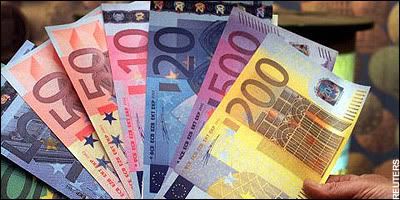
The Credit Crunch Could Crush the Euro

Photo Sharing and Video Hosting at Photobucket
Photo courtesy of Reuters

THE TELEGRAPH: The credit crunch is hammering the US, which now faces a likely recession. Things don’t look great for the UK either; here growth could plunge to 1 per cent next year.

There is a near-consensus among economists, in fact, that the Anglo-Saxon world created this credit crunch and will likely bear the most pain.

The eurozone, it is widely assumed, has been less affected by sub-prime. Most investment banks predict the 13-country region will out-perform the UK in 2008.

A slew of recent data tells me we should now question that assumption. If I’m right, and the eurozone does a face serious drop, us Brits would be foolish to grin. We like to revel in Continental misfortunes, but the single currency area matters hugely – accounting for three-fifths of UK trade, more than four times as much as the States.

The reason the eurozone now worries me is the emerging picture of sharply rising consumer prices on the one hand, and falling output on the other. Just like the Bank of England, the European Central Bank will on Thursday try to set monetary policy not only to deal with inflation, but also bolster growth.

Eurozone base rates are likely to be held at 4 per cent – for the sixth month in a row. Most observers think if they do shift this week, the only possible move is up.

That’s because, despite the credit crunch, the ECB’s rhetoric has remained very hawkish. But, in reality, eurozone policy makers now face a classic growth-inflation dilemma – one they share with other Western central banks.

The ECB’s predicament is made worse, though, by the euro/dollar exchange rate, and the single currency’s structural flaws. These two unique aspects of the region’s quandary are why its prospects are more gloomy than assumed. The credit crunch could crush the euro >>> By Liam Halligan, Economics Editor

Mark Alexander