Showing posts sorted by relevance for query sharia-compliant finance. Sort by date Show all posts

January 17, 2008

Banking on Piety

Photobucket
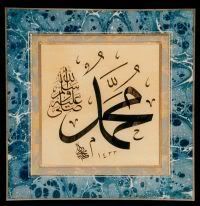
Image of Muhammad’s name in calligraphic art form courtesy of Google Images

ARABIAN BUSINESS.COM: There is no such thing as an Islamic Sukuk; these are conventional bonds that are coated with an Islamic shell." To say Hassan Heikal, the CEO of the leading home-grown investment bank in the Middle East, EFG-Hermes, is sceptical about Islamic finance is an understatement. On the other side of the spectrum, Dr Abdul Moman Al-Olaby, a professor who was one of the pioneers in the industry agrees that some Sharia-compliant structures are questionable, but says "Sharia-compliant finance is our jewel, and even in its infancy, it is well positioned to compete among global banking giants."


Dr Ibrahim Warde, a professor of international business at Tufts University in the USA, and author of Islamic Finance in the Global Community, has been studying the industry for the past decade. As an academic, he takes a more nuanced approach, and tells Arabian Business "the initial hope of the sector was that it would be a completely different approach to finance and it would have many economic and social benefits, and would be based on the principle of sharing profits and losses." Critics today claim that "it evolved into a mimicking of conventional finance" and some question if it is a "new model", but supporters defend the approach on the grounds that they are leading the much needed modernisation of the financial sector.


While the debate will undoubtedly continue, it is undeniable that the cat is out of the bag. Sharia-compliant finance is a growth sector all over the world, and has now become a US$600bn industry. Given the immense wealth of the Arab world and the billion-plus global Muslim population, market dynamics forced the creation of Sharia-compliant finance. From Singapore to London, from Doha to New York, bankers are developing new products, chasing new clients, and laying the groundwork for global expansion.

In this report, Arabian Business examines the origins of Sharia finance, modern banking products, and the rise in corporate finance. We also speak to some of the players behind the burgeoning Takaful (insurance) market, see the Qatari innovation of Sharia-compliant private equity, and look at the scholars and boards endorsing the various structures. Banking on piety >>> By Christina Corbett and Mohammed Aly Sergei

Mark Alexander (Paperback)
Mark Alexander (Hardback)

November 18, 2008

Government Seen Helping Islamic Finance

INTERNATIONAL HERALD TRIBUNE: KUALA LUMPUR: Islamic banking is set to rise from its modest 2 percent share of bank assets as the government encourages growth and Muslims overcome their suspicion, sharia lender Gatehouse Bank said on Tuesday.

Islamic finance, which rejects interest-based lending and speculation in favour of profit and loss sharing between venture partners, has been in Britain since the 1970s, but only a small number of Muslims have embraced it.

In recent years, Britain has been viewed as the European leader in providing Islamic financial services, aiming to serve both domestic Muslim markets as well as tapping into the vast wealth of Gulf investors.

"The government is very keen on social inclusion and economic inclusion and it feels that still there are areas of the UK where there's not enough economic inclusion," Gatehouse Chairman Richard Thomas told reporters on the sidelines of an Islamic finance forum in Malaysia.

"So they feel that if they open up alternative finance such as Islamic finance then that will allow people to be included in the British economy in a way they weren't before."

He did not give estimates for the Islamic finance industry's growth.

Britain intends to issue its own sovereign sharia-compliant sukuk debt in a rolling programme worth around 2 billion pounds, although it has said legal barriers still remain and it will make a final decision later. >>> Reuters (Reporting by Liau Y-Sing) | Novemebr 18, 2008

THE GUARDIAN: Standardisation Moves to Help Sharia Finance-scholar

KUALA LUMPUR, Nov 18 (Reuters) - Efforts to standardise the reading of the sharia will not stifle the Islamic finance sector, a leading sharia scholar said on Tuesday, dismissing concerns that the industry risks being smothered by too much regulation.

A lack of standardisation in Islamic finance contracts is one of the biggest complaints among bankers in the $1 trillion industry, but there are also worries that a growing effort to harmonise across the globe could create a one-size-fits all approach in structuring deals.

"In Islamic law we encourage debate, research, scholarship and it is an ongoing process which cannot be stopped by anybody," Sheikh Nizam Yaquby, a highly regarded scholar, told reporters on the sidelines of an Islamic finance forum.

"However, for the purpose of standardisation, it is important to have certain prudential rules and basic contracts especially repetitive ones to be accepted among a group."

Sharia scholars are experts in Islamic law and international finance. They are seen as the industry's gatekeepers as they sit on the Islamic boards of institutions and rule on whether or not proposed products are sharia compliant.

Islamic law is open to diverse interpretations, resulting in some financing structures that aren't accepted by all Islamic markets.

An Islamic finance structure called bai bithaman ajil that is popular in Malaysia, for example, is not accepted by Middle East markets as Islamic.

Under bai bithaman ajil, a bank purchases an asset for its customer and sells it to him at a profit, with the sum to be repaid in instalments.

Recent attempts to harmonise industry standards include a plan by the International Swaps and Derivatives Association to launch standards next year for over-the-counter sharia-compliant derivative contracts. >>> Reuters, Tuesday November 18 2008

The Dawning of a New Dark Age – Paperback (US) Barnes & Noble >>>
The Dawning of a New Dark Age – Hardcover (US) Barnes & Noble >>>

April 05, 2008

Jihad Comes to Wall Street

"Sharia finance" does exactly what it promises, financing the spread of sharia — and terror. - Alex Alexiev

NATIONALREVIEW ONLINE: If you’ve seen Geert Wilders’s film Fitna, you may not have noticed a single headline amongst all the bombings, beheadings, and earnest expressions of Islam’s eventual world domination: Halal-fund: investments for Muslims. But the investment vehicles referenced are an essential part of radical Islam’s efforts to insinuate itself into Western societies in order to destroy them from within. And Wall Street, barely out of the woods from its disastrous run-in with sub-prime mortgages — and having lost one of its historic investment houses, Bear Stearns, in the process — is now chasing the very kind of "sharia finance" against which Wilders's movie warns, a business line that may eventually wind up being even more calamitous than the subprime-mortgage fiasco.

For the growing army of its acolytes, who salivate at the prospect of tens of billions of dollars in transaction fees from the burgeoning industry, sharia-compliant finance is seen as little more than a cuddly Islamic version of socially conscious investment — with ethical strictures forbidding usury and sin industries, and emphasizing charity. Indeed, a conference on the subject last Fall co-sponsored by the Wall Street Journal was titled just that: "Islamic Ethical Investment." According to this rosy interpretation, sharia finance is a windfall for capital markets — allowing Wall Street to skim some foam off the ocean of petrodollar liquidity in the Middle East, and put it to good use.

Other interpretations are possible, of course. Critics see sharia finance as a massive subversion campaign by radical Islam designed to legitimize sharia in the West, to undermine our markets, and ultimately to imperil our free-enterprise system and national security — all the while exposing banks to financial risks that make the sub-prime fiasco look like a walk in the park. For its proponents and ideological enablers — such as the well known suicide-bombing advocate, Sheikh Yusuf al-Qaradawi — sharia finance is nothing less than "Jihad with money." As al-Qaradawi explains, "God has ordered us to fight enemies with our lives and with our money." Unfortunately for Wall Street, it’s hard to argue with the good sheikh on that score. Far from being a guide to ethical investment, sharia finance is indistinguishable from sharia itself.

Sharia is a reactionary-to-the-core medieval Islamic doctrine that claims control over every aspect of every Muslim’s life. It imposes such "ethical" mandates on Muslims as the obligation to discriminate against women and non-Muslims; to kill homosexuals, adulterers, and apostates; to establish and maintain Muslim rule around the world; and to carry out violent offensive jihad against infidels. Notably, for those Muslims who cannot engage in physical jihad using force of arms, sharia requires that they support jihad financially. This is what sharia finance is all about. Jihad Comes to Wall Street >>> By Alex Alexiev

Hat tip: Revereridesagain

Cross-posted at A New Dark Age Is Dawning

Mark Alexander

September 19, 2008

Islamic Finance Moves into Mainstream as Investors Seek Ethical Alternatives

Photobucket
Image courtesy of Google Images

TIMESONLINE: Our correspondent looks at the steady rise of Sharia-compliant banking across Britain

Amjid Ali tells a story about when he was setting up the UK operations of HSBC Amanah, HSBC’s Islamic bank, in 2003. Mr Ali, now a senior manager at the global Amanah business, said: “I had a young, white, Christian man working with me. His surname was Bacon, which wasn’t ideal, but he embedded himself in the community so well that he became known as Mr Halal Bacon.”

His point was that although Islamic, or Sharia-compliant, finance was designed to enable Muslims to buy financial products that comply with the tenets of their religon, it is no longer a niche business. “There’s no need to be Muslim to work here or to buy the products,” Mr Ali said.

The global Islamic finance market is growing at 15 per cent a year and is expected to be worth $1,000 billion by 2010. In the UK it has grown to more than £500 million. A recent Mintel report said that 400,000 Muslims in Britain held Islamic products.

Moreover, although the official estimate of the Muslim population in the UK is two million, it is likely to be closer to three million, which means that there is a huge potential market.

NonMuslim Britons are getting a taste for Sharia-compliant products. Steven Amos, head of marketing at the Islamic Bank of Britain, said: “We’ve got nonMuslim customers, including some really famous names, because they like the ethical standpoint we take.”

The Islamic Bank opened in 2004 and is listed on AIM. Last year its customer base shot up by 38 per cent to 42,000, while deposits grew 61 per cent to £135 million and assets went up 51 per cent to £15.8 million. Muslim demographics in Britain offer the potential for even greater growth. Islamic Finance Moves into Mainstream as Investors Seek Ethical Alternatives >>> By Christine Seib | September 16, 2008

Related - ABC NEWS (AU):
Federal Opposition Leader Brendan Nelson says under no circumstances would he support Australia recognising Sharia law.

Dr Nelson's comments came after Britain's Archbishop of Canterbury Rowan Williams said he believed the adoption of certain aspects of Sharia (Islamic) law in the UK was unavoidable.

Dr Williams said British Muslims could choose to have marital disputes or financial matters dealt with in a Sharia court.
But Dr Nelson says everyone who comes to Australia should accept the existing laws.

"The idea that in some way you would change your basic values, culture and law to accommodate some people who feel that they don't want to see themselves as Australians first, above all else - under no circumstances would I support that," he said.
Sharia Law Not an Option: Nelson >>> | February 8, 2008

The Dawning of a New Dark Age – Dust Jacket Hardcover, direct from the publishers (UK) >>>
The Dawning of a New Dark Age – Paperback, direct from the publishers (UK) >>>

March 04, 2008

Islamic Finance and the Square Mile

Photobucket
Image courtesy of Google Images

TIMES ONLINE: How does Sharia fit into the heated debate about the relationship between the British legal system and religious codes?

Here’s a thought. If all the sub-prime deals in the US had been governed by Sharia there would have been no massive defaults and the credit crunch would never have loomed over our shopping expeditions.

Instead, Islamic law’s requirements for prudent lending, the sharing of risk and a ban on the earning of interest would have insulated the borrowers and the world economy at large from the debacle of the past six months. And for that even the Archbishop of Canterbury’s harshest critics might have been a mite grateful.

So how does Islamic finance — now increasingly practised by law firms in London and New York — fit into the heated debate about the relationship between the British legal system and religious codes?

The Prime Minister in particular needs to have an answer to that. Last week he was quoted as saying that: “British laws must be based on British values and religious law should be subservient to British criminal and civil law.” How come then that Gordon Brown, when Chancellor, wanted “to make Britain the gateway to Islamic finance and trade”? And, to support that, government introduced changes to the taxation regime to accommodate Sharia-compliant transactions.

To appreciate the full impact of Sharia on City law and business you have only to go to Clifford Chance where Islamic finance is an important activity. The firm was named Euromoney Islamic finance firm of the year in 2007 and it has scores of lawyers both in the Middle East and in London practising Sharia. Habib Motani explains: “Doing deals that are Sharia compliant is a standard part of what we do. It’s part of the mainstream.”

But does this mean that there is now a rival jurisdiction operating in London? Has Sharia sneaked into the Square Mile by the back door while the good Archbishop waits befuddled at the front? Well, in the spirit of Canterbury unclarity, the answer is Yes (and a little bit No). What is clear is that transactions hatched in London by UK lawyers are being reviewed by Sharia scholars in the Middle and Far East who judge whether or not they comply with Islamic law. If they do not, they do not go ahead. So in practice the jurisdiction of Sharia is now well established in Britain. Islamic finance and the Square Mile >>> By Edward Fennell

TIMES ONLINE:
London risks losing its lead in Islamic finance: Reports that the Government has gone cold on plans to issue its own sukuk, or Sharia bond, is a blow for the City By Michael Herman

Mark Alexander (Paperback)
Mark Alexander (Hardback)

March 12, 2009

Westerners Help Financial Jihad Along

TIMES ONLINE: Sharia-compliant finance is prospering in Britain. But how can it stay insulated from the credit crunch?

As the credit crunch has mutated inexorably into a recession, with bankers having eclipsed politicians, lawyers and even journalists as public enemy number one, the growing number of Islamic finance institutions in Britain might just be sitting pretty.

The UK now has five fully Sharia-compliant banks and another 17 financial institutions have set up special branches or firms. They include the Qatar Islamic Bank (QIB), with its London-based European Finance House in Berkeley Square, and the Islamic Bank of Britain, which has headquarters in Birmingham.

Both have answered Gordon Brown’s call of two years ago for Britain to become the global centre for international Islamic banking; a report by the International Financial Services London even says that Britain’s Islamic banking sector is now bigger than that of Pakistan.

Islamic banks, says Steven Amos, the Islamic Bank of Britain’s head of marketing, are prospering. “Our core business will always be Muslims but the numbers of non-Muslims are really picking up. We’ve had massive interest — and that’s down to a number of reasons, all of which have kept us insulated from the credit crunch.”

He alludes to the nuances of Islamic banking — specifically that Islamic finance has to be Sharia, or Islamic law, compliant. Sharia is taken from the Koran, one of whose central tenets — that money has no intrinsic value — might sound alien to the denizens of the City.

One British businessman believes that adopting Sharia principles might be just what the West needs. Roger Smee, a former professional footballer and now businessman, says the West has “lost the plot. All we have as a success guide is a number of rich lists. Instead of looking down on what we are quick to reject as cumbersome legal restrictions, we should take a page out of the Middle East’s book and use the principles of Sharia to begin building real and sustainable economies.” Crossing Over to Islamic Banking >>> Alex Wade | Thursday March 12, 2009

The Dawning of a New Dark Age (Paperback & Hardback) – Free delivery >>>

December 04, 2008

Keeping the Faith

TIMESONLINE: Islamic finance principles may be a thousand years old but they have attracted the attention of the West only recently. Now business schools are offering specialist masters programmes on the subject

While the world’s financial systems are shaken to their foundations, global stock markets tumble and thousands of bankers are made redundant, one area of finance goes from strength to strength.

Islamic banking and finance principles may be a thousand years old but they have attracted the attention of Western financial services companies only recently. Now business schools are offering specialist masters programmes on the subject.

Islamic banking and finance must comply with Islamic law, or Sharia. This is governed by a number of fundamental principles and prohibitions and there are many differences from conventional finance.

“There is the absolute prohibition on the charging of interest,” says John Board, director of the International Capital Market Association (ICMA) Centre, part of Henley Business School at Reading University. ICMA runs an MSc in investment banking and Islamic finance, taught jointly with the International Centre for Education in Islamic Finance in Kuala Lumpur. “This leads to the question: how do you raise money in a way that is commercially sensible but does not involve paying interest?

“And on the investment side, there is a range of prohibited activities. For example, Islamic investors may not invest in businesses that trade in alcohol or pork-related products, or are involved in certain types of entertainment.”

Other restrictions include not being able to sell something unless you own it, or to invest in companies with high levels of debt. Taking all the restrictions into account, many conventional financial products, such as deposit accounts, mortgages, credit cards, insurance, bonds and many derivatives, such as futures and options, are out of bounds to Islamic investors.

Until recently, certainly in non- Islamic countries, there was little on offer for people who wanted Sharia-compliant banking and finance. However, substantial growth in this market over the past five to ten years, partly driven by Middle Eastern countries investing oil revenues, means more institutions are beginning to offer appropriate products and services. Islamic assets under management are about £400 billion, according to the Islamic Financial Services Board, an industry body.

Today Islamic finance and banking touches everything from large capital infrastructure projects to retail banking. HSBC in the UK, for example, has Sharia-compliant bank accounts and mortgages. And the increase in Islamic finance activity means there is a need for postgraduates with knowledge in this area. “There is a big demand for Islamic finance as a professional activity,” Board says. >>> Steve Coomber | December 3, 2008

The Dawning of a New Dark Age (Paperback & Hardback) – Free delivery >>>

May 01, 2008

A View on Islamic Banking Which Sees All the Benefits But None of the Dangers Inherent in Its Growth Here in the West

FINANCIAL TIMES: A new Islamic bank will be launched in London on Tuesday, reaffirming the City’s status as the leading western financial centre for this fast-growing sector.

Gatehouse Bank is the fifth Islamic bank to be awarded a licence in Britain, demonstrating the resilience of Sharia-compliant finance in spite of the credit crisis that has wiped billions off the balance sheets of conventional banks.

David Testa, chief executive at Gatehouse, said: “Islamic finance is a healthy and growing industry, stimulated primarily from the Gulf, but also from growing interest in south-east Asia, including new centres such as Indonesia.

“Investors in the Middle East are increasingly looking to diversify out of their region and they see London as a key marketplace to help them in this. One of the main reasons why London has become such an important centre for this kind of finance is due to the legislative changes pushed through by the government over the last five years.

“It has brought in new laws to level the playing field with conventional finance and make the City an attractive place to invest in a Sharia-compliant way. For London, what with the problems of Northern Rock and the crackdown on non-doms [non-domiciled foreigners], this really is one area where the City has got it right.”

Britain is the only country in the European Union to have licensed Islamic banks as the government has realised the potential of this market for the City as a financial centre. It has also seen the development of Islamic finance as a way of building bridges with the 2m Muslims who live in the UK.

The UK has also stolen a march on New York, the world’s other leading financial centre, as a hub for Islamic finance, partly because of its timezone and partly because of the antipathy towards this sector in the US following the September 2001 attacks. UK’s Fifth Islamic Bank to Tap Demand Growth >>> By David Oakley, Capital Markets Correspondent | April 21, 2008

The Dawning of a New Dark Age (Paperback - UK)
The Dawning of a New Dark Age (Hardback - UK)

November 22, 2008

Muslims to Be Offered Sharia-compliant Pensions by Government

The game must now surely be about up! - ©Mark

THE TELEGRAPH: Muslims are to be offered Sharia-compliant pension funds by a new Government body.

The scheme to provide retirement funds for millions who do not already have a company pension is likely to include a special option that would not invest in companies deemed sinful under Islam.

Ministers are keen to get Muslims saving with the Personal Accounts Delivery Authority, as many who have low-paid jobs or who have moved to Britain in recent decades are unlikely to have put away much for their old age.

The decision to provide a Sharia-compliant pension fund is another sign of the growing influence of Islamic law in British public life and in particular the country's finance industry.

The prospect of some aspects of Sharia law such as divorce proceedings and dispute resolution being enshrined in the English legal system – raised by the Archbishop of Canterbury and Lord Chief Justice this year – remains highly controversial because of fears that the system discriminates against women and that a two-tier approach would be divisive.

But more and more financial products are being tailored to cater for Britain's population of 2million Muslims.

The religion's holy book, the Qu'ran, forbids Muslims from making money from money, so they cannot use products that involve the charging of interest nor invest in traditional financial services firms.

Gambling, drinking and pornography are also seen as immoral under Islam, so Muslims cannot put their money into companies that promote these activities.

The Islamic finance market is estimated to be worth £500million already and is growing rapidly.

Families can already get Sharia-compliant baby bonds under the Government's Child Trust Fund scheme while the UK is likely to become the first Western country to issue Islamic bonds in order to raise money from the Middle East.

This year has also seen the launch of Britain's first Islamic insurance company and pre-paid MasterCard. There are a handful of wholly Islamic banks in the country and several more that offer alternatives to mortgages which do not involve the charging of interest. >>> By Martin Beckford, Social Affairs Correspondent | November 21, 2008

The Dawning of a New Dark Age (Paperback & Hardback) – Free delivery >>>

July 17, 2010

Beginners’ Guide to Islamic Finance

FINANCIAL TIMES: Islamic Finance is a method of financing and banking operations that abides by Sharia Law. With the help of Bank of London and Middle East we outline the rules that all sharia-compliant financial products have to adhere to.

What are the main rules for Islamic finance?

Bank of London and the Middle East (BLME), a Sharia compliant bank, says the main principles of Islamic Finance is the avoidance of all haram (harmful) activities such as charging interest. In addition to the prohibition on charging interest, Islamic financial institutions must ensure that ambiguity (gharar) or gambling/speculation (maysair) is minimised in transactions and contracts. Complying with Sharia law also means that Islamic Financial Institutions are not permitted to invest in alcohol, pork, pornography or gambling.

How does Islamic finance work?

The overarching principle of Islamic finance is that all forms of interest are forbidden.

The Islamic financial model works on the basis of risk sharing. The customer and the bank share the risk of any investment on agreed terms, and divide any profits between them.

The main categories within Islamic finance are: Ijara, Ijara-wa-iqtina, Mudaraba, Murabaha and Musharaka. >>> Lucy Warwick-Ching | Wednesday, July 14, 2010

Related articles here and here and here

May 30, 2008

Economic Jihad Spreads to Ireland; Shari’ah-Compliant Financial Services ‘Should’ Be Made Available to Muslims There as a Matter of Urgency

At this rate, capitalism will be dead in a short time. It took the West years to defeat communism. Western capitalism eventually won the day as it was seen to be superior. Indeed it was and still is superior. Islamic economics is now winning the day, though. And there has been no need of a Cold War, and no need for guns (or swords). All it has taken is intimidation of Westerners by an assertive Muslim population, a sense of subservience to the Gulf Arabs, especially the Saudis, ignorance of the true nature of Islam and its goals, a refusal to admit to the dangers of that faith, appeasement, meekness, and timidity on the part of Westerners who are afraid of confronting the ideology, a loss of belief in our own destiny, and a dogged determination on the part of our leaders and captains of industry NOT to call Islam what it actually is: A political system wrapped up in a deity.

The end of capitalism and liberty, dear readers, is nigh! - ©Mark


THE IRISH TIMES: THERE IS an “urgent need” for sharia-compliant financial services to be made available in Ireland so that Muslims living here do not contravene religious teachings, representatives from Irish financial institutions were told at a seminar on Islamic banking yesterday.

The seminar was held at the Islamic Cultural Centre of Ireland (ICCI), which is based at Ireland’s largest Sunni mosque in Clonskeagh, Dublin.

“We organised this conference because there is an urgent need for the Muslim community here to have mortgages and other financial services that do not drive them to break their Islamic teachings,” said Ali Selim, a theologian and secretary to Imam Hussein Halawa of the ICCI.

During yesterday’s seminar Imam Halawa outlined the religious tenets of Islam that forbid the payment or receipt of interest, known as riba.

Representatives from the Arab Banking Corporation’s London subsidiary and the Islamic Bank of Britain gave presentations on how the market for Islamic finance has developed in the UK in recent years.

Several high street banks in Britain now offer a variety of sharia-compliant services, including mortgages.

One of the most common types is based on the Islamic principles of “diminishing musharaka” or diminishing ownership. Under this scheme, the customer and bank jointly acquire a property, with the customer’s share usually similar to the normal deposit, but the property is bought in the bank’s name only.

The customer makes monthly payments made up of rent and contributions towards the purchase price over an agreed period of time.

The amount of rent decreases as the customer’s share in the property increases. Ownership is transferred when the customer eventually buys out the bank.

Similar partnerships are available so Muslim business people in the UK can avoid interest repayments.

Mr Selim told the seminar that as Ireland’s Muslim population increased there would be more demand for such services here. Call for Sharia-Compliant Finance Services to Be Available in Ireland >>> By Mary Fitzgerald | May 30, 2008

The Dawning of a New Dark Age (Paperback - UK)
The Dawning of a New Dark Age (Hardback - UK)

March 06, 2009

Britain Warned over Sharia-compliant Finance Arrangements

RELIGIOUS INTELLIGENCE: A British campaigning group has hit out at plans that would allow current financial arrangements to be altered to allow Sharia-compliant bonds to be issued.

The warning comes from two bodies, the Christian Legal Centre and Christian Concern for Our Nation (CCFON). They spoke out after changes were recommended to the Legislative Framework for the Regulation of Alternative Finance Investment Bonds (Sukuk). They say that if the changes are accommodated, the British Government would be ‘capitulating’ to Islamic religious law.


The subject of Sharia law has been hotly debated in the UK following comments by the Archbishop of Canterbury when he said that it "seems inevitable" that some parts of sharia would be enshrined in this country's legal code. Earlier this week the former Prime Minister Tony Blair backed the Archbishop. He commented in The Church of England Newspaper: "I thought at the time all this was a lot of fuss over nothing."


But in a written submission to the Treasury, the Christian Legal Centre and CCFON said that any change could radically change the fundamental basis of British society through its financial regulation. >>> By Judy West | Friday, March 6, 2009

NATIONAL SECULAR SOCIETY: Raise Your Voice against Sharia Law

The demonstration and meeting to protest at the introduction of sharia law into Britain will take place Saturday 7 March in Central London. We urge you to be there.

The One Law for All Campaign is calling on members and supporters of the NSS to come along to the demo and raise their voice against the rising clamour for official recognition of the pernicious sharia system of injustice. We will also be objecting to all religious-based tribunals that operate here of any religion. >>> | Friday, March 6, 2009

The Dawning of a New Dark Age (Paperback & Hardback) – Free delivery >>>

September 14, 2008

Canada’s Hot New Banking Trend: Shari’ah-compliant Finance

ISLAM BANK: TORONTO, ONTARIO -- It's an unlikely image: staffers at the Office of the Superintendent of Financial Institutions - surely one of Ottawa's driest regimes - are busy brushing up on the fine points of sharia law these days to cope with the anticipated expansion of Islamic financial services in Canada.

"Lately we have had more expressions of interest," said Normand Bergevin, managing director at OSFI's approvals and precedents division.

Several people on his staff are learning about business plans, legal structures, accounting methods, types of governance and other issues related to Islamic finance.

"It's fairly new to us," he said. "There's not a whole lot of experience here in terms of supervising or even understanding the different types of products. They all have little twists on them that make them very unlike anything we've ever seen before."

They're likely to see a lot more. Islamic finance is becoming one of the hottest areas in banking and insurance in the world as the Muslim population grows and wealth increases. A Hot New Banking Trend: Sharia-compliant Finance >>> By Tavia Grant | September 14, 2008

The Dawning of a New Dark Age (Paperback – Canada) >>>
The Dawning of a New Dark Age (Hardback – Canada) >>>

October 29, 2013

Britain to Become First Non-Muslim Country to Launch Sharia Bond

THE DAILY TELEGRAPH: David Cameron to unveil £200m Sukuk at the World Islamic Economic Forum in London on Tuesday

Britain is set to become the first non-Muslim country to sell a bond that can be bought by Islamic investors in a bid to encourage massive new investment into the City.

David Cameron will say in a speech on Tuesday at the World Islamic Economic Forum in London that the Treasury is drawing up plans to issue a £200m Sukuk, a form of debt that complies with Islamic financial law.

The new sharia-compliant gilt will enable Britain to become the first non-Muslim country to tap the growing pool of Islamic investments that is forecast to top £1.3 trillion by next year.

The Prime Minister will say that it would be a “mistake” to miss the opportunity to encourage more Islamic investment in the UK and that the City of London should rival Dubai as a centre for sharia-compliant finance.

“When Islamic finance is growing 50pc faster than traditional banking and when global Islamic investments are set to grow to £1.3 trillion by 2014, we want to make sure a big proportion of that new investment is made here in Britain,” Mr Cameron will tell an audience of senior officials from Islamic countries.

Among those at the meeting are Sultan Hassanal Bolkiah of Brunei, King Abdullah of Jordan, Afghan president Hamid Karzai and Prince Salman bin Hamad Al Khalifa, Crown Prince of Bahrain.

The World Islamic Economic Forum has never been held before in a non-Muslim country and highlights the growing role London is playing in the Islamic finance industry. » | Harry Wilson | Tuesday, October 29, 2013

April 28, 2008

Islamic Finance

INFORMATION CLEARING HOUSE: Islamic finance has become the fastest-growing, most dynamic sector of global finance. Every Western-style financial product has its sharia, i.e. Islamic law, compliant instrument: microfinance, mortgages, oil and gas exploration, bridge building, even sponsorship of sporting events. Islamic finance is innovative, flexible, and potentially very profitable. “Operating in 70 countries with about $500bn in assets, it is poised to expand geometrically.” With more than one billion Muslims eager to support it, analysts project that this system will soon manage approximately 4 percent of the world economy, equivalent to $1 trillion in assets. Such figures explain the eagerness of Western banks to tap into sharia financial services. Citigroup, along with many other Western banking retailers, have opened Islamic branches in Muslim countries.


At the end of 2004, the Islamic Bank of Britain, the first bank catering to a European Muslim client base, floated its shares on the London Stock Exchange. Ironically, Western capitalism’s three major global economic crises - the 1970s oil shocks, the late 1990s Asian crisis, and 9/11 - paved the way to the ascent of Islamic finance. Unlike market economics, Islamic finance centers on the religious tenets of Islam and operates in a way to keep Muslims compliant with sharia, the religious law that comes directly from the Koran. Islamic activists, intellectuals, writers, and religious leaders have always upheld the prohibition of riba, the interest charged by moneylenders, and denounced gharar, which refers to any type of speculation. Under this belief, money must not become a commodity in itself to create more money. Islamic finance thus shuns hedge funds and private equities, because they simply multiply cash by stripping assets. Money serves as a means or instrument of productivity as originally envisioned by Adam Smith and David Ricardo. This principle is embodied in the sukuks, Islamic bonds. Sukuks always link to real investments - for example, to pay for the construction of a toll highway - and never for speculative purposes. This principle springs from the sharia’s ban on gambling as well as on the prohibition of any forms of debt and activities that trade risk. Islamic Finance >>> By Loretta Napoleoni | April 26, 2008

Hat tip: Dr Nasir Khan >>>

The Dawning of a New Dark Age (Paperback - UK)
The Dawning of a New Dark Age (Hardback - UK)

May 06, 2009

Sharia Boards: Scholars Hold Sway over the Success of Products

FINANCIAL TIMES: The ultimate arbiters of the Islamic finance industry are not regulators, bespoke-suited bankers or the authorities, but a small, select coterie of ascetically garbed scholars versed in Koranic verses and arcane areas of jurisprudence.

This was made abundantly clear last year, when Sheikh Taqi Usmani, a leading scholar of sharia-compliant finance, shocked the industry by declaring many Islamic bonds, or sukuk, had gone too far in mimicking conventional debt.

Bankers and lawyers debate whether it was Sheikh Taqi or the credit crunch that caused the sukuk market to clam up: most admit the denouncement did not help.

The sharia supervisory boards – that Islamic banks must have – approve or ban transactions, products and services but do not become involved in credit policy or portfolio choices.

This can bring them into conflict with bankers who have conjured up increasingly complicated products.

“I’ve seen banks where the relationships were close, and others where they were tense, but everyone knows you cannot do anything without the scholars’ blessing,” says an industry insider.

Bankers say – until the credit crunch – the scarcity of sharia scholars was the biggest drag on growth of the Islamic finance industry.

Islamic banks have multiplied in recent years, thanks to government support, a profusion of petrodollars and a favourably inclined customer base in much of the Muslim world.

However, the number of scholars qualified to pass judgment on banks has remained low at about 30-40.

In addition to exhaustive knowledge of sharia and Islamic jurisprudence, scholars have to be financially knowledgeable and comfortable with English – the language of most financial and legal documentation. >>> By Robin Wigglesworth | Tuesday, May 5, 2009

October 22, 2008

Dimmi Alert! Could Sharia Car Insurance Save You a Fortune?

There is no doubt in my mind that Westerners, if they see a chance to save some money on financial products such as car insurance, will desert the usual and go for the halal option. Principle will matter to them not a jot, nor will the Jihad being waged against the West.

Has anybody else noticed that the Muslims are winning this war against the West, against democracy, and against capitalism precisely because they put principle before profit. There’s a lesson to be learnt in that, don’t you think?
- ©Mark


THE GUARDIAN: This week the snappily named Salaam Insurance announced it was taking its "halal car insurance" to a wider audience than Britain's 2 million Muslims. And with good reason - this sharia-compliant product is attractive enough to give many established insurers a run for their money.

For years the UK has had sharia-compliant mortgages engineered so that borrowers pay for their loan without incurring interest charges - something outlawed by sharia rules. But until now, according to Farrukh Raza of Islamic Finance Advisory & Assurance Services, Muslim car owners have had to put their beliefs to one side when buying a policy. "These new products are sharia-compliant but the insurance works in exactly the same way as conventional policies."

Salaam says its car policies conform to the principle of takaful - a form of sharing risk. Any surplus is returned to customers as discounts on their next renewal.

You'll know the money was invested ethically, too. It cannot, for example, be sunk into businesses that are prohibited to Muslims - such as casinos or pornography.

The big question is, will it undercut your current premium? Yesterday I got a quote from Salaam to insure my 10-year-old Toyota estate. It came it [sic] at £233 - almost exactly the same as we pay our current insurer, the Co-op. So it certainly looks competitive. Next time your car insurance renewal comes through, it could be worth going halal. [Source: The Guardian] Miles Brignall | October 21, 2008

The Dawning of a New Dark Age – Dust Jacket Hardcover, direct from the publishers (UK) >>>
The Dawning of a New Dark Age – Paperback, direct from the publishers (UK) >>>

February 05, 2009

Indian Money Managers Warm Up to Islamic Finance

REUTERS: MUMBAI/KUALA LUMPUR - Money managers in India have begun launching sharia-compliant funds, hoping to tap the country's large Muslim population, the world's third-biggest after Indonesia and Pakistan.

The push toward the new funds comes in the wake of dwindling cash flows into more traditional investment channels, which have been hit by a stock market slump and slowing economic growth.

In January, the portfolio management services unit of HSBC's (HSBA.L) Indian fund arm started offering a sharia product, and on Wednesday Mumbai-based Benchmark Asset Management launched India's first exchange-traded sharia fund.

"There is a need gap...for investment products that are sharia-compliant," said Vikramaaditya, chief executive of HSBC Asset Management.

Zafar Sareshwala, chief executive of Mumbai-based Islamic brokerage Parsoli, said sharia-compliant funds could easily raise $1 billion from millions of potential Muslim investors. >>> By Nishant Kumar & Liau Y-Sing | Thursday, February 5, 2009

The Dawning of a New Dark Age (Paperback & Hardback) – India >>>

February 10, 2009

Western Companies Seen Eyeing Islamic Bonds

Photobucket

REUTERS: LONDON/MANAMA - Cash-strapped Western companies are considering issuing Islamic bonds to tap Middle Eastern investors but face a challenge in choosing the right instrument, bankers and asset managers said.

Companies, especially in the UK and France, are looking to Islamic compliant investors as alternative sources of finance as the global crisis restricts their usual funding routes.

"There is a lot of interest from corporates to issue sukuk. My feeling is that as liquidity in the West gets scarce, they will look into the Middle East," said London-based Adnan Aziz, head of sharia advisory and structuring at asset manager BMB Group.

British retailer Tesco (TSCO.L) issued its first sukuk -- or Islamic-compliant debt --in 2007 for its Malaysian unit as well as raising conventional debt.

Islamic bonds do not pay interest, which is banned under Islamic law or Sharia, and are structured as profit-sharing or rental agreements, underpinned by physical assets such as real estate or commodities.

"We have discussions with clients, conventional issuers in Europe and we pitch both solutions, (bonds and sukuk) that is going to be a trend going forward," said Vikrant Bhansalim, who works for French bank Societe Generale (SOGN.PA) in London.

"In today's world the corporate sector is interested in the right price, the format is not as important," he said. >>> Reuters | Tuesday, February 10, 2009

The Dawning of a New Dark Age (Paperback & Hardback) – Free delivery >>>

REUTERS:
Indonesia Reports Strong Demand for First Retail Sukuk >>> Reuters | Tuesday, February 10, 2009

SMART BRIEF: Report Details Growth of U.K.'s Islamic Finance Sector

A report by International Financial Services London found that the Islamic finance sector in Britain, with $18 billion in assets, is much larger than that of Pakistan, Turkey, Egypt and Bangladesh, countries where Islam is the primary religion. The report also states that the U.K. leads Western countries in the number of financial institutions focused on Muslims and sharia-compliant products. >>> The Telegraph | Tuesday, February 10, 2009

The Dawning of a New Dark Age (Paperback & Hardback) – Free delivery >>>

September 25, 2008

More Sharia-compliant Investment Companies than Conventional Ones in Kuwait

ARAB TIMES: KUWAIT, (KUNA): Islamic investment companies have surpassed conventional institutions, with 48 Sharia-compliant investment companies up to the end of July compared to 45 conventional ones. According to a KUNA analysis of statistics published by the Central Bank of Kuwait, however, the volume of assets managed by Islamic companies still remained less than that run by conventional companies. Total assets held by conventional companies came to KD 10.6 billion at the end of July compared to KD 7.9 billion held by Islamic ones. Nevertheless, there is a noticeable growth in assets of Islamic investment companies since January by 18.7 percent compared to the 14 percent growth rate registered by conventional companies during the same period.

As for assets of conventional companies, they were divided into credit facilities to residents at KD one billion, domestic investments at KD 3.1 billion, as well as KD 145 million in non-financial investments. Foreign assets came to KD 4.6 billion, cash at KD 8.7 million, and other assets came to KD 1.2 billion. Assets of Sharia-compliant investment companies came to a total of KD 7.9 billion of which financial investment accounted for KD 2.8 billion, foreign assets at KD 1.9 billion, as well as client financing operations at KD 947 million.

Meanwhile, the Chairman of Al-Madina Real Estate Development Company — a subsidiary of Al-Madina for Finance and Investment Company — announced that the company is proceeding with the implementation of its marketing strategy, which relies on real estate investment in the domestic market by seeking to seize promising investment opportunities, where the company acquired three residential towers in Abu Dhabi, in the UAE, and will be marketed in an exhibition. In another development, Global Investment House has signed a syndication of a $410 million three-year term loan backing its acquisition of a 20% stake in National Bank of Umm Quwain (NBQ). The loan was launched via arranging banks BNP Paribas and WestLB. Global Investment House will contribute with a 25% stake of the capital increase which will reach $650 million. [Source: ARAB TIMES] | September 24, 2008

The Dawning of a New Dark Age – Dust Jacket Hardcover, direct from the publishers (US) >>>
The Dawning of a New Dark Age – Paperback, direct from the publishers (US) >>>