Showing posts sorted by relevance for query Islamic finance. Sort by date Show all posts

June 01, 2009

Islamic Finance Info Launches Islamic Finance Web Portal

AME Info: Islamic Finance Info Inc., the online company dedicated to offering the Muslim investors financial and investment information service in compliance with Islamic principles, announces the launch of its Islamic Finance web portal at www.islamicfinanceinfo.com.

The ultimate goal of establishing the web portal is to create a platform that is totally dedicated to Islamic Finance so that the relevant information could be disseminated across the globe.

Islamic Finance have been proven to be resillient against the current global financial crisis because it follows the tenets of Shariah that have prohibited its association to elements such as riba, speculation and uncertainty. Now, many people, Muslims and non Muslims alike are curious to find out more about Islamic Finance. IFI's objective is to provide the answers to all things related to Islamic Finance.

The Islamic Finance portal will provide educational information on the basic principles of Islamic finance, the various types of Islamic finance products and the other key principles in Islamic Finance.Membership is currently free and will entitle the users to access the various databases that are currently set up. Amongst those that are available would be the list of Islamic banks. Takaful companies, Shariah scholars and Islamic funds.

Islamic Finance Info Inc. was founded by two investors with extensive experience in Islamic Finance and Information Technology. The company is currently in the process of setting up its various offices. It will eventually have a key presence in Dubai and Singapore respectively. [Source: AME Info] Monday, June 01, 2009

November 18, 2008

Government Seen Helping Islamic Finance

INTERNATIONAL HERALD TRIBUNE: KUALA LUMPUR: Islamic banking is set to rise from its modest 2 percent share of bank assets as the government encourages growth and Muslims overcome their suspicion, sharia lender Gatehouse Bank said on Tuesday.

Islamic finance, which rejects interest-based lending and speculation in favour of profit and loss sharing between venture partners, has been in Britain since the 1970s, but only a small number of Muslims have embraced it.

In recent years, Britain has been viewed as the European leader in providing Islamic financial services, aiming to serve both domestic Muslim markets as well as tapping into the vast wealth of Gulf investors.

"The government is very keen on social inclusion and economic inclusion and it feels that still there are areas of the UK where there's not enough economic inclusion," Gatehouse Chairman Richard Thomas told reporters on the sidelines of an Islamic finance forum in Malaysia.

"So they feel that if they open up alternative finance such as Islamic finance then that will allow people to be included in the British economy in a way they weren't before."

He did not give estimates for the Islamic finance industry's growth.

Britain intends to issue its own sovereign sharia-compliant sukuk debt in a rolling programme worth around 2 billion pounds, although it has said legal barriers still remain and it will make a final decision later. >>> Reuters (Reporting by Liau Y-Sing) | Novemebr 18, 2008

THE GUARDIAN: Standardisation Moves to Help Sharia Finance-scholar

KUALA LUMPUR, Nov 18 (Reuters) - Efforts to standardise the reading of the sharia will not stifle the Islamic finance sector, a leading sharia scholar said on Tuesday, dismissing concerns that the industry risks being smothered by too much regulation.

A lack of standardisation in Islamic finance contracts is one of the biggest complaints among bankers in the $1 trillion industry, but there are also worries that a growing effort to harmonise across the globe could create a one-size-fits all approach in structuring deals.

"In Islamic law we encourage debate, research, scholarship and it is an ongoing process which cannot be stopped by anybody," Sheikh Nizam Yaquby, a highly regarded scholar, told reporters on the sidelines of an Islamic finance forum.

"However, for the purpose of standardisation, it is important to have certain prudential rules and basic contracts especially repetitive ones to be accepted among a group."

Sharia scholars are experts in Islamic law and international finance. They are seen as the industry's gatekeepers as they sit on the Islamic boards of institutions and rule on whether or not proposed products are sharia compliant.

Islamic law is open to diverse interpretations, resulting in some financing structures that aren't accepted by all Islamic markets.

An Islamic finance structure called bai bithaman ajil that is popular in Malaysia, for example, is not accepted by Middle East markets as Islamic.

Under bai bithaman ajil, a bank purchases an asset for its customer and sells it to him at a profit, with the sum to be repaid in instalments.

Recent attempts to harmonise industry standards include a plan by the International Swaps and Derivatives Association to launch standards next year for over-the-counter sharia-compliant derivative contracts. >>> Reuters, Tuesday November 18 2008

The Dawning of a New Dark Age – Paperback (US) Barnes & Noble >>>
The Dawning of a New Dark Age – Hardcover (US) Barnes & Noble >>>

October 06, 2008

Is Islamic Finance at Tipping Point?

THE ECONOMIST: Shari'a-compliant banking is fast moving from niche to mainstream, says Christopher Watts. But while continuing growth seems certain, challenges remain.

In January this year when the UAE's Sharjah Electricity and Water Authority (SEWA) needed cash to construct a power generation and desalination plant in the town of Hamriyah, it was Islamic finance that provided the answer: The utility raised USD 350 m by issuing its first ever sukuk ? asset-backed bonds that comply with Shari'a, the Islamic legal code that prohibits interest.

By no means is SEWA alone in venturing into the Islamic capital markets. Corporate sukuk issuance leapt from USD 0.4 billion in 2000 to USD 24.5 billion in 2006, according to International Islamic Financial Market (IIFM), an industry association. Growth topped 122% in 2006 alone. "Islamic finance is no longer a niche market," says David Pace, CFO of Bahrain-based Unicorn Investment Bank (UIB), a Shari'a-compliant house. "It is increasingly a mainstream component of the global banking system."

To be sure, while the world's first Islamic bank was founded back in 1975, it is only in the last five years or so that Islamic finance has surged. Sniffing opportunity, conventional banks are now scrambling to set up Shari'a-compliant operations; and there has been a flurry of all-Islamic start-ups, from full-service investment banks to specialist advisory firms. Products have moved beyond lending, insurance and investment funds to include sukuk, hedge funds, currency swaps, and more.

Despite this boom ? [sic] largely concentrated in the Middle East and South-East Asia ? [sic] it's plain the Islamic finance industry still lacks global scale. Professor Rodney Wilson of the Institute for Middle Eastern and Islamic studies at Durham University in the UK estimates Islamic banking assets speak for less than 0.5% of the world's total. And worldwide sukuk debt outstanding amounts to perhaps USD 100 billion ? just 0.1% of the global bond market.

Still, the signs point to a continuing surge in Islamic finance. Take economic growth: The Middle East and Asia are the two fastest-growing areas of the world. Kuwait Finance House expects 2007 GDP to rise 6.1% in the GCC and 6.2% in South-East Asia ? [sic] in contrast to 2.4% in the EU and 2.2% in the US. Oil revenues lie behind the boom in the GCC; and in South-East Asia it is "the financial rigour adopted in the wake of the Asian currency crises," according to Douglas Clark Johnson, CEO of Calyx Financial, an alternative investment adviser based in New York.

Continuing growth in the GCC states and South-East Asia is fast creating a prosperous middle class among the regions' combined 410 m-strong Muslim population. As the ranks of the regions' newly well-off snap up credit to buy homes and cars, and invest in savings and retirement plans, demand for Shari'a-compliant retail financial services is set to accelerate. Behind such consumer products is a need for Islamic institutional finance too.

Consider, too, the vast cash-flows into the GCC region and South-East Asia: The IMF expects Indonesia and Malaysia alone to record a cumulative current account surplus of USD 132 billion for the five-year period to end-2008, in contrast to a deficit of USD 32 billion for the same period a decade earlier. And in the GCC, the surplus should reach USD 680 billion, versus a prior deficit of USD 8 billion.

Buoyed by this cash, regional governments are planning ambitious infrastructure programmes: Indonesia alone expects USD 110 billion of expenditure in the five years to end-2010; and consulting firm McKinsey estimates the GCC will invest USD 200 billion in the same period. Much of this spending is already being financed by sukuk ? and the volume is set to balloon: Following its successful sukuk issue, SEWA hopes to raise another USD 2.7 billion. And in neighbouring Dubai, the electricity and water authority is eyeing a debut sukuk issue, with plans to raise USD 2.5 billion.

With ever-stronger foundations in the Middle East and Asia, Islamic finance is now starting to take hold in London, too. The UK's first standalone Shari'a-compliant bank opened its doors in 2004; two others have followed; another is on the way. (All are backed by Middle Eastern institutions.) And in April this year the London Stock Exchange listed its maiden sukuk, adding much-needed depth and liquidity to the market. Another milestone is in sight: the UK government is mulling its first sovereign sukuk issue, perhaps as soon as early-2008. Is Islamic Finance at Tipping Point? >>> By Christopher Watts | Copyright © 2007 Qatar Financial Centre | Undated

Listen to this article >>>

The Dawning of a New Dark Age – Paperback (US) Barnes & Noble >>>
The Dawning of a New Dark Age – Hardcover (US) Barnes & Noble >>>

December 04, 2008

Keeping the Faith

TIMESONLINE: Islamic finance principles may be a thousand years old but they have attracted the attention of the West only recently. Now business schools are offering specialist masters programmes on the subject

While the world’s financial systems are shaken to their foundations, global stock markets tumble and thousands of bankers are made redundant, one area of finance goes from strength to strength.

Islamic banking and finance principles may be a thousand years old but they have attracted the attention of Western financial services companies only recently. Now business schools are offering specialist masters programmes on the subject.

Islamic banking and finance must comply with Islamic law, or Sharia. This is governed by a number of fundamental principles and prohibitions and there are many differences from conventional finance.

“There is the absolute prohibition on the charging of interest,” says John Board, director of the International Capital Market Association (ICMA) Centre, part of Henley Business School at Reading University. ICMA runs an MSc in investment banking and Islamic finance, taught jointly with the International Centre for Education in Islamic Finance in Kuala Lumpur. “This leads to the question: how do you raise money in a way that is commercially sensible but does not involve paying interest?

“And on the investment side, there is a range of prohibited activities. For example, Islamic investors may not invest in businesses that trade in alcohol or pork-related products, or are involved in certain types of entertainment.”

Other restrictions include not being able to sell something unless you own it, or to invest in companies with high levels of debt. Taking all the restrictions into account, many conventional financial products, such as deposit accounts, mortgages, credit cards, insurance, bonds and many derivatives, such as futures and options, are out of bounds to Islamic investors.

Until recently, certainly in non- Islamic countries, there was little on offer for people who wanted Sharia-compliant banking and finance. However, substantial growth in this market over the past five to ten years, partly driven by Middle Eastern countries investing oil revenues, means more institutions are beginning to offer appropriate products and services. Islamic assets under management are about £400 billion, according to the Islamic Financial Services Board, an industry body.

Today Islamic finance and banking touches everything from large capital infrastructure projects to retail banking. HSBC in the UK, for example, has Sharia-compliant bank accounts and mortgages. And the increase in Islamic finance activity means there is a need for postgraduates with knowledge in this area. “There is a big demand for Islamic finance as a professional activity,” Board says. >>> Steve Coomber | December 3, 2008

The Dawning of a New Dark Age (Paperback & Hardback) – Free delivery >>>

April 28, 2008

Islamic Finance

INFORMATION CLEARING HOUSE: Islamic finance has become the fastest-growing, most dynamic sector of global finance. Every Western-style financial product has its sharia, i.e. Islamic law, compliant instrument: microfinance, mortgages, oil and gas exploration, bridge building, even sponsorship of sporting events. Islamic finance is innovative, flexible, and potentially very profitable. “Operating in 70 countries with about $500bn in assets, it is poised to expand geometrically.” With more than one billion Muslims eager to support it, analysts project that this system will soon manage approximately 4 percent of the world economy, equivalent to $1 trillion in assets. Such figures explain the eagerness of Western banks to tap into sharia financial services. Citigroup, along with many other Western banking retailers, have opened Islamic branches in Muslim countries.


At the end of 2004, the Islamic Bank of Britain, the first bank catering to a European Muslim client base, floated its shares on the London Stock Exchange. Ironically, Western capitalism’s three major global economic crises - the 1970s oil shocks, the late 1990s Asian crisis, and 9/11 - paved the way to the ascent of Islamic finance. Unlike market economics, Islamic finance centers on the religious tenets of Islam and operates in a way to keep Muslims compliant with sharia, the religious law that comes directly from the Koran. Islamic activists, intellectuals, writers, and religious leaders have always upheld the prohibition of riba, the interest charged by moneylenders, and denounced gharar, which refers to any type of speculation. Under this belief, money must not become a commodity in itself to create more money. Islamic finance thus shuns hedge funds and private equities, because they simply multiply cash by stripping assets. Money serves as a means or instrument of productivity as originally envisioned by Adam Smith and David Ricardo. This principle is embodied in the sukuks, Islamic bonds. Sukuks always link to real investments - for example, to pay for the construction of a toll highway - and never for speculative purposes. This principle springs from the sharia’s ban on gambling as well as on the prohibition of any forms of debt and activities that trade risk. Islamic Finance >>> By Loretta Napoleoni | April 26, 2008

Hat tip: Dr Nasir Khan >>>

The Dawning of a New Dark Age (Paperback - UK)
The Dawning of a New Dark Age (Hardback - UK)

March 09, 2008

Islamic Finance Expands as Wealth Grows

KHALEEJ TIMES: DUBAI - The market for Islamic finance and banking is growing rapidly in the Gulf thanks to burgeoning wealth and attractive financial instruments.

Studies have put the total value of Islamic equity funds in the Gulf region at around 30 billion dollars (19.5 billion euros), said Khaled al-Masri, partner in asset management at Dubai-based Rasmala Investments.

“Investable wealth in the Gulf Cooperation Council is growing by one of the highest rates in the world ... This increase is being met with more product providers and products being launched in the GCC market,” he said.

The Islamic finance industry worldwide is worth around 700 billion dollars, Moody’s Investors Services estimated in a February report.

Economies of the six GCC member states -- Bahrain, Kuwait, Oman, Qatar, Saudi Arabia and the United Arab Emirates -- have been enjoying remarkable growth over the past few years on the back of record oil prices.

The robust economic performance has inflated local wealth in this Muslim region where many might prefer to seek profit through investments that do not contradict their beliefs.

The basic principle of Islamic finance is the prohibition of Riba (usury), which is correlated with interest in today’s banking.
Islamic funds are also banned from investing in companies associated with tobacco, alcohol, pornography, pork or gambling, all considered taboo by devout Muslims.

Some 125 Islamic equity funds are based in the GCC out of around 320 globally, said Mark Smyth, UK-based managing director of Failaka Advisors, an Islamic fund research company.

“Increasing familiarity with Islamic products combined with the presence of longer and more established funds seems to be driving the current growth, combined with strong returns,” Smyth told AFP.

Islamic finance provides a “solution for investors and consumers who want to adhere to sharia-compliant principles in their investment and consumption decisions,” said Masri, referring to principles in line with Islamic law.

He also pointed out that the sukuk (Islamic bonds) have become appealing at the corporate and government levels as a tool to raise finance, which in turn increased the size of the sector.

A report by the US-based Morgan Stanley investment bank published by the local press in February put outstanding issued sukuk at more than 90 billion dollars worldwide. Islamic finance expands as wealth grows >>>

Mark Alexander (Paperback)
Mark Alexander (Hardback)

July 17, 2010

Beginners’ Guide to Islamic Finance

FINANCIAL TIMES: Islamic Finance is a method of financing and banking operations that abides by Sharia Law. With the help of Bank of London and Middle East we outline the rules that all sharia-compliant financial products have to adhere to.

What are the main rules for Islamic finance?

Bank of London and the Middle East (BLME), a Sharia compliant bank, says the main principles of Islamic Finance is the avoidance of all haram (harmful) activities such as charging interest. In addition to the prohibition on charging interest, Islamic financial institutions must ensure that ambiguity (gharar) or gambling/speculation (maysair) is minimised in transactions and contracts. Complying with Sharia law also means that Islamic Financial Institutions are not permitted to invest in alcohol, pork, pornography or gambling.

How does Islamic finance work?

The overarching principle of Islamic finance is that all forms of interest are forbidden.

The Islamic financial model works on the basis of risk sharing. The customer and the bank share the risk of any investment on agreed terms, and divide any profits between them.

The main categories within Islamic finance are: Ijara, Ijara-wa-iqtina, Mudaraba, Murabaha and Musharaka. >>> Lucy Warwick-Ching | Wednesday, July 14, 2010

Related articles here and here and here

March 04, 2008

Islamic Finance and the Square Mile

Photobucket
Image courtesy of Google Images

TIMES ONLINE: How does Sharia fit into the heated debate about the relationship between the British legal system and religious codes?

Here’s a thought. If all the sub-prime deals in the US had been governed by Sharia there would have been no massive defaults and the credit crunch would never have loomed over our shopping expeditions.

Instead, Islamic law’s requirements for prudent lending, the sharing of risk and a ban on the earning of interest would have insulated the borrowers and the world economy at large from the debacle of the past six months. And for that even the Archbishop of Canterbury’s harshest critics might have been a mite grateful.

So how does Islamic finance — now increasingly practised by law firms in London and New York — fit into the heated debate about the relationship between the British legal system and religious codes?

The Prime Minister in particular needs to have an answer to that. Last week he was quoted as saying that: “British laws must be based on British values and religious law should be subservient to British criminal and civil law.” How come then that Gordon Brown, when Chancellor, wanted “to make Britain the gateway to Islamic finance and trade”? And, to support that, government introduced changes to the taxation regime to accommodate Sharia-compliant transactions.

To appreciate the full impact of Sharia on City law and business you have only to go to Clifford Chance where Islamic finance is an important activity. The firm was named Euromoney Islamic finance firm of the year in 2007 and it has scores of lawyers both in the Middle East and in London practising Sharia. Habib Motani explains: “Doing deals that are Sharia compliant is a standard part of what we do. It’s part of the mainstream.”

But does this mean that there is now a rival jurisdiction operating in London? Has Sharia sneaked into the Square Mile by the back door while the good Archbishop waits befuddled at the front? Well, in the spirit of Canterbury unclarity, the answer is Yes (and a little bit No). What is clear is that transactions hatched in London by UK lawyers are being reviewed by Sharia scholars in the Middle and Far East who judge whether or not they comply with Islamic law. If they do not, they do not go ahead. So in practice the jurisdiction of Sharia is now well established in Britain. Islamic finance and the Square Mile >>> By Edward Fennell

TIMES ONLINE:
London risks losing its lead in Islamic finance: Reports that the Government has gone cold on plans to issue its own sukuk, or Sharia bond, is a blow for the City By Michael Herman

Mark Alexander (Paperback)
Mark Alexander (Hardback)

April 14, 2009

Dhimmitude Alert! Lloyd's of London Eyes Islamic Reinsurance

Educating Islamic Bankers: Dubai International Financial Center plans to set up a board to encourage education in Islamic finance, an industry that is likely to grow by 15 to 20 percent this year despite the financial crisis.

The Executive Director of Islamic finance at the DIFC Nik Thani, speaking at the 2009 Reuters Islamic Banking and Finance Summit in Dubai, says that with large conventional banks increasingly venturing into the Islamic arena, more educational and training resources are needed.

Thani says "this would be the minimum standard and from their we could build up to other things...including degrees in Islamic finance."

Speaker: Nik Thani, Islamic Finance Executive Director Dubai International Financial Center

Presenter: Ruben Ramirez, Dubai

REUTERS: LONDON - Lloyd's of London is setting up an Islamic re-insurance syndicate with a capacity of up to 200 million pounds to write Islamic compliant reinsurance globally, a PriceWaterhouseCoopers executive said on Tuesday.

Mohammad Khan, director for Islamic insurance, or takaful, at PwC, said the Lloyd's syndicate would include mainly financial institutions and to a lesser extent individual investors. It would become operational between the end of 2009 and the beginning of next year.

Financial consultant and accounting firm PwC is advising the financial group on the syndicate, he said at the Reuters Islamic Banking and Finance Summit in London.

Lloyd's of London was not immediately available to comment. >>> By Cecilia Valente | Tuesday, April 14, 2009

May 01, 2008

A View on Islamic Banking Which Sees All the Benefits But None of the Dangers Inherent in Its Growth Here in the West

FINANCIAL TIMES: A new Islamic bank will be launched in London on Tuesday, reaffirming the City’s status as the leading western financial centre for this fast-growing sector.

Gatehouse Bank is the fifth Islamic bank to be awarded a licence in Britain, demonstrating the resilience of Sharia-compliant finance in spite of the credit crisis that has wiped billions off the balance sheets of conventional banks.

David Testa, chief executive at Gatehouse, said: “Islamic finance is a healthy and growing industry, stimulated primarily from the Gulf, but also from growing interest in south-east Asia, including new centres such as Indonesia.

“Investors in the Middle East are increasingly looking to diversify out of their region and they see London as a key marketplace to help them in this. One of the main reasons why London has become such an important centre for this kind of finance is due to the legislative changes pushed through by the government over the last five years.

“It has brought in new laws to level the playing field with conventional finance and make the City an attractive place to invest in a Sharia-compliant way. For London, what with the problems of Northern Rock and the crackdown on non-doms [non-domiciled foreigners], this really is one area where the City has got it right.”

Britain is the only country in the European Union to have licensed Islamic banks as the government has realised the potential of this market for the City as a financial centre. It has also seen the development of Islamic finance as a way of building bridges with the 2m Muslims who live in the UK.

The UK has also stolen a march on New York, the world’s other leading financial centre, as a hub for Islamic finance, partly because of its timezone and partly because of the antipathy towards this sector in the US following the September 2001 attacks. UK’s Fifth Islamic Bank to Tap Demand Growth >>> By David Oakley, Capital Markets Correspondent | April 21, 2008

The Dawning of a New Dark Age (Paperback - UK)
The Dawning of a New Dark Age (Hardback - UK)

October 23, 2008

Islamic Finance Panacea for Global Crisis: Chapra

ARAB NEWS: JEDDAH: The Islamic finance system, which introduces greater discipline into the economy and links credit expansion to the growth of the real economy, is capable of minimizing the severity and frequency of financial crises, says Umer Chapra, a well-known Saudi economist and winner of the King Faisal International Prize for Islamic Studies.

“Islamic finance can also reduce the problem of subprime borrowers by providing them loans at affordable terms. This will save billions of dollars that are spent to bail out the rich bankers,” said Chapra, who at present works as adviser at the Islamic Research and Training Institute of the Islamic Development Bank.

Chapra estimated the derivatives market at $600 trillion, more than 10 times the size of the world economy.

“No wonder George Soros described derivatives as hydrogen bombs while Warren Buffett called them financial weapons of mass destruction,” he pointed out. The derivatives include credit default swaps (CDS) worth $54.6 trillion.

The Islamic economist described the present global financial crisis as the worst in four decades. “There is a lurking fear that this might be only the tip of the iceberg. A lot more may come if the crisis spreads further and leads to a failure of credit card institutions, corporations, and derivatives dealers,” he warned.

Chapra urged Muslims to establish a genuine Islamic finance system with proper checks and controls, adding that such a move would encourage others to embrace it.

The Islamic system does not allow the creation of debt through direct lending and borrowing. It rather requires the creation of debt through the sale or lease of real assets by means of its sales- and lease-based modes of financing such as murabaha, ijara, salam, istisna and sukuk.

Spelling out the regulatory regimes in the Islamic system, Chapra said: “The asset which is being sold or leased must be real, and not imaginary or notional; the seller must own and possess the goods being sold or leased; the transaction must be genuine with the full intention of giving and taking delivery; and the debt cannot be sold and thus the risk associated with it cannot be transferred to someone else.” >>> P.K. Abdul Ghafour | October 23, 2008

The Dawning of a New Dark Age – Paperback (US) Barnes & Noble >>>
The Dawning of a New Dark Age – Hardcover (US) Barnes & Noble >>>

March 06, 2008

The Risky Business of Islamic Finance

INVESTOR’S BUSINESS DAILY: Islamofascism: Shariah banking has come into vogue in the West, as even cash-strapped U.S. banks try to attract free-flowing Arab petrodollars. But it poses major risks. Wall Street beware.

With oil prices hovering around $100 a barrel, more than $1 trillion in petrodollars are now available annually for global investment. And major U.S. financial institutions, hit hard by the credit crunch, are hungrily eyeing them.

Citibank and Goldman Sachs, for example, are creating investment vehicles that cater to Muslim investors in order to grab some of the billions in management fees in the offing. These products include Shariah-compliant bonds, mutual funds, mortgages, insurance, hedge funds and soon REITs.

Dow Jones Corp. has even created its own index for Islamic-correct investments: the Dow Jones Islamic Index.

While the $800 billion global Shariah market is relatively small, it's growing at a 15% clip, thanks to the oil boom and a resurgence in Islamic fundamentalism, according to the Center for Security Policy. And it's expected to more than double over the next 10 years.

What's the fuss? Money is money, right? Not in this case.
Shariah-compliant finance involves investments and other transactions that have been structured to conform with the orthodox teachings of Islamic law.

That means they can't charge or earn interest — the cornerstone of our credit-driven economy. Nor can they take any stake in haram, or forbidden, industries, including meat and beverage producers (if they process any pork or alcohol); entertainment; gaming; and interest-based financing.

Wall Street is jumping into this hot new market oblivious to the risks not just to the bottom line, but to national security. It knows little about Shariah law and is turning to consultants to create "ethical" products to sell.

Lost in the hype over these Muslim-friendly funds is that they must "purify" their returns by transferring at least 3% into Islamic charities, many of which funnel funds to terrorists. So the Street may unwittingly be helping the evildoers launder blood money.

Shariah law obligates that a sizable portion of zakat, or giving — one of the pillars of Islam — go to support jihad. So many of the purification donations generated from Shariah finance could wind up in the hands of our enemy.

Wall Street also knows little about who's advising these funds. Each has to hire Muslim scholars to bless the investments.
One such scholar is Yusuf Qaradawi, a member of the radical Muslim Brotherhood, which works for the establishment of a global caliphate, and an open supporter of suicide bombings.

Another is Muhammad Usmani, a radical Pakistani cleric who ran a madrassa that trained thousands of Taliban, according to the Washington-based Center for Security Policy.

Usmani sits on the Shariah supervisory board of the Dow Jones Islamic Index Fund, which is run by the North American Islamic Trust — a Saudi-tied alleged front for the Muslim Brotherhood that holds title to some of the most radical mosques in America. The Justice Department last year named the Islamic Trust an unindicted co-conspirator in a major terror-financing case.

It is this radical group, which may be using investment proceeds to finance new mosques in America, to which Dow Jones has lent its name — something the company, under the new management of Fox News founder Rupert Murdoch, may want to revisit. The Risky Business of Islamic Finance >>>

Mark Alexander (Paperback)
Mark Alexander (Hardback)

January 17, 2008

Banking on Piety

Photobucket
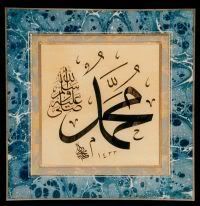
Image of Muhammad’s name in calligraphic art form courtesy of Google Images

ARABIAN BUSINESS.COM: There is no such thing as an Islamic Sukuk; these are conventional bonds that are coated with an Islamic shell." To say Hassan Heikal, the CEO of the leading home-grown investment bank in the Middle East, EFG-Hermes, is sceptical about Islamic finance is an understatement. On the other side of the spectrum, Dr Abdul Moman Al-Olaby, a professor who was one of the pioneers in the industry agrees that some Sharia-compliant structures are questionable, but says "Sharia-compliant finance is our jewel, and even in its infancy, it is well positioned to compete among global banking giants."


Dr Ibrahim Warde, a professor of international business at Tufts University in the USA, and author of Islamic Finance in the Global Community, has been studying the industry for the past decade. As an academic, he takes a more nuanced approach, and tells Arabian Business "the initial hope of the sector was that it would be a completely different approach to finance and it would have many economic and social benefits, and would be based on the principle of sharing profits and losses." Critics today claim that "it evolved into a mimicking of conventional finance" and some question if it is a "new model", but supporters defend the approach on the grounds that they are leading the much needed modernisation of the financial sector.


While the debate will undoubtedly continue, it is undeniable that the cat is out of the bag. Sharia-compliant finance is a growth sector all over the world, and has now become a US$600bn industry. Given the immense wealth of the Arab world and the billion-plus global Muslim population, market dynamics forced the creation of Sharia-compliant finance. From Singapore to London, from Doha to New York, bankers are developing new products, chasing new clients, and laying the groundwork for global expansion.

In this report, Arabian Business examines the origins of Sharia finance, modern banking products, and the rise in corporate finance. We also speak to some of the players behind the burgeoning Takaful (insurance) market, see the Qatari innovation of Sharia-compliant private equity, and look at the scholars and boards endorsing the various structures. Banking on piety >>> By Christina Corbett and Mohammed Aly Sergei

Mark Alexander (Paperback)
Mark Alexander (Hardback)

December 01, 2008

Islamic Finance Sector Needs More Sharia Scholars

THE GUARDIAN: PARIS (Reuters) - As the world financial industry sheds jobs by the tens of thousands, the $1 trillion Islamic banking sector has a growing load of work for sharia scholars but few candidates coming forward to do it.

Experts steeped in the Muslim scriptures are critical to Islamic finance, which requires a religious stamp of approval before a bond, mortgage contract or other financial product can be marketed as moral according to the standards of the Koran.

But qualifying for this work takes much more time and effort than other jobs in finance require. Candidates must first study Islamic law or sharia for many years, and then master finance.

"Globally, and especially in Europe and America, there is a shortage of scholars familiar with both fields," said Mufti Abdul Kadir Barkatulla, an Indian-born imam in London who sits on sharia boards for six banks including Lloyds TSB.

"A few scholars are going around the world (advising banks) and new scholars are not being trained fast enough to take their place," he said at an Islamic finance conference in Paris.

Part of the problem is linguistic. Many Middle Eastern scholars work only in Arabic, the language of Islam, but the global market needs scholars fluent both in Arabic and in languages such as English or French.

A study for Paris Europlace, an industry group trying to develop Islamic banking in France, said there were fewer than 100 scholars in the world qualified to sit on sharia boards.

Demand for Islamic banking has grown in recent years and expanded from the Middle East as more of the world's 1.3 million Muslims seek investments that comply with their faith. >>> By Tom Heneghan, Religion Editor | December 1, 2008

The Dawning of a New Dark Age (Paperback & Hardback) – Free delivery >>>

November 06, 2008

U.S. Treasury Submits to Shariah

FAMILY SECURITY MATTERS: The U.S. Treasury Department is submitting to Shariah – the seditious religio-political-legal code authoritative Islam seeks to impose worldwide under a global theocracy.

As reported in this space last week, Deputy Secretary of the Treasury Robert Kimmitt set the stage with his recent visit to Saudi Arabia and other oil-rich Persian Gulf states. His stated purpose was to promote the recycling of petrodollars in the form of foreign investment here.

Evidently, the price demanded by his hosts is that the U.S. government get with the Islamist financial program. While in Riyadh, Mr. Kimmitt announced: "The U.S. government is currently studying the salient features of Islamic banking to ascertain how far it could be useful in fighting the ongoing world economic crisis."

"Islamic banking" is a euphemism for a practice better known as "Shariah-Compliant Finance (SFC)." And it turns out that this week the Treasury will be taking officials from various federal agencies literally to school on SFC.

The department is hosting a half-day course entitled "Islamic Finance 101" on Thursday at its headquarters building. Treasury's self-described "seminar for the policy community" is co-sponsored with the leading academic promoters of Shariah and SCF in the United States: Harvard University Law School's Project on Islamic Finance. At the very least, the U.S. government evidently hopes to emulate Harvard's success in securing immense amounts of Wahhabi money in exchange for conforming to the Islamists' agenda. Like Harvard, Treasury seems utterly disinterested in what Shariah actually is, and portends.

Unfortunately, such submission – the literal meaning of "Islam" – is not likely to remain confined long to the Treasury or its sister agencies. Thanks to the extraordinary authority conferred on Treasury since September, backed by the $700 billion Troubled Asset Relief Program (TARP), the department is now in a position to impose its embrace of Shariah on the U.S. financial sector. The nationalization of Fannie Mae and Freddie Mac, Treasury's purchase of – at last count – 17 banks and the ability to provide, or withhold, funds from its new slush-fund can translate into unprecedented coercive power.

Concerns in this regard are only heightened by the prominent role Assistant Treasury Secretary Neel Kashkari will be playing in "Islamic Finance 101." Mr. Kashkari, the official charged with administering the TARP fund, will provide welcoming remarks to participants. Presumably, in the process, he will convey the enthusiasm about Shariah-Compliant Finance that appears to be the current party line at Treasury.

As this enthusiasm for SCF ramps up in Washington officialdom, it is worth recalling a lesson from "across the pond." Earlier this year, the head of the Church of England, Archbishop of Canterbury Rowan Williams, provoked a brief but intense firestorm of controversy with his declaration that it was "unavoidable" that Shariah would be practiced in Britain. Largely unremarked was the reason he gave for such an ominous forecast: The U.K. had already accommodated itself to Shariah-Compliant Finance. >>> By Frank Gaffney Jr

The Dawning of a New Dark Age – Paperback (US) Barnes & Noble >>>
The Dawning of a New Dark Age – Hardcover (US) Barnes & Noble >>>
March 12, 2009

Westerners Help Financial Jihad Along

TIMES ONLINE: Sharia-compliant finance is prospering in Britain. But how can it stay insulated from the credit crunch?

As the credit crunch has mutated inexorably into a recession, with bankers having eclipsed politicians, lawyers and even journalists as public enemy number one, the growing number of Islamic finance institutions in Britain might just be sitting pretty.

The UK now has five fully Sharia-compliant banks and another 17 financial institutions have set up special branches or firms. They include the Qatar Islamic Bank (QIB), with its London-based European Finance House in Berkeley Square, and the Islamic Bank of Britain, which has headquarters in Birmingham.

Both have answered Gordon Brown’s call of two years ago for Britain to become the global centre for international Islamic banking; a report by the International Financial Services London even says that Britain’s Islamic banking sector is now bigger than that of Pakistan.

Islamic banks, says Steven Amos, the Islamic Bank of Britain’s head of marketing, are prospering. “Our core business will always be Muslims but the numbers of non-Muslims are really picking up. We’ve had massive interest — and that’s down to a number of reasons, all of which have kept us insulated from the credit crunch.”

He alludes to the nuances of Islamic banking — specifically that Islamic finance has to be Sharia, or Islamic law, compliant. Sharia is taken from the Koran, one of whose central tenets — that money has no intrinsic value — might sound alien to the denizens of the City.

One British businessman believes that adopting Sharia principles might be just what the West needs. Roger Smee, a former professional footballer and now businessman, says the West has “lost the plot. All we have as a success guide is a number of rich lists. Instead of looking down on what we are quick to reject as cumbersome legal restrictions, we should take a page out of the Middle East’s book and use the principles of Sharia to begin building real and sustainable economies.” Crossing Over to Islamic Banking >>> Alex Wade | Thursday March 12, 2009

The Dawning of a New Dark Age (Paperback & Hardback) – Free delivery >>>

October 09, 2008

Key Agreement Boost for Global Islamic Finance

GULF DAILY NEWS: Manama: The Bahrain-based International Islamic Financial Market (IIFM) has launched the world's first-ever standardised Master Agreement in Islamic finance. The IIFM Master Agreement for Treasury Placement (MATP) can be used by financial institutions across the globe for their over-the-counter (OTC) Commodity Murabaha transactions.

The MATP comprises of standalone Master Murabaha Agreement, Master Agency Agreement and Letter of Understanding.
With an estimated value of more than $100 billion, Commodity Murabaha currently is the most widely used Islamic money market product in the GCC and other jurisdictions for liquidity management purpose.

The development of the MATP culminates a year of intense work spearheaded by the IIFM Secretariat and involving several Islamic financial institutions (IFIs) from member jurisdictions as well as Sharia scholars, legal experts and other market practitioners, said IIFM chairman and Central Bank of Bahrain executive director, banking supervision, Khalid Hamad.

"The MATP is a benchmark document and a global first for the Islamic finance industry," he said. Key Agreement Boost for Global Islamic Finance >>> | October 9, 2008

The Dawning of a New Dark Age – Paperback (US) Barnes & Noble >>>
The Dawning of a New Dark Age – Hardcover (US) Barnes & Noble >>>

September 19, 2008

Islamic Finance Moves into Mainstream as Investors Seek Ethical Alternatives

Photobucket
Image courtesy of Google Images

TIMESONLINE: Our correspondent looks at the steady rise of Sharia-compliant banking across Britain

Amjid Ali tells a story about when he was setting up the UK operations of HSBC Amanah, HSBC’s Islamic bank, in 2003. Mr Ali, now a senior manager at the global Amanah business, said: “I had a young, white, Christian man working with me. His surname was Bacon, which wasn’t ideal, but he embedded himself in the community so well that he became known as Mr Halal Bacon.”

His point was that although Islamic, or Sharia-compliant, finance was designed to enable Muslims to buy financial products that comply with the tenets of their religon, it is no longer a niche business. “There’s no need to be Muslim to work here or to buy the products,” Mr Ali said.

The global Islamic finance market is growing at 15 per cent a year and is expected to be worth $1,000 billion by 2010. In the UK it has grown to more than £500 million. A recent Mintel report said that 400,000 Muslims in Britain held Islamic products.

Moreover, although the official estimate of the Muslim population in the UK is two million, it is likely to be closer to three million, which means that there is a huge potential market.

NonMuslim Britons are getting a taste for Sharia-compliant products. Steven Amos, head of marketing at the Islamic Bank of Britain, said: “We’ve got nonMuslim customers, including some really famous names, because they like the ethical standpoint we take.”

The Islamic Bank opened in 2004 and is listed on AIM. Last year its customer base shot up by 38 per cent to 42,000, while deposits grew 61 per cent to £135 million and assets went up 51 per cent to £15.8 million. Muslim demographics in Britain offer the potential for even greater growth. Islamic Finance Moves into Mainstream as Investors Seek Ethical Alternatives >>> By Christine Seib | September 16, 2008

Related - ABC NEWS (AU):
Federal Opposition Leader Brendan Nelson says under no circumstances would he support Australia recognising Sharia law.

Dr Nelson's comments came after Britain's Archbishop of Canterbury Rowan Williams said he believed the adoption of certain aspects of Sharia (Islamic) law in the UK was unavoidable.

Dr Williams said British Muslims could choose to have marital disputes or financial matters dealt with in a Sharia court.
But Dr Nelson says everyone who comes to Australia should accept the existing laws.

"The idea that in some way you would change your basic values, culture and law to accommodate some people who feel that they don't want to see themselves as Australians first, above all else - under no circumstances would I support that," he said.
Sharia Law Not an Option: Nelson >>> | February 8, 2008

The Dawning of a New Dark Age – Dust Jacket Hardcover, direct from the publishers (UK) >>>
The Dawning of a New Dark Age – Paperback, direct from the publishers (UK) >>>

October 22, 2008

Islamic Finance Down, Far from Out

THE AGE: IN THE aftermath of the US financial crisis, the future is uncertain for Islamic investment in Australia.

While the impact of the global credit crisis has had a minor effect on sharia-compliant investments compared with debt-laden conventional bourses, some stocks that dominate Islamic indices have fallen.

And the lack of confidence in the banking and finance sector has made Islamic finance providers from the Middle East and South-East Asia hesitant to set up shop Down Under.

The Dow Jones Islamic Market Financials Index measures the performance of about 70 sharemarkets around the world that are sharia-compliant, or in line with Islamic ethics. "Conventional banks and insurance companies are banned from the DJIM universe," says Gerard al-Fil, a Dubai-based financial journalist and portfolio manager.

"Non-Islamic or haram sectors, such as alcohol, tobacco, weapons, pornography and gambling companies are likewise excluded."

The index lost 2.74% in September — a month in which conventional sharemarkets lost a fifth of their value. In that month, AIG, Fannie Mae and Freddie Mac all became de facto state-owned enterprises, while the Lehman Brothers declared bankruptcy and the Bank of America took over Merrill Lynch.

As sharemarkets around the world were rattled by the rapid changes on Wall Street, Islamic stocks also felt the impact.

Mr Fil says other asset-based investments might still drag down the Islamic indices. "The Islamic markets are very heavy on basic materials and raw materials and these prices dropped as well."

But Islamic stocks were sheltered from the most extreme jolts to the global financial market, by a historical and theological tendency to avoid credit.

"Islamic stocks operated in the wider global stockmarkets, so the effects of the crisis will be felt," says Hussain Rammal, a lecturer in international business at University of Adelaide. >>> Nasya Bahfen | October 23, 2008

The Dawning of a New Dark Age – Paperback (US) Barnes & Noble >>>
The Dawning of a New Dark Age – Hardcover (US) Barnes & Noble >>>

May 09, 2008

Turning towards Mecca

THE ECONOMIST: CHINA is not the only financial powerhouse with its hungry eye on Africa. Flush with oil wealth, the Gulf states, too, are spying profitable opportunities among the hundreds of millions of Muslims who live just a hop across the Red Sea. Africa's economies are growing fast, thanks in large part to the commodities boom. Although many people on the continent do not have a bank account, the banking systems in some countries are growing increasingly sophisticated. Bankers from the Gulf hope that the middle class, particularly in the Muslim north, will turn to Islamic finance, and that firms will raise money through Islamic bonds, known as sukuk. Moody's, a credit-rating agency, reckons that although Islamic finance was worth a puny $18 billion at the end of last year, its potential is close to $235 billion—about half what it estimates as the GDP of Africa's Muslim population.

So far, forays from the Gulf into Africa have been limited to a few countries. Sudan—where only sharia-compliant finance is allowed in the north—dominates, holding over half of Africa's Islamic-banking assets. A number of Gulf banks, familiar with the country's language and oil resources, have joined forces with Sudanese investors to open Islamic banks. Last year the first sukuk from Africa was issued by a Sudanese cement firm. Reportedly, the government also tapped the market in January—selling bonds to Gulf investors to sidestep American economic sanctions over the massacres in Darfur.

But Sudan's banking industry remains embryonic and few African countries combine the strong desire to promote Islamic banking with heavy demand from Muslim customers. “Islamic banking is a luxury product,” admits Anouar Hassoune of Moody's: it tends to do better in places with established banking systems, such as South Africa and Kenya. South Africa's only Islamic bank, Albaraka, was set up in 1989. Last year the Kenyan authorities licensed two Islamic banks, Gulf African Bank and First Community Bank, both backed by Gulf investment.

Western banks are also dipping their toes in. In Kenya Barclays was the first to offer an Islamic bank account appropriately named La Riba, meaning “no interest”. South Africa's ABSA opened an Islamic banking division in 2006. It offers phone, internet and branch banking. Its head, Ahmed Moola, says the division was profitable last year, though he declines to discuss numbers. Turning towards Mecca: Islamic banks join the race for Africa >>> |May 8, 2008

The Dawning of a New Dark Age (Paperback - UK)
The Dawning of a New Dark Age (Hardback - UK)
Mecca,