May 21, 2010
FRANKFURTER ALLGEMEINE ZEITUNG: Nach einer turbulenten Sitzung hat der Bundestag mit knapper Mehrheit den milliardenschweren Bürgschaften für Euro-Länder in der Krise zugestimmt. 319 Abgeordnete votierten für das Gesetz - sieben mehr als notwendig. Die Opposition kritisierte das Schnellverfahren heftig.

Der Bundestag hat den deutschen Anteil am Rettungspaket für den Euro gebilligt. Die von Kanzlerin Angela Merkel (CDU) erhoffte breite Zustimmung kam aber nicht zustande. Der deutsche Anteil an dem 750-Milliarden-Euro-Schutzschirm umfasst Kreditgarantien von bis zu 148 Milliarden Euro. Für das Gesetz zur Euro-Stabilisierung stimmten am Freitag in einer turbulenten Sitzung 319 Abgeordnete. Es gab 73 Nein-Stimmen, 195 Parlamentarier enthielten sich. >>> Faz.net mit dpa | Freitag, 21. Mai 2010
THE TELEGRAPH: Fears that American, British and other governments intend to inflate their way off the rocks of excessive debt prompted record inflows into gold this week.
Now some fund managers claim the price could more than double to $3,000 (£2,080) per ounce within five years.
Heavily indebted governments throughout the developed world are struggling to fill deficits of black-hole dimensions in public finances by imposing spending cuts and tax rises. Both are expected in Britain's emergency Budget on June 22 and neither will be popular.
But keeping interest rates lower than inflation and letting the currency take the strain is another way to reduce the real value of debt. You can see why politicians may feel that is the ''least worst'' option.
Stealthily robbing savers by eroding the purchasing power of money is less likely to cause riots in the streets than spending cuts, because inflation tends to hit older people hardest while unemployment hits the young.
Governments can devalue their own currencies, but it is harder for them to make more gold. That fact helped prompt record inflows of $484m (£336m) into gold exchange-traded commodities this week, while gold trading volumes peaked at $2.1bn (£1.45bn). >>> Ian Cowie | Thursday, May 20, 2010
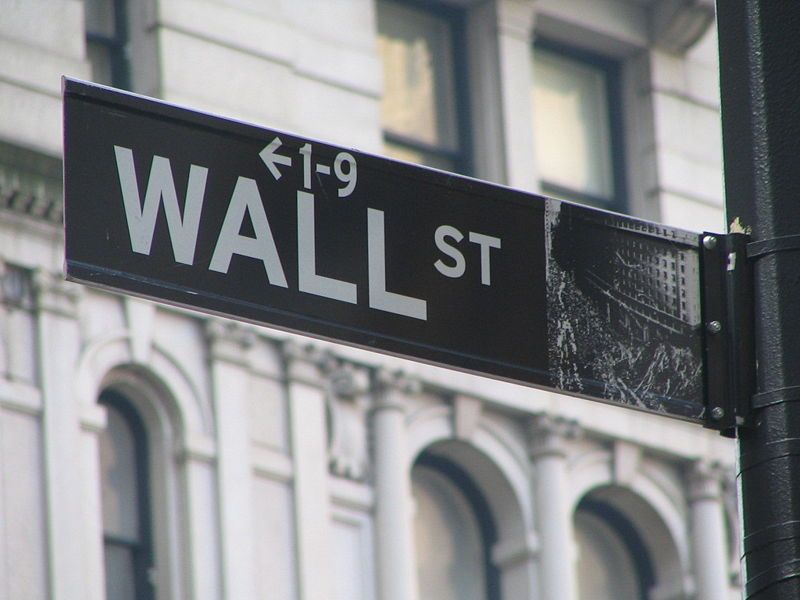
THE TELEGRAPH: Capitulation fever has swept global markets on triple fears of faltering recovery in the US, Chinese credit curbs and Europe's intractable escalating debt crisis.
"It is the perfect storm," said Andrew Roberts, credit strategist at RBS. "People have been too complacent about risky assets. This is a global deflation scare and people need to get ready for falls in US and European bond yields to 2pc."
The global stock market sell-off continued for a third day on Friday in Europe and Asia. London's FTSE 100 slid 0.6pc, Germany's DAX lost 1pc, France's skidded CAC 0.8pc and Japan's Nikkei plunged 2.5pc as world equities head for the biggest monthly fall since October 2008.
Wall Street shares plunged 3pc on Thursday after new jobless claims in the US rose to 471,000 last week, the biggest jump in three months. The S&P 500 index of shares fell to 1080, triggering automatic stop-loss sales as it crashed through support on its 200-day moving average. Read on and comment >>> Ambrose Evans-Pritchard, International Business Editor | Friday, May 21, 2010
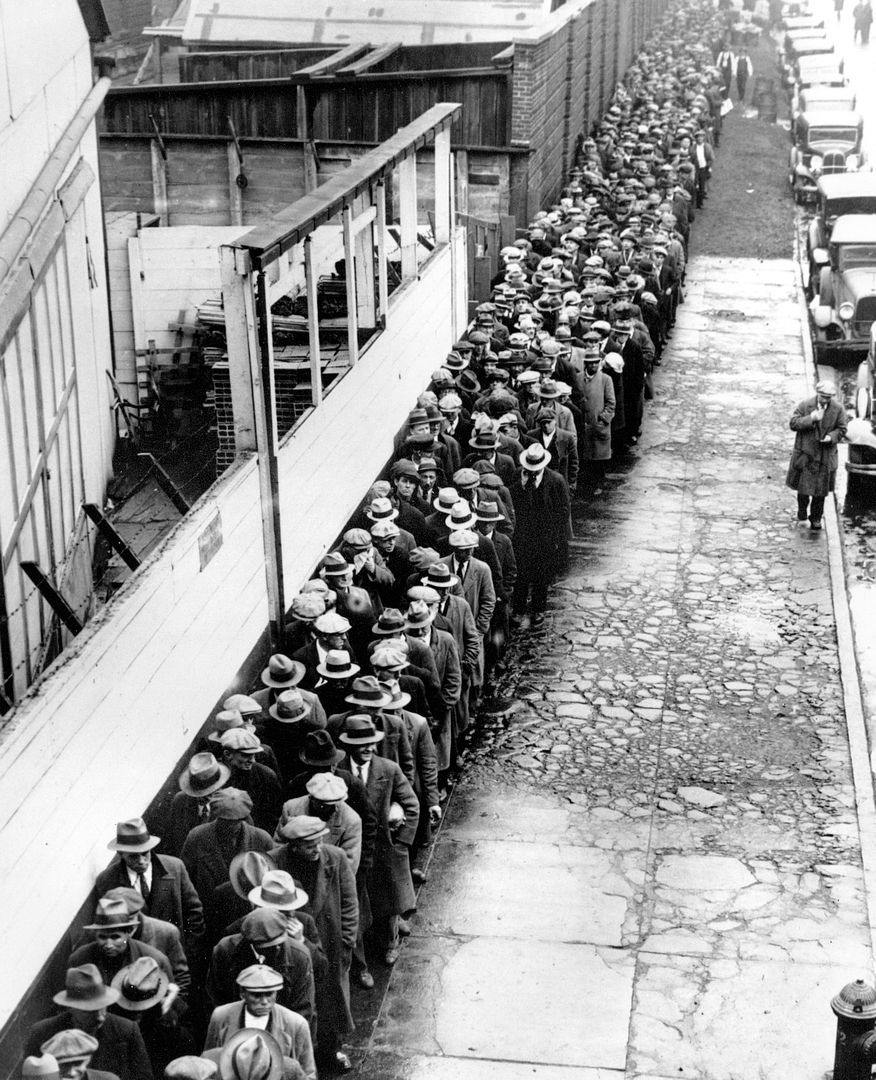
THE TELEGRAPH: Leading City experts have started raising the prospect of "Great Depression II" amid worries that the European economic crisis could trigger a deeper bout of chaos.
Markets on both sides of the Atlantic dipped to fresh lows as fears surrounding the fate of the euro project transmuted into worries about the wider global economic system.
Bill Gross of bond fund Pimco said that hedge funds were starting to liquidate their positions in a bid to preserve their capital – a worrying "mini relapse" towards 2008 territory.
Andrew Roberts, head of European rates strategy at RBS, said "Great Depression II" could now be approaching, adding: "It now has potential to speed toward its conclusion; a European $1trn package which does little and political panic tells you we are about to reach the end of the road. The world should be discussing deflation, not inflation." Read on and comment >>> Edmund Conway, Economics Editor | Friday, May 21, 2010

TIMES ONLINE: The US Senate has passed legislation that will usher in the biggest overhaul of Wall Street since the Great Depression, fulfilling President Barack Obama’s vow to toughen regulation of the financial sector following the credit crisis.
The Senate voted 59 to 39 to pass the 1,500-page Restoring American Financial Stability Act overnight, after months of argument between Democrats and Republicans over President Obama’s reform proposals.
The House of Representatives passed its own bill based on the President’s ideas last December. Now lawmakers from both branches of Congress must meld the two bills into one piece of legislation.
The Senate’s yes-vote is a significant achievement for President Obama, who made reforming America’s financial regulatory system one of his key domestic priorities. Since passing his historic healthcare reform bill in March, the President has thrown much of his energy into urging Republicans and Wall Street to support the changes, which attempt to plug the holes in America's patchwork of financial monitoring. Read on and comment >>> Christine Seib, New York | Friday, May 21, 2010
NZZ ONLINE: Der US-Senat verabschiedet Obamas Finanzreform: Mehr Kontrolle über die Banken und besserer Schutz für Konsumenten >>> sda/dpa/afp | Freitag, 21. Mai 2010
LE MONDE: La réforme de Wall Street adoptée par le Sénat américain >>> LeMonde.fr avec AFP et Reuters | Vendredi 21 Mai 2010
May 20, 2010

THE TELEGRAPH: Angela Merkel's ban on short-selling is just a distraction from the horror to come
"Money can't buy you friends, but it does get you a better class of enemy" – Spike Milligan
For Angela Merkel, leader of the eurozone's richest country, a queue is forming of high-quality adversaries. As she tips German Geld und Gut into the furnace of a rescue package for the euro, while going it alone in a misguided ban on market "manipulators", the brass-neck Chancellor has infuriated domestic voters, angered her EU partners (in particular the French) and invited the so-called wolf pack of global traders to do its worst.
In one respect, Mrs Merkel is right: "The euro is in danger… if the euro fails, then Europe fails." What she has not yet admitted publicly is that the main cause of the single currency's peril appears beyond her control and therefore her impetuous response to its crisis of confidence is doomed to fail.
The euro has many flaws, but its weakest link is Greece, whose fundamental problem is that for years it spent too much, earned too little and plugged the gap by borrowing in order to enjoy a rich man's lifestyle. It flouted EU rules on the limits to budget deficits; its national accounts were a moussaka of minced statistics, topped with a cheesy sauce of jiggery-pokery.
By any legitimate measure, Greece was unworthy of eurozone membership. That it achieved card-carrying status was down to the sleight-of-hand skills of its Brussels fixers and the acquiescence of central bank bean-counters. Now we know the truth, jet-hosing it with yet more debt makes no sense. Another dose of funny money will delay but not extinguish the need for austerity.
This is why the euro, in its current form, is finished. The game is up for a monetary union that was meant to bolt together work-and-save citizens in northern Europe with the party animals of Club Med. No amount of pit props from Berlin can save the euro Mk I from collapsing under the weight of its structural dysfunctionality. You cannot run indefinitely a single currency with one interest rate for 16 economies, when there are such huge fiscal disparities.
What was once deemed unthinkable is now, I believe, inevitable: withdrawal from the eurozone of one or more of its member countries. At the bottom end, Greece and Portugal are favourites to be forced out through weakness. At the top end, proposals are already being floated in the Frankfurt press for a new "hard currency" zone, led by Germany, Austria and the Benelux countries. Either way, rich and poor are heading in opposite directions. Read on and comment >>> Jeff Randall | Thursday, May 20, 2010
TIMES ONLINE: Angela Merkel led calls for an international financial tax today as a “signal of strength” as stock markets continued to slump from a lack of confidence in the euro.
The German Chancellor, whose apocalyptic warnings about the single currency yesterday started the latest slide in European shares, insisted that new regulations would demonstrate that politicians had a grip on the febrile financial markets.
After touching 5,000.76 points today — a new low for the year - the FTSE 100 rallied to close down 85 points, or 1.65 per cent, at 5,073.13, while Europe experienced bigger falls of 2.5 per cent in Berlin and 2.9 per cent in Paris. The Dow Jones Industrial Average lost 2.41 per cent while the S&P 500 dropped 1.77 per cent. Read on and comment >>> David Charter, Berlin | Thursday, May 20, 2010
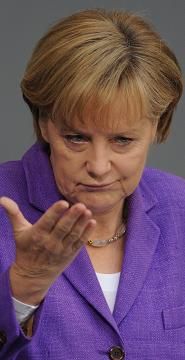
TIMES ONLINE: Shocked European ministers are preparing for emergency talks to shore up the euro after markets fell in reaction to panic measures in Germany.
Angela Merkel stunned EU capitals by warning that the euro was in danger and triggered fears of a fresh financial meltdown by announcing a ban on risky trading practices by speculators. The German Chancellor’s actions opened up new cracks in the single currency, drawing sharp criticism from France and prompting Brussels to issue an appeal for unity.
Shares in London plunged by nearly 3 per cent, with similar falls in Paris, Berlin and Madrid. The euro plummeted to a new low against the dollar before making a slight recovery.
European finance ministers, who have just hammered out a massive rescue plan for Greece, will hear controversial calls from Germany at a meeting tomorrow for changes to the Lisbon treaty to give Brussels powers to co-ordinate national budgets.
Ms Merkel believes that the EU should have stronger powers to organise the “orderly insolvency” of countries such as Greece that set giveaway budgets with no means of paying for them. After announcing a ban on speculative share trading in Germany’s top financial institutions and the bonds of eurozone countries until next March, she warned: “This challenge is existential and we have to rise to it. The euro is in danger. If we don’t deal with this danger, then the consequences for us in Europe are incalculable . . . If the euro fails, then Europe fails.” Read on and comment >>> David Charter, Berlin | Thursday, May 20, 2010
May 19, 2010

THE SYDNEY MORNING HERALD: The Australian dollar plunged more than 2.5 US cents in less than 18 hours, compounding a series of significant falls over the past days that have seen the value of the currency hit its lowest level since last September against its US counterpart - down more than 8 per cent since the start of the month.
This morning, the Aussie dollar traded as low as 85.15 US cents, well down on the 87.67 US cents it was buying at yesterday's close and a world away from the 92.7 US cents it was buying at the start of May.
At the local close, the local currency had bounced back - a little - to 85.88 US cents, still down 1.79 US cents from yesterday.
Investors were offered many reasons to sell the commodity currency: Germany's move to ban some types of short-selling, a sinking euro, worries about Europe's future, falling stocks and commodities, and poor consumer mood data from Australia.
Data out today showed the biggest drop in consumer confidence since the global financial crisis. That news reinforces the market's view that interest rates will not rise any time soon - and low interest rates discourage foreign investors from buying Australian assets, effectively depleting demand for the local currency. Read on (+ video of business and markets report) >>> Gabrielle Costa | Wednesday, May 19, 2010
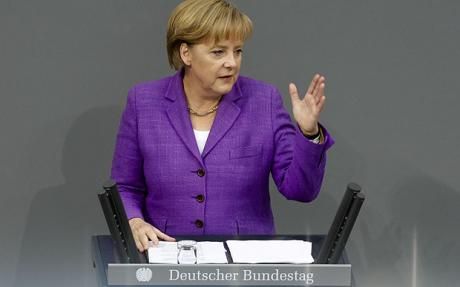
THE TELEGRAPH: World stock markets tumbled as investors digested Germany's unilateral ban on short-selling but the euro rallied from fresh four-year lows on talk of central bank intervention.
European bourses, which followed Asian shares lower, slid further when the Dow Jones opened down 1pc. The FTSE 100 sank 2.5pc, Germany's DAX lost 2.2pc, and France's CAC fall 2.4pc. Japan's closed down 0.5pc and Hong Kong 1.8pc.
The euro, which has been volatile, spiked more than than a cent against the dollar to above $1.23 at 2pm on rumours that the Swiss National Bank or European Central Bank had entered the market.
"Euro is popping all over as talk is going around that the ECB may be considering intervention," said Brian Dolan, chief strategist at Forex.com in Bedminster, New Jersey.
"It looked like the Swiss were in earlier, though that hasn't been confirmed, so we're left to speculate. But the market is exceptionally short euro, and with it bouncing today, the wind would be at their back." >>> | Wednesday, May 19, 2010

FRANKFURTER ALLGEMEINE ZEITUNG: Frankreich hat sich empört über den Vorstoß Deutschlands gezeigt, ab sofort ungedeckte Leerverkäufe bestimmter Wertpapiere zu verbieten: „Ich finde, dass jemand bei einer solchen Maßnahme zumindest den Rat der anderen Mitgliedstaaten einholen sollte“, sagte die französische Wirtschaftsministerin Christine Lagarde.
„Wir haben nicht vor, dem Schritt zu folgen“, sagte Lagarde. Die deutsche Finanzaufsicht Bafin hatte überraschend ab Mitternacht ungedeckte Leerverkäufe von Staatsanleihen der Euro-Länder sowie auf Aktien der zehn größten deutschen Finanzinstitute untersagt. Das Verbot betrifft auch ungedeckte Kreditausfallversicherungen auf Euro-Staatsanleihen (siehe auch: Aufsicht verbietet Hochrisiko-Wetten).
Auch die EU-Kommission ist sauer - weniger auf das Verbot an sich, aber auf den deutschen Alleingang. Er verstehe zwar die Sorge über mögliche Auswirkungen der riskanten Transaktionen auf die unruhigen Märkte, sagte EU-Finanzregulierungskommissar Michel Barnier am Mittwoch. Aber es sei wichtig, dass die EU-Staaten gemeinsam handeln, betonte Barnier, ansonsten drohe eine „Zersplitterung“ der Finanzmärkte. Die Angelegenheit müsse auf dem Eurogruppen-Finanzministertreffen am Freitag in Brüssel besprochen werden. Er verwies darauf, dass die Kommission bereits eine Arbeitgruppe eingesetzt habe und dass er binnen weniger Wochen Empfehlungen für Leerverkaufs-Regelungen vorlegen werde. Einen formellen Vorschlag der Kommission werde es aber erst im Oktober geben. >>> Faz.net | Mittwoch, 19. Mai 2010
Related article and videos / Verbundener Artikel und verbundene Videos here / hier

THE WALL STREET JOURNAL: BANGKOK—Hard-line Thai protesters set fire Wednesday to the country's stock exchange, shopping malls and a television station, while Thai authorities called an 8 p.m. curfew, casting doubt on the prospects for a resolution to the country's weeks-long political crisis despite the surrender of protest leaders earlier in the day.
Thai Red Shirt protest leaders called off their marathon rally and surrendered to police Wednesday after an early morning army assault on their heavily fortified camp in the center of Bangkok.
But in the midafternoon, smoke could be seen billowing from the Stock Exchange of Thailand's headquarters as helicopters buzzed in the sky above. Though trading has been taking place at a different, undisclosed location in recent days, stock-exchange officials said markets would be closed Thursday. Earlier in the day, Thailand's benchmark index finished up 0.7% on hopes for a quick resolution. Authorities also said commercial banks around the country would be closed Thursday and Friday.
Thick plumes of smoke rose across other locations in the city as militant protesters targeted some of Bangkok's main commercial centers. In other parts of Thailand, local television broadcast pictures of antigovernment demonstrators setting alight a provincial government building in northeastern Khon Kaen. >>> James Hookway | Wednesday, May 19, 2010

WELT ONLINE: Angela Merkel hat in ihrer Regierungserklärung die Euro-Krise als existenziell für Deutschland und Europa bezeichnet. "Die Währungsunion ist eine Schicksalsgemeinschaft. Es geht um nicht mehr und nicht weniger als um die Bewahrung der europäischen Idee", sagt die Kanzlerin. Scheitere der Euro, dann scheitere Europa.
In ihrer Regierungserklärung zum 750 Milliarden Euro schweren Rettungsschirm für die Gemeinschaftswährung hat Angela Merkel von einer existenziellen Bewährungsprobe gesprochen.
„Sie muss bestanden werden", sagte die Kanzlerin. „Die Währungsunion ist eine Schicksalsgemeinschaft. Es geht um nicht mehr und nicht weniger als um die Bewahrung der europäischen Idee." Scheitere der Euro, dann scheitere Europa. Werde diese Gefahr abgewendet, würden der Euro und Europa stärker als zuvor sein.
Europa benötige eine neue Stabilitätskultur. Zudem müsse über Europa hinaus auf Ebene der wichtigsten Wirtschaftsnationen (G20) Vorsorge getroffen werden, um künftige Krisen zu verhindern. Die EU wiederum müsse schonungslos strukturelle Schwächen offenlegen. >>> dpa/fas | Mittwoch, 19. Mai 2010
THE TELEGRAPH: Traders are predicting chaos on the world's second-largest government bond market after the German authorities on Tuesday announced a ban on all naked short-selling in European public debt, as well as shares in the country's 10 largest financial institutions.
The unprecedented step saw the euro sink to a four-year low after Germany said that from midnight shorting of credit default swaps of any European government would be banned.
The prohibition is an attempt to counter speculators that Berlin believes are trying to destabilise the region's sovereign bond market.
Traders greeted the move by BaFin, the German regulator, with a mixture of anger and astonishment. One bond trader said he expected Wednesday's trading session to be one of the most volatile in living memory: "It will be complete chaos, I really don't know what the Germans think they are doing." >>> Harry Wilson, Financial Services Correspondent | Tuesday, May 18, 2010
THE TELEGRAPH: European shares set to fall as euro slides on German ban: European shares were set to fall sharply on Wednesday, as investors' confidence was rattled by Germany's decision to ban naked short-selling of some bonds, stocks and credit protection, prompting weakness in Asian equities and the euro. >>> | Wednesday, May 19, 2010

THE TELEGRAPH: Investors concerned about debt problems in the eurozone and China's continuing growth potential flocked to the safety of the US in their droves in March, snapping up a record net $140.5bn (£97bn) of long-term debt.
The net increase was almost a $100bn rise on February – when foreign purchases of long-term securities stood at $47.1bn – and was a new record, according to US Treasury figures.
The marked increase in securities purchases – which saw China become a net-buyer of US assets for the first time in six months – is evidence that the rest of the world continues to view the US as a relative safe haven. >>> James Quinn, US Business Editor | Monday, May 17, 2010
May 18, 2010

LE TEMPS: L’organisme faîtier de l’économie a évalué six scénarios dans une étude, de l’isolement à l’adhésion européenne. Elle conclut qu’en vertu de nos particularités économiques et politiques, il n’y a pas d’alternative au bilatéralisme
Economiesuisse a étudié six scénarios de politique européenne dans des travaux débutés l’automne dernier et achevés en mars: l’isolement, la poursuite de la voie bilatérale, la voie bilatérale avec accord-cadre, l’adhésion à l’EEE, l’union douanière et l’adhésion à l’UE. Ses conclusions sont claires: l’organisation faîtière du patronat entend poursuivre sur la voie bilatérale, «la meilleure option pour les deux parties», a déclaré à la presse mardi à Zurich Pascal Gentinetta, président de la direction. >>> Emmanuel Garessus | Mardi 18 Mai 2010
Subscribe to:
Posts (Atom)