WELT ONLINE: Negative Vorgaben aus Übersee und Sorgen um eine Verschärfung der politischen Situation in Korea haben den deutsche Aktienmarkt und die europäischen Börsen am Dienstag belastet. Der Dax fiel in den ersten Handelsminuten um 2,60 Prozent auf 5654,99 Punkte. Auch der Euro kennt weltweit nur eine Richtung. >>> Reuters/dpa/ws | Montag, 24. Mai 2010
May 25, 2010
WELT ONLINE: Negative Vorgaben aus Übersee und Sorgen um eine Verschärfung der politischen Situation in Korea haben den deutsche Aktienmarkt und die europäischen Börsen am Dienstag belastet. Der Dax fiel in den ersten Handelsminuten um 2,60 Prozent auf 5654,99 Punkte. Auch der Euro kennt weltweit nur eine Richtung. >>> Reuters/dpa/ws | Montag, 24. Mai 2010
May 24, 2010
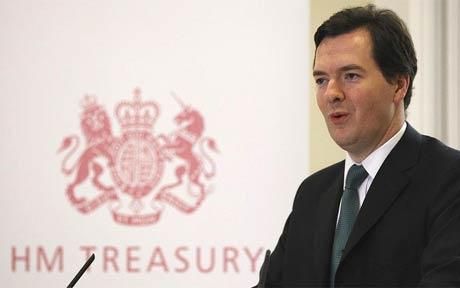
THE TELEGRAPH: It's a new nation under the coaltion government – but be warned: the newly poor will need a voice, says Mary Riddell.
Tomorrow, with all due pomp and pageantry, the Queen will tell Parliament that her Government will exercise "freedom, fairness and responsibility". Her speech, rooted in 500 years of tradition, will herald the birth of a modern nation.
The legislative programme outlined by Her Majesty is the gateway to a Britain in which children play in streets uncluttered by CCTV cameras and superfluous immigrants. These pupils, heading to sumptuous schools set up by (non-working?) parents, may walk past JobCentre Plus branches packed with benefit scroungers being shoehorned into gainful employment. Any anti-social elements disturbing the civic calm will be swiftly dealt with by our newly-politicised police. What happy days.
I do not mean to parody the Con-Lib agenda. Scrapping ID cards, curbing the excesses of the surveillance state and electoral reform are welcome and overdue. Even so, the upbeat pitch of today's proceedings stands in stark contrast to yesterday's.
The £6.25 billion cuts outlined by George Osborne sounded modest and, in some cases, positive. We can all sign up to a bit of quangocide and an end to first-class travel by civil servants. But these are the surface grazes before tax cuts kick in and the axe falls on the 300,000 public sector jobs threatened by efforts to cut the £157 billion budget deficit.
As the age of austerity dawns, the government is unfurling two contradictory visions of Britain. One is of a settled country reclaiming equality and freedom. The other shows a future so divisive that its strictures may rupture our tacit social contract and threaten civic peace. Obviously, cuts are essential, and Labour profligacy has made them more so. But the Coalition, still in its honeymoon, is being allowed to draw a veil over the pain to come. >>> Mary Riddell | Monday, May 24, 2010

FAZ: EU-Kommissionspräsident Barroso äußert sich im Gespräch mit der F.A.Z. skeptisch über Forderungen aus Berlin, den Stabilitätspakt zu verschärfen, um Haushaltssünder sanktionieren zu können. Die Regierung Merkel sei mitschuldig an der weitverbreiteten Ablehnung der Euro-Rettungspakete. >>> | Montag, 24. Mai 2010

BBC: The International Monetary Fund (IMF) has raised fresh concerns about Spain's economy, saying "far-reaching" reforms are needed to ensure its recovery.
It said the country faced "severe" challenges, including the need to urgently reform a "dysfunctional" labour market, and its banking sector.
The IMF's comments came after Spanish authorities had to rescue regional lender Cajasur at the weekend.
Last week, Spain's government passed austerity measures to cut its deficit.
This deficit - the money the administration has to borrow to pay for public services due to insufficient tax returns and other revenues - currently equates to 11% of Spain's economic output.
This is substantially higher than the eurozone ceiling of 3% and another concern that the IMF has highlighted.
It also pointed to Spain's property market slump, heavy indebtedness in the private sector, and weak productivity and competitiveness. >>> | Monday, May 24, 2010
THE TELEGRAPH: A £6 billion package of cuts in public spending is “only the first step” towards repairing Britain’s public finances and even tougher cuts will follow, ministers have warned.
David Laws, the Chief Secretary to the Treasury, said that today’s cuts – which will fall on Whitehall departments and local councils – are just a foretaste of a much larger and more painful austerity programme to be unveiled later this [year].
Mr Laws and George Osborne, the Chancellor today unveiled cuts worth a total of £6.2 billion, which will mean cuts in civil service job numbers, quango budgets and Whitehall spending on advertising and consultants.
Local councils will bear a large share of the cuts, which could raise questions about the services they deliver. There will be a cut of £311 million in the money handed to local authorities for education services like school transport.
Government payments into Child Trust Funds will also end. >>> James Kirkup, Political Correspondent | Monday, May 24, 2010
TELEGRAPH BLOG: George Osborne and David Laws show political will – but this was the easy bit >>> Benedict Brogan | Monday, May 24, 2010
TIMES ONLINE: President Barack Obama today said he “fully supports” the South Korean president and his response to the torpedo attack by North Korea that killed 46 South Korean sailors as the cross-border animosity between the two countries continues to rise.
South Korea’s President Lee Myung-bak earlier today demanded that North Korea “immediately apologise and punish those responsible for the attack, and, most importantly, stop its belligerent and threatening behaviour” and announced it will take the case of the torpedoed Cheonan warship to the United Nations Security Council.
In a move which analysts described as “cautiously hard-line”, Mr Lee also said he would be suspending all exchanges between the two Koreas and imposing a total ban on North Korean ships passing through South Korean waters.
His government banned all trade, investment and visits with North Korea. South Korea also plans to reduce the number of workers in a joint factory park just inside the North which has long been an important source of income for the North Korean leadership.
The White House said Seoul can continue to count on the full backing of Washington. Read on and comment >>> Leo Lewis, Beijing | Monday, May 24, 2010
May 23, 2010

THE SUNDAY TIMES: Public spending cuts have been made imperative by the crisis in the eurozone, Nick Clegg, the Deputy Prime Minister, said today as the new coalition Government prepared to start chipping away at Britain’s record £156 billion deficit.
Years of Labour “throwing money around like there was no tomorrow” had left a “black hole” in the country’s finances, he said.
Mr Clegg’s scathing assessment of the outgoing regime came as George Osborne, the Chancellor, prepared to announce tomorrow where the axe will fall for his first £6bn of cuts — most of which will be ploughed straight into paying off the deficit.
Having backed Labour’s assertion during the election campaign that cuts this year would jeopardise the fragile economic recovery, Mr Clegg told BBC1’s Andrew Marr Show that turbulence in the eurozone had lent a greater urgency to balancing Britain’s books.
“I don’t think anybody could have anticipated then quite how sharply the economic conditions in the eurozone would have deteriorated and that the need to show that we are trying to get to grips with this suddenly became much greater,” the Liberal Democrat leader said.
“That is why we need to show at a more accelerated timetable than I had initially thought that we are going to get to grips with this great black hole in our public finances.
“The outgoing Labour Government was just throwing around money like there was no tomorrow, probably knowing that they were going to lose the election, making extraordinary commitments left, right and centre, many of which they knew they couldn't honour.
“So not only are we going to have to deal with cuts, we are also going to have to actually deal with some of the pledges that the Government made in the past which they didn’t even provide budgets for.
“The age of plenty where money could be thrown around in almost carelessness, which is what the outgoing Labour Government has done for some time, now is over.” Read on and comment >>> Sadie Gray | Sunday, May 23, 2010

THE NEW YORK TIMES: PARIS — Across Western Europe, the “lifestyle superpower,” the assumptions and gains of a lifetime are suddenly in doubt. The deficit crisis that threatens the euro has also undermined the sustainability of the European standard of social welfare, built by left-leaning governments since the end of World War II.
Europeans have boasted about their social model, with its generous vacations and early retirements, its national health care systems and extensive welfare benefits, contrasting it with the comparative harshness of American capitalism.
Europeans have benefited from low military spending, protected by NATO and the American nuclear umbrella. They have also translated higher taxes into a cradle-to-grave safety net. “The Europe that protects” is a slogan of the European Union.
But all over Europe governments with big budgets, falling tax revenues and aging populations are experiencing rising deficits, with more bad news ahead.
With low growth, low birthrates and longer life expectancies, Europe can no longer afford its comfortable lifestyle, at least not without a period of austerity and significant changes. The countries are trying to reassure investors by cutting salaries, raising legal retirement ages, increasing work hours and reducing health benefits and pensions.
“We’re now in rescue mode,” said Carl Bildt, Sweden’s foreign minister. “But we need to transition to the reform mode very soon. The ‘reform deficit’ is the real problem,” he said, pointing to the need for structural change.
The reaction so far to government efforts to cut spending has been pessimism and anger, with an understanding that the current system is unsustainable.
In Athens, Aris Iordanidis, 25, an economics graduate working in a bookstore, resents paying high taxes to finance Greece’s bloated state sector and its employees. “They sit there for years drinking coffee and chatting on the telephone and then retire at 50 with nice fat pensions,” he said. “As for us, the way things are going we’ll have to work until we’re 70.” >>> Steven Erlanger | Saturday, May 22, 2010
Reporting was contributed by Maïa de la Baume and Scott Sayre from Paris, Niki Kitsantonis from Athens, and Elisabetta Povoledo from Rome.

THE SUNDAY TELEGRAPH: As the currency crashes and the Continent is swept by protests, even key members such as Germany and France are starting to think the unthinkable about the euro.
Like many of Spain's 4.5 million unemployed, Cinthia Carvajal is on the verge of despair. The 41-year-old marketing executive has jobhunted non-stop for the last six months, but with the country in the grip of its worst recession in 50 years, there are precious few firms needing anything to be marketed.
She will now take whatever job she can find, but with unemployment running at 20 per cent nationally, the few offers come her way are generally less than tempting.
"I spend my whole time going for interviews," said Ms Carvajal, who receives €475 (£388) per month in unemployment benefits. "But often they want you to work on the black market to avoid paying taxes, and I'm not prepared to do that."
Spain's jobless rate is currently double the the average for the euro zone, rising to nearly 32 per cent in places like Cadiz, a windswept port that has never recovered since its shipbuilding yards went the same way as those on the Clyde.
The economy shrank nationwide by nearly four per cent last year, and in the bars of Cadiz's winding, cobbled streets, the sense is that things can only get worse - which, last week, they effectively did.
On Thursday, in a bid to avoid a Greek-style deficit crisis, the socialist administration of Prime Minister Jose-Luis Zapatero approved highly unpopular moves to slash public spending by €15 billion, which will include sacking 13,000 civil servants, trimming public sector wages by 5 per cent, and freezing state pensions.
Out, too will go to the €2,500 birth grant for all new-born children - just one of the generous social benefits that Madrid can no longer afford.
Mr Zapatero has billed it as a painful but necessary dose of financial medicine, but as in Greece, many of Spain's 45 million citizens seem reluctant to swallow what government deems good for them. >>> Harriet Alexander in Cadiz, Colin Freeman and Bruno Waterfield in Brussels | Sunday, May 23, 2010

THE INDEPENDENT ON SUNDAY: Confused at the single currency's crisis? Who wouldn't be? Don't worry. Our guide empowers you to bluff through any dinner party
Q&A: Your guide to Europe's financial situation:
What was the original idea behind the euro and its zone?
The idea dates back to 1969, when a European summit at The Hague made its creation an official ambition. However, it took 20 years for the plans to be properly prepared, when European Commission president Jacques Delors came up with a three-stage plan that, after a further delay, led to the then 12-strong eurozone in 1999. European politicians originally wanted a strong political and economic bloc to ensure that great wars were avoided. There was belief that the euro would be strong enough to avoid devaluation and compete with the mighty US dollar. >>> Questions answered by Simon Evans, Julian Knight, Mark Leftly and Margareta Pagano | Sunday, May 23, 2010
THE OBSERVER: Enthusiasm for single currency fades as resentment grows over Greek bailout

In the back of the Berliner Republik bar on the banks of the river Spree, Matt, Otto and Christian's eyes are fixed on a screen in front of them. The names and prices of 18 German draught beers flash up, bright green on a black background, and change every few seconds, according to who has ordered what.
It's a pub game for the modern age, based on supply and demand. The trick is to buy the beer cheaply and then give yourself a pat on the back when demand pushes the price up.
"It gives a bit of a risqué edge to ordering," says Otto, a graphic designer. "But it also makes you feel strangely vulnerable."
The screen is more fruit machine than stock market, but it reflects the sense of playing a lottery common in Angela Merkel's Germany as it has pumped billions of euros into bailing out profligate Greece and propping up the single currency, without knowing whether the injection will do any good.
As the prices of the beers rise, news comes through from Frankfurt that in the real world Germany's DAX index has fallen 106.86 points, despite the €750m rescue package that the Bundestag has just narrowly approved. On Wall Street and elsewhere the markets wobbled, a sure sign that no one believed the crisis was anywhere near over.
On the pavement outside the bar, drawing on a cigarette, Pamela Schreiber pauses in contemplation. "Do I consider myself European? Well, of course, but first and foremost I'm a German," says the 33-year-old set designer with conviction.
The answer is not one that you would have expected a few years ago from a young person in Germany. This is the country where European enthusiasm has been easiest to find and where, since the war, European interests have taken precedence over nationalist ones. But, according to Schreiber, Germans feel increasingly torn over Europe.
"We always knew in our heart of hearts that the euro would never be as solid as our deutschmark, but we gave up our beloved currency, which was actually central to our identity, because we believed in the European project so fervently," she says.
Now there is talk, albeit based on blog gossip and a tabloid desire to whip up a good tale, of a return of the mark. Some even claim that secret supplies of the defunct currency – the strength of which was seen as a legacy of the sweat and tears that Germans spent to build up their ruined economy after the war – are being printed in secret underground locations. >>> Kate Connolly in Berlin | Sunday, May 23, 2010
May 22, 2010

LE MONDE: Joseph Stiglitz, 67 ans, Prix Nobel d'économie en 2001, ex-conseiller économique du président Bill Clinton (1995-1997) et ex-chef économiste de la Banque mondiale (1997-2000), est connu pour ses positions critiques sur les grandes institutions financières internationales, la pensée unique sur la mondialisation et le monétarisme. Il livre au Monde son analyse de la crise de l'euro.
Vous avez récemment dit que l'euro n'avait pas d'avenir sans réforme majeure. Qu'entendez-vous par là ?
L'Europe va dans la mauvaise direction. En adoptant la monnaie unique, les pays membres de la zone euro ont renoncé à deux instruments de politique économique : le taux de change et les taux d'intérêt. Il fallait donc trouver autre chose qui leur permette de s'adapter à la conjoncture si nécessaire. D'autant que Bruxelles n'a pas été assez loin en matière de régulation des marchés, jugeant que ces derniers étaient omnipotents. Mais l'Union européenne (UE) n'a rien prévu dans ce sens.
Et aujourd'hui, elle veut un plan coordonné d'austérité. Si elle continue dans cette voie-là, elle court au désastre. Nous savons, depuis la Grande Dépression des années 1930, que ce n'est pas ce qu'il faut faire. >>> Propos recueillis par Virginie Malingre, Londres Correspondante | Samedi 22 Mai 2010

THE WALL STREET JOURNAL: LONDON—Britain's biggest supermarket said it supports the U.K. government's plan to ban the sale of alcohol at prices below cost, in response to proposals designed to curb binge drinking and rowdy behavior.
Tesco PLC, the country's biggest retailer by market share, also said it would support any government move to set minimum prices on beer, wine, alcoholic cider and spirits—a measure that has been much-debated in the U.K., but not explicitly proposed by the country's new coalition government.
The U.K. has been struggling with a rise in alcohol consumption that many people contend is fueling public disorder and violence. Health experts say cheap supermarket alcohol, irresponsible barroom promotions and longer pub opening hours have contributed to the problem. Binge-drinking became an issue during the election campaign, with all the parties vowing to crack down. >>> Jeanne Whalen and Paul Sonne | Saturday, May 22, 2010

NEUE OSNABRÜCKER ZEITUNG: Die Bereitschaft der Griechen, mit der alltäglichen Korruption in ihrem krisengeschüttelten Land zu brechen, ist größer als bisher angenommen. Die überwältigende Mehrheit der Bürger verurteilt die gängige Praxis der Schmiergeldzahlung. Das geht aus einer Untersuchung von Transparency International hervor, aus der unsere Zeitung (Samstagausgabe) zitiert.
Nach dem Bericht des nationalen Zweiges der weltweit gegen Korruption kämpfenden Organisation halten 92 Prozent aller Griechen es für falsch, bei Anwälten, Ärzten, Banken oder Behörden Bestechungsgeld zu zahlen. 96 Prozent der Befragten sprechen sich dafür aus, die Annahme von Schmiergeld konsequent zu bestrafen. Drei von vier Griechen wünschen sich in diesem Zusammenhang, dass die Justiz unabhängiger wird. 73 Prozent der Bevölkerung plädieren für eine breite Aufklärungskampagne über Korruption in den Medien ihres Landes. Transparency hat für die Studie im vergangenen Jahr mehr als 6000 erwachsene Griechen durch Meinungsforscher befragen lassen. >>> reb Osnabrück. | Samstag 22 Mai 2010
THE TELEGRAPH: No one – not Britain, the US nor Japan – is immune to a Greek-style debt crisis, one of Europe's chief policymakers has warned, as investors reeled from a week of market drama.
The sovereign debt crisis could claim new victims, including those outside the euro area, according to Lorenzo Bini Smaghi, a member of the European Central Bank's executive board. He was speaking as finance ministers met in Brussels to discuss their response to the crisis.
The new Chancellor, George Osborne, urged them to cut deficits faster and with more urgency, pointing towards the £6bn of in-year spending cuts he is set to unveil on Monday.
The warning came on another tense day for capital markets worldwide.
London's benchmark FTSE 100 dipped briefly beneath the 5,000 mark, recovering later in the day but nevertheless closing down 10.2 points at 5062.93. The FTSE has fallen by 3.8pc this week alone, and is 13pc down on its peak in April.
Although markets across Europe spent most of the day in negative territory, they recovered in late trading after German politicians backed their part in the $1 trillion safety net euro area members are constructing to prevent re-runs of the Greek economic catastrophe. On Wall Street, the Dow Jones closed up 1.3pc at 10,193.39 points. Read on and comment >>> Edmund Conway, Economics Editor | Friday, May 21, 2010
THE INDEPENDENT: When David Cameron planned his first foray into Europe as British Prime Minister he cannot have imagined that he would be entering a maelstrom.
But a financial maelstrom it is, with stock markets falling, the euro currency sliding and politicians openly talking about the biggest crisis for the union since the European Community was founded. That makes Mr Cameron's trip to Paris and Berlin this week seem more of a sideshow in the Continent, for all the pre-meeting suggestion of a clash between a Eurosceptic British leader and his European partners. But it also provides opportunities for forging a new relationship in crisis which the British premier could never have foreseen. >>> | Saturday, May 22, 2010
THE INDEPENDENT: The global recession has changed everything, exposing grave structural problems within the European economy.
Fears about the future of the euro have helped plunge global markets into chaos, with share prices around the world reacting to the possibility that the eurozone will break up and that several of its member countries may default on their debts.
Will the euro survive? It is a question that, two years ago, would have seemed outrageous. Anyone who suggested that the eurozone was fatally flawed was branded as a Europhobe, someone who hated the European Union, not just its single currency. For the euro appeared a success. After a few wobbles, it had established itself as a major currency, while across the Continent, euros were making it easy for people to travel and trade. More important, adopting the euro seemed to have given a greater stability to countries that had previously had weaker currencies, such as Italy and Spain, cutting their interest rates and encouraging growth.
True, there were rumbles of discontent. Many in Germany felt the country had had to adopt too tough a policy to hold down its costs, whereas in Spain and Ireland the soaring property prices exposed the difficulties created by one-size-fits-all interest rates. Even more ominously, a number of countries, including France and Germany, had breached the rule in the Maastricht Treaty that fiscal deficits should not exceed 3 per cent of GDP. But while the boom continued, these problems seemed a small price for the stability it gave the Continent. >>> Hamish McRae | Saturday, May 22, 2010

FRANKFURTER ALLGEMEINE ZEITUNG: Gold ist wegen der Euro-Krise beliebt wie nie. Der Bedarf ist sogar noch höher als zur Finanzkrise im Jahr 2008 - das treibt den Preis. Doch die Goldanlage hat auch Tücken.
Wenn Christof Wilms über die Wahl seiner Kundschaft berichtet, dann ist die Sache eindeutig: „Die meisten Kunden kennen den Krügerrand und deshalb investieren sie in ihn“, sagt Wilms, der den Goldhandel der Reisebank leitet. Das Unternehmen gehört zu den großen Händlern im Edelmetallgeschäft und versorgt in Deutschland 1200 Banken mit Edelmetallen, verfügt aber auch über 100 eigene Filialen.
Der Krügerrand aus Südafrika ist die Goldmünze, die auf der Welt am weitesten verbreitet ist. Kein Wunder, dass nicht nur die geübten Münzsammler derzeit daran großes Interesse haben, sondern auch diejenigen Käufer, die in Zeiten der Euro-Krise zum ersten Mal ihr Geld in Gold anlegen. Es gibt aber nicht nur den Krügerrand, sondern auch Nuggets, also australische Goldmünzen oder die kanadische Maple-Leaf-Münze. „Sie haben alle den selben Goldanteil, sind aber deutlich günstiger als der Krügerrand“, sagt Wilms. Derzeit koste der Krügerrand abhängig der Stückelung zwischen 1003 Euro bis 1010 Euro, berichtet er. „Andere Goldmünzen sind allerdings um 10 bis 20 Euro je Unze günstiger, weil sie ein geringeres Aufgeld haben.“ Das Aufgeld fällt etwa für die Prägekosten an.
Für Anleger, die in Gold investieren wollen, ist daher das Edelmetall preiswerter zu haben, wenn sie sich für andere Münzen als den Krügerrand entscheiden. Ob Krügerrand oder etwa Nugget: Sie bestehen immer aus einer Unze Gold, das sind 31,1 Gramm. Doch der Krügerrand ist die bekannteste Goldmünze, darauf setzen die Anleger. Die Folge: Mancher Händler muss seine Kunden vertrösten und kann nicht gleich liefern. Bedarf doppelt so hoch wie zur Finanzkrise im Jahr 2008 >>> Von Tim Höfinghoff | Freitag, 21. Mai 2010
Subscribe to:
Posts (Atom)