February 12, 2008

US Pushes EU to Shut Down Iranian Banks

FINANCIAL TIMES: The US is pushing the European Union to increase the pressure on Tehran over its nuclear programme by stopping two Iranian banks from operating on European soil.

The plan to take steps against Banks Saderat and Melli – a move also backed by Paris and London – would build on a United Nations Security Council resolution that the US and the EU hope to push through this month.

So far, Germany, Italy and other European states have resisted taking EU action to ban Saderat and Melli – which Washington alleges are involved in terrorist financing and proliferation activities – because neither bank has yet been the subject of UN action.

The lack of an EU ban has left the UK, the US’s closest ally, unable to prevent a branch of Saderat from operating in the City of London – a fact which blunts the effectiveness of the US’s drive for international action against the banks. US pushes EU to shut down Iranian banks >>> By Daniel Dombey in Washington, Roula Khalaf and James Blitz in London

Mark Alexander (Paperback)
Mark Alexander (Hardback)
February 07, 2008

Warren Buffet Blames Banks for Meltdown

Photobucket
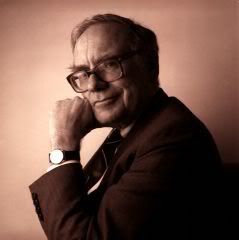
Photo of Warren Buffett courtesy of Google Images

BUSINESS TELEGRAPH: Billionaire Warren Buffett has accused major investment banks of creating their own downfalls through the collapse in the US sub-prime mortgage market.

Mr Buffett, known as the "Sage of Omaha" for his investment record, suggested that the banking fraternity has only itself to blame for its recent problems which have seen banks write off more than $130bn (£66.3bn) so far.

"It's sort of a little poetic justice, in that the people that brewed this toxic Kool-Aid found themselves drinking a lot of it in the end," Mr Buffett said, making reference to the American soft drink.

The septuagenarian investor, speaking in Toronto, said that in spite of the meltdown in the sub-prime mortgage market and the impact on the banking system, funds remain available.

"I wouldn't quite call it a credit crunch," he said. "Money is available, and it's really quite cheap because of the lowering of rates that has taken place."

However, he said what had taken place was "a re-pricing of risk," leading to an "unavailability of what I might call 'dumb money', of which there was plenty around a year ago."

Mr Buffett also reiterated his negative views on the subject of the US dollar, saying that over the next five-10 years, the dollar could seriously devalue if the US trade deficit persists. As a result, Mr Buffett - who famously bet $21.8bn against the dollar in 2005, a position he has since unwound - stressed he will continue to look beyond the US for investments in part to hedge against the dollar's weakness. Warren Buffett blames banks for meltdown >>> By James Quinn Wall Street Correspondent

Mark Alexander (Paperback)
Mark Alexander (Hardback)
February 06, 2008

George & Gordon and Free Trade

THE TELEGRAPH: Gordon Brown and George W. Bush have one thing in common. No, not their brand of toothpaste, nor a fondness for jeans and casual jackets. Nor a willingness to see the Iraq war through to victory. Nor a belief that tax cuts can stimulate economic growth.

What they have in common is a belief that their nations and the world are served by the preservation of the free trading regime that has contributed so much to economic welfare in the post-World War Two period.

Both have a relaxed attitude towards the free movement of people, and are therefore reluctant to prevent immigrants from joining their nations' workforces.

Both resist efforts to raise barriers to the free flow of goods into their countries, with an occasional politically necessitated lapse on Bush's part. And both favour the free flow of capital and welcome the investment of sovereign wealth funds in their nations' financial and other institutions.

The British Prime Minister and the American President might be the last two men standing in the fight against protectionism. Unless you count Tony Blair and John McCain, which you probably shouldn't, since Blair is otherwise engaged, and McCain has a long way to go before he sits in the Oval Office where he can affect trade policy.

All three pillars of free trade - free movement of people, goods, and capital - are under assault, or soon will be. Gordon Brown and George Bush's free trade >>> By Irwin Stelzer

Mark Alexander (Paperback)
Mark Alexander (Hardback)
Islamic Banking: Is It Really Kosher?

NO SHARIA.BLOGSPOT.COM: Muslim scholars say the Qur’an prohibits collecting interest on loans. But many banks, both global and local, have found clever ways to meet religious strictures. It’s a system that may be hypocritical, but also profitable.

The coverage can be a little bit breathless: “La finance Islamique en plein boom,” Le Figaro reported in September. Yes, Islamic banking, structured along the lines that religion decrees, is in full boom. But is it really banking? And is it really kosher?


Islam prohibits the payment of interest on loans, so observant Muslims require specialized alternative arrangements from their banks. Many of the largest global financial companies, including Deutsche Bank and JPMorgan Chase, have established thriving subsidiaries that strive to meet these requirements. As a result, optimists speculate that the common pursuit of lucre—divinely sanctioned, filthy, or otherwise—will bring bickering civilizations together. They may be right.


The Islamic aversion to interest collection comes from the Qur’an. Not that the term “interest” is ever used: the Arabic injunction forbids something called riba. The Qur’an offers no exact definition of what riba meant in seventh-century Arabia, the time and place of the Prophet Mohammed—let alone what the term should mean today. In particular, the passages are ambiguous on the question of whether riba refers to all kinds of interest collection, or only usurious interest—that is, lending practices that are, according to some ill-defined standard, unfair and exploitative. What is clear in the divine financial critique is that, whatever riba may be, Jews are doing it. At one point God warns that they will face a “painful day of doom” if they keep it up.


This ambiguity was a practical problem for the early Muslim jurists, who formalized religious rules in a code called sharia. They were divided on the subject, but as time went on, the weight of consensus came to rest on the side of prohibiting all interest collection. Islamic Banking: Is It Really Kosher? >>> By Aaron MacClean, The American

Mark Alexander (Paperback)
Mark Alexander (Hardback)
February 04, 2008

Le retour des deux “nations” britanniques: la riche et la pauvre

LE MONDE: Dans son roman Sybil, Benjamin Disraeli, premier ministre de la reine Victoria, avait condamné la coupure du royaume en "deux nations entre lesquelles il n'y a ni relation ni sympathie... les riches et les pauvres". Ce thème, récurrent sous le gouvernement Thatcher (1979-1990), est redevenu d'actualité.

"En trente-cinq années de métier dans la distribution, je n'ai jamais vu de disparités aussi grandes : à Londres et dans le Sud, les nantis s'enrichissent, dans le reste du pays, les gens s'appauvrissent. Je ne reconnais plus le Royaume-Uni" : directeur général des grands magasins Marks & Spencer, Stuart Rose a repris à son compte la remarque de Disraeli. Malgré la baisse du nombre de touristes américains et japonais ou le ralentissement économique, lors des fêtes de fin d'année, les ventes de M & S ont explosé à Londres et dans les comtés voisins. En revanche, le chiffre d'affaires de l'enseigne dans le nord de l'Angleterre et en Ecosse a fortement diminué.

Lacunes du système éducatif

Dans la foulée, un rapport de l'institut des études fiscales, Institute for Fiscal Studies, confirme le fossé grandissant entre les riches et le reste de la population depuis l'arrivée au pouvoir du Labour, en 1997. Les 47 000 contribuables gagnant plus de 350 000 livres brut par an vivent dans leur quasi-totalité à Londres.

A l'évidence, cet écart régional est fécondé par le formidable essor des services, en particulier financiers, dans la capitale britannique. A l'exception des multinationales, pharmacie, défense, aéronautique etc., l'industrie britannique installée dans le vieux Pays noir, a souffert des délocalisations et de la concurrence étrangère, sans parler de la fermeté jusqu'il y a peu de la livre sterling.

Le Nord est pénalisé par une infrastructure de transports inférieure et les lacunes du système éducatif d'Etat. Tandis que les rémunérations s'envolent dans le tertiaire, les ouvriers et employés voient leurs revenus amputés par la hausse de la fiscalité indirecte et l'inflation. Cette situation contrastée est aussi patente dans les régions rurales du Sud-Ouest. Le retour des deux "nations" britanniques : la riche et la pauvre >>>

Mark Alexander (Paperback)
Mark Alexander (Hardback)
Russian Economy Succumbs to the Oil Curse

THE TELEGRAPH: Moscow is the most expensive city in the world, like Tokyo before the Nikkei bubble burst. A taxi from Domodedovo airport to the Kremlin costs $170 (£86). Property in Ostozhenka trumps Chelsea. Space fetches $30,000 a square metre.

Nice Tsarist flats fetch $3m to $4m. Even Bolshevik boxes are booming. Moscow boasts 150,000 home millionaires in dollars, says Sergei Polonsky, the Mirax Group tycoon. In a good year, prices double.

This is the curse of commodity wealth, the "Dutch Disease" that eats at the competitive foundations of an economy and incubates a parasite culture. No doubt Russia's scientists, engineers, and cyber talent, will enrich the country, but first it must overcome the toxic effects of oil at $90 a barrel.

"We can no longer afford to buy Russian equipment," said Yevgeny Ivanov, head of Polyus Gold.

"The prices here are one and a half times higher than abroad so we're having to break our rigid rule and turn to foreign-made machinery. It is bad news for Russian firms. The commodity super-cycle is catching up with us through higher prices. It is a disheartening picture," he said.

"There's no infrastructure, no power, no roads. Electricity costs twice what they pay in Alaska and Canada. We face a Soviet bureaucracy passing decrees that make you weep," he said.

The government has declared an infrastructure emergency. Russia has hit the limits of durable growth on today's rickety foundations.China has built 25,000 miles of highways since 1988, Russia a few hundred. Russian economy succumbs to the oil curse >>> By Ambrose Evans-Pritchard International Business Editor

Mark Alexander (Paperback)
Mark Alexander (Hardback)

February 01, 2008

Microsoft will Yahoo kaufen

NZZ Online: Der amerikanische Softwarekonzern Microsoft will das Online-Unternehmen Yahoo für 44,6 Milliarden Dollar übernehmen. Microsoft will damit seine Position im hart umkämpften Markt von Onlinediensten ausbauen. Die Ankündigung hat den Börsen Schwung verliehen.

(ap/sda/Reuters) Der weltgrösste Softwarekonzern Microsoft will das schwächelnde Online-Unternehmen Yahoo für 44,6 Milliarden Dollar übernehmen. Microsoft will damit seine Position im hart umkämpften Markt der Internet-Werbung ausbauen. Microsoft bietet nach eigenen Angaben von Freitag 31 Dollar pro Yahoo-Aktie, was einen Aufschlag von 62% auf den Schlusskurs vom Donnerstag bedeutet.

Yahoo gilt seit geraumer Zeit als Übernahmekandidat. Das Onlineunternehmen war zwar bald nach der Gründung durch Jerry Yang und seinen Kommilitonen David Filo im Jahr 1995 die Nummer eins im Internet. Inzwischen aber ist Yahoo bei den Werbeeinnahmen längst von Google überholt. Google nimmt in zwei Monaten so viel Geld ein wie Yahoo in einem ganzen Jahr. Microsoft will Yahoo kaufen: Softwarekonzern offeriert knapp 45 Milliarden Dollar >>>

Mark Alexander (Paperback)
Mark Alexander (Hardback)

January 31, 2008

Ben Bernankes Wiederwahl gerät in Gefahr

Photobucket
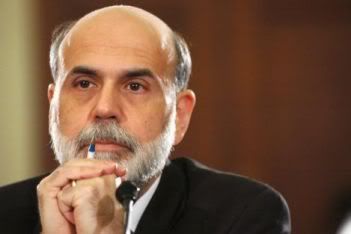
Foto von Ben Bernanke dank der Welt

WELT ONLINE: Die drohende Rezession und die Turbulenzen an den Finanzmärkten bringen den US-Notenbankchef in Bedrägnis. Egal was Ben Bernanke derzeit macht, die Kritiker melden sich immer lauter zu Wort. Einige sehen bereits seine Wiederwahl gefährdet.

Ben Bernanke ist nicht zu beneiden. In dieser Woche hat der mächtigste Währungshüter der Welt die Hälfte seiner vierjährigen Amtszeit hinter sich gebracht. Doch nach Feiern dürfte dem Nachfolger Alan Greenspans an der Spitze der amerikanischen Notenbank Federal Reserve (Fed) nicht zumute sein. Seit im Sommer vergangenen Jahres die lange aufgestaute Immobilienblase in den USA geplatzt ist, seit die Börsen trudeln und die Wirtschaft schwächelt, steht Bernanke so stark unter Druck wie nie zuvor. Und egal was der oberste Hüter des Dollar tut oder unterlässt – aus Sicht der Finanzmärkte ist es momentan immer irgendwie das Falsche.

Erst warfen ihm die Beobachter der Notenbank vor, zu zögerlich vorzugehen. Statt die angeschlagene US-Wirtschaft zu retten, warte der oberste Dollar-Hüter einfach nur ab, kritisierten die mächtigen Banker an der Wall Street in New York die mangelnde Effizienz der Fed in Zeiten der Finanzkrise.

Doch nun, da Bernanke die Leitzinsen binnen zwei Wochen um insgesamt 1,25 Prozentpunkte nach unten gedrückt und damit die geldpolitische Reißleine so stark gezogen hat wie kaum ein Fed-Präsident vor ihm, ist es den Beobachtern auch wieder nicht recht. Zwei so große Zinssenkungen in so kurzer Zeit – das zeuge von Panik. Bernanke habe offensichtlich die Nerven verloren, lästerten Fernsehkommentatoren im Anschluss. Längst wird in New York und Washington daher auch darüber spekuliert, ob Bernanke unter diesen Voraussetzungen überhaupt das Zeug dazu hat, nach Ablauf seiner Amtszeit erneut in das oberste geldpolitische Amt gewählt zu werden. Notenbankchef: Ben Bernankes Wiederwahl gerät in Gefahr >>>

Mark Alexander (Paperback)
Mark Alexander (Hardback)
”Arabisches” Geld für Austrian Airlines (AUA) – Scheich wird Großaktionär

Photobucket
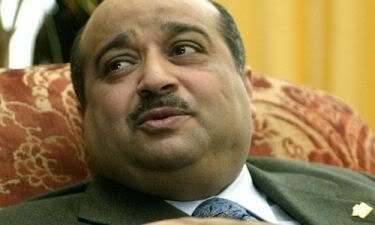
Foto von Scheich Al Jaber dank der Presse

DIE PRESSE: Die Fluglinie bekommt 150 Mio. Euro von Scheich Al Jaber. Er soll im Gegenzug Großaktionär der Fluglinie werden und in das Syndikat einsteigen.

Wien. 370 Mio. Euro hat sich die AUA im Dezember 2006 über eine Kapitalerhöhung von der Börse geholt. Jetzt erhält sie eine weitere Geldspitze: Das Geld kommt aber nicht von der Börse – was angesichts der Turbulenzen an den Finanzmärkten auch kaum möglich wäre. Vielmehr soll die AUA einen strategischen Partner erhalten. Es ist Scheich Mohamed Bin Issa Al Jaber, mit dem AUA-Boss Alfred Ötsch bereits intensive Verhandlungen führt, wie die „Presse“ aus Finanzkreisen erfahren hat.

Der Saudi ist hierzulande kein Unbekannter: Er besitzt das „Grand Hotel“, „The Ring“ und das Hotel Schwarzenberg. Nun will er 150 Mio. Euro in die AUA investieren. Dafür soll er Aktien erhalten – wie viele, sei eine Frage der Verhandlungen, heißt es. Auf Basis des aktuellen Börsewerts der Fluglinie, der aufgrund des starken Kursverfalls bei knapp 450 Mio. Euro liegt, würde Al Jaber ein Drittel der Fluglinie erhalten. Grünes Licht der Regierung? >>> Von Hedi Schneid

Mark Alexander (Paperback)
Mark Alexander (Hardback)

January 30, 2008

The Fed Cuts Interest Rates Again

FINANCIAL TIMES: The Federal Reserve on Wednesday cut interest rates by a further 50 basis points to 3 per cent, in an aggressive move to try to keep the US out of recession.

The 50 point reduction, hot on the heels of the unscheduled 75 basis point cut last week, takes the total reduction over the past eight days to 125 basis points.

This is the most radical adjustment of Fed rate policy in a short period of time since 1982.

It reflects concern that a negative feedback loop between the financial system and the economy could be spreading from housing to other sectors. Fed cuts rates by 50 basis points >>> By Krishna Guha in Washington

FT:
Full text of Fed statement

FT:
Bernanke’s reflation gamble may work too well By Martin Wolf

FT:
Back to ‘the economy, stupid’: How a slowdown will influence America’s presidential contest By Edward Luce

Mark Alexander (Paperback)
Mark Alexander (Hardback)
Shameless, Brazen Blair

Photobucket
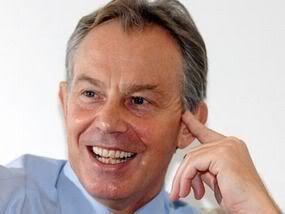
Photo of the money-grubbing, ‘socialist’ Tony Blair courtesy of The Daily Express

THE DAILY EXPRESS: As he lands another giant payday, our former Prime Minister is cashing in with a vengeance on companies who are happy to buy his star quality...no matter what his lack of expertise

YOU have probably never heard of Phil Wilson. Since July 20 last year this miner’s son from County Durham has been MP for the rock-solid Lab­our seat of Sedgefield. 


Whatever qualities as a New Labour drone, he will no doubt demonstrate for decades to come the most interesting thing about him is the date of his election: just 22 days after the previous ­holder of the seat, Tony Blair, resigned as Prime Minister.


In the past, PMs have tended to linger on the backbenches after leaving Downing Street. Ted Heath stayed for 27 years, while Jim Callaghan stayed for eight and then became an active member of the Lords. Margaret Thatcher kept her seat until the 1992 general election allowed her a graceful exit, while John Major remained a backbencher throughout New Labour’s first term.

But not Anthony Charles Lynton Blair. Delighting, as ever, in driving a limousine convoy through the usual way of doing things, the three-times-elected Premier could not give up his Westminster seat fast enough when the time came. 


Having “never pretended to be a House of Commons man”, as Blair told MPs in his farewell appearance, he billed his resignation from Parliament as a clean break: lesser figures might keep the seat for the salary and the perks but Honest Tone would rather make way for a younger man to do the job properly. 


In a further sign of his People’s Ex-Premier credentials, he also let it be known that he had no desire to become Baron Blair of Baghdad. The flummery of the House of Lords wasn’t his style, he told us. 


Six months on, it is becoming clearer why. While the former PM has racked up voluntary commitments with the appetite of a hyper-active toddler – Middle East peace broker, inter-faith ambassador, global warming guru, sports messiah for the North-east, chair of the World Economic Forum in Davos – it is his greed for lucrative private-sector jobs that has stunned admirers and critics alike.

SINCE he left office he has set himself up for the kind of fortune he would never have got away with as an MP – when he would have had to declare every penny – a staggering £10,254,000 in just one year. That figure is predicted to rise to £40million in the next five years. This month, it was announced that he had taken an estimated £2.5million a year part- time job with US bank JP Morgan. The Blair Rich Project >>> By Simon Edge

Mark Alexander (Paperback)
Mark Alexander (Hardback)
sinecures
Idiots in the Banking Sector Eager to Play Dhimmi

THE STAR: A controversial study looking at Islamic banking by the Canada Mortgage and Housing Corp. has ignited protest from some sectors of the Muslim community.

But despite opposition from the Muslim Canadian Congress, the federal housing authority said yesterday it is going forward with the study looking at banking that adheres to Islam's guiding body of rules, or sharia.

Tarek Fatah, founder of the Muslim Canadian Congress, which bills itself as a progressive Muslim group, said in an interview he was "shocked" to learn that "a Crown corporation is using taxpayers' money" for faith-based banking.

Fatah calls sharia banking the "biggest con job ever. What are we going to have next, Buddhist banking?" he asked.

The congress released a letter yesterday written to CMHC chief executive officer Karen Kinsley, urging the housing authority to abandon the $100,000 study.

"Religion has no place in the banking or mortgage industry," the letter said.

The group says the vast majority of Canadian Muslims already use conventional mortgages. Muslim leader calls sharia loans a `con job': Congress wants CMHC to end its banking study >>> By Tony Wong and Tonda Maccharles

Mark Alexander (Paperback)
Mark Alexander (Hardback)

January 29, 2008

House Passes $146 Billion Economic Aid Package

NEW YORK TIMES: WASHINGTON — The House voted overwhelmingly Tuesday afternoon to approve a $146 billion fiscal stimulus package, hoping to quickly seal a fast-paced deal with the Bush administration. But Senate Democrats forged ahead with their own, more expensive plan despite a rising chorus of warnings from the White House and Speaker Nancy Pelosi that they risk delaying much-needed help for the economy and could plunge the nation too far in debt.

The House vote was 385 to 35, with 169 Republicans joining 216 Democrats voting “yes.” Voting against the package were 10 Democrats and 25 Republicans. House Passes $146 Billion Economic Aid Package >>> By David M. Herszenhorn

Mark Alexander (Paperback)
Mark Alexander (Hardback)

January 28, 2008

Meinung: Theo Sommer über Blair als EU-Präsidenten

DIE ZEIT: Tony Blair soll der erste Vollzeitpräsident der Europäischen Union werden. Ausgerechnet Blair, ausgerechnet ein Brite: Das ist wirklich eine absurde Idee

Was immer Tony Blair sich in den zehn Jahren seiner Amtszeit als britischer Premier an Verdiensten erworben haben mag – Verdienste um die Europäische Union sind nicht dabei. Als er 1997 in die Downing Street 10 einzog, gab er sich als passionierter Europäer und gelobte, Großbritannien „ins Herz Europas“ zu rücken.

Es ist ihm nicht gelungen. Er hat es nicht einmal ernsthaft versucht. Vielmehr blieb seine Europapolitik trügerisch und halbherzig. Zaghaftigkeit charakterisierte sie, Nachgiebigkeit gegenüber den euro-phoben Pressezaren seines Landes, unbegreifliches Kuschen vor seinem Schatzkanzler und Nachfolger Gordon Brown, der eine „rote Linie“ nach der anderen zog, die das Vereinigte Königreich auf der Straße nach Brüssel nicht überschreiten dürfe.

So kommt es, dass England noch immer nicht mit beiden Beinen in Europa steht, geschweige denn mit dem Herzen im Herz der Union. Es ist bis heute ein Außenseiter geblieben. Beim Euro ist es nicht dabei; in der Schengen-Zone macht es nicht mit; die Grundrechte-Charta hat es nicht übernommen; aus der gemeinsamen Justiz- und Sicherheitspolitik hat es sich in den Verhandlungen über den Reformvertrag ausgeklinkt. Als Blair aus dem Amt schied, war Großbritannien innerlich weiter von der EU entfernt als bei seinem Amtsantritt.

Der künftige EU-Präsident soll nach dem Lissaboner Vertrag zweieinhalb Jahre amtieren, nicht länger bloß sechs Monate. Es ist schlechthin unvorstellbar, dass er, der doch die Stimme Europas sein wird, das europäische Projekt nicht mit vollem Engagement verficht. Mit einem Präsidenten, der Europapolitik nur mit halbem Herzen betreibt, ist der Union nicht gedient. Den Bock zum Gärtner >>> Von Theo Sommer

Mark Alexander (Paperback)
Mark Alexander (Hardback)
Let the Backbiting Begin!

SPIEGELONLINE INTERNATIONAL: Less than one year from now, the European Union will choose its first long-term president. Former British Prime Minister Tony Blair appears to be the front-runner right now, but a number of senior statesment have emerged as viable candidates.

It took years for the European Union to finally agree that it should even have a president. Now, with just 12 months to go before the 27-member bloc is set to inaugurate its first full time leader, the name-game surrounding the position has begun in earnest. And so has the backbiting.

Until now, the bloc's leadership was passed around on a rotating basis, with a new country taking the helm every six months. But according to the terms of the Lisbon Treaty, signed in the Portuguese capital in December and currently in the process of being ratified across the continent, the new "President of the European Council" will hold office for a two-and-a-half year term.

Tony Blair is one prominent name that has been bandied about recently. The former British prime minister is said to have a good shot, and he has powerful friends. French President Nicolas Sarkozy has thrown his support behind Blair for reasons of both personality and politics -- and Blair even spoke French during a recent speech in France that many are describing as his campaign kick-off event.

But numerous Social Democrats and most Christian Democrats, along with German Chancellor Angela Merkel, aren't as impressed. On Monday, the Daily Telegraph also reported that senior allies of current Prime Minister Gordon Brown were plotting to wreck Blair's ambitions for the post out of concern that his appointment could reignite old divisions within his Labour Party. The office could also come at considerable expense to Blair, who is currently earning millions of pounds as a bank lobbyist, author and as part of the VIP speech circuit. All that would be history should he end up with the prestigious Brussels post. Name-Dropping Begins for EU's First President >>>

SPIEGELONLINE INTERNATIONAL:
Photo Gallery of Contenders

Mark Alexander (Paperback)
Mark Alexander (Hardback)
The BMA Has Learned Nothing from History

HMP ALBION: Dear Fellow Bloggers,

Have a look at these articles from the Daily Telegraph (27th Jan 2008):
A Healthier Way to Run the NHS
Don’t Treat the Old and Unhealthy, Say Doctors
Read these and see where the UK is being lead [sic] by the fascist Left, the malignant Politically Correct and our Hippocratically ignorant NuDoctors.


I make no apology for comparing the cancer that is the "New" Labour project and Nazi Germany.


In both cases they banned fox-hunting and smoking. In both cases they targetted the sick, the elderly, the weak and anyone who didn't fit their sick mindset.


Now the overpaid, decadent fools that head the BMA are effectively promoting the eugenics of Herr Doktor Mengele. The BMA Has Learned Nothing from History >>> By Jeremy Zeid

Mark Alexander (Paperback)
Mark Alexander (Hardback)
Many More Millions for Tone!

THE TELEGRAPH: Tony Blair has expanded his post-Prime Ministerial employment portfolio yet again – and given his soaring earnings another rocket boost – by taking on a second job as a financial consultant.

The top Swiss financial services company Zurich announced it had signed up Mr Blair to give advice on "developments and trends in the international political environment". Zurich refused to say how much Mr Blair will earn.

But, if his £2.5-million-a-year salary for a recently announced role as part-time advisor to Wall Street bank JP Morgan is anything to go by, it will be substantial.

Mr Blair is said to be keen to earn as much as he reasonably can over the next year because he hopes to become the EU's first Permanent President of the Council of Ministers from the start of next year.

If he got the EU job, which would come with a salary of around £200,000, he would have to give up his consultancies – hence the rush to take advantage of the best offers now. Tony Blair takes new financial consultancy role >>> By Toby Helm, Public Policy Editor

THE TELEGRAPH:
Gordon Brown to thwart Tony Blair's EU bid By Andrew Pierce, Toby Helm and Rosa Prince

Join the Telegraph campaign for a EU referendum

Mark Alexander (Paperback)
Mark Alexander (Hardback)

January 27, 2008

Stimulating the Economy?

Photobucket

ALWAYS ON WATCH: This letter to the editor, in the January 26, 2008 edition of the Washington Post, sums up Always On Watch’s views as to the economic-stimulus package, destined to pass Congress in some form:
The back-patting by Congress and the White House over the proposed economic stimulus package ["Negotiators Grappling With Stimulus Plan; White House, Hill Strive to Maintain Bipartisanship," news story, Jan. 24] should be put in check by calling these "tax rebates" what they really are: tax loans. Unlike the checks issued in 2001, those proposed would not be part of a planned permanent tax cut and would thus have to be repaid by taxpayers (that is, us) sometime in the future.

Encouraging us to spend these "rebates" quickly instead of saving the money to pay off this tax loan is shortsighted. That behavior would lead to a quick economic high and then a deep low. It would be like abolishing paycheck tax withholdings and telling folks to spend the money as it comes in and deal with the tax bill when it arrives.

Today's plan may work to boost lawmakers' images in the short term, but it is merely a sham to those of us who will still be paying taxes once those public servants leave office.
Mr. Ryan Fitzgerald, the author of the above letter, has it exactly right! Putting money, so-called "rebates," into the hands of the American people fails to address the multiple causes of the present economic crisis.

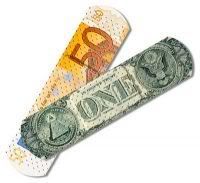
And it is a crisis. The subprime mortgage crisis, Americans' penchant to spend over 100% of what they earn (via easy credit and other overspending), and the outsourcing of American industry cannot be solved by a one-time Congressional measure. In fact, the economic-stimulus package is like putting a bandaid on an arterial rupture and provides only short-lived relief. Stimulating the Economy? By Always On Watch

You may comment on this post HERE

Mark Alexander (Paperback)
Mark Alexander (Hardback)

January 25, 2008

George Bush in Saudi Arabia: The 20 Billion Dollar Arms Deal


Mark Alexander (Paperback)
Mark Alexander (Hardback)
Banks are Helping Sharia Make a Back-Door Entrance

GLOBE AND MAIL: It seems only yesterday that Premier Dalton McGuinty declared: "There will be no sharia law in Ontario." Many of us, who witnessed the medieval nature of manmade sharia laws in our countries of birth, heaved a sigh of relief back in September of 2005. We thought this was the end of the attempt by Islamists to sneak sharia into a Western jurisdiction. We were wrong.

The campaign to introduce sharia is back. Last time, the campaign took a populist approach, invoking multiculturalism. This time, the pro-sharia lobby is dangling the carrot of new niche markets and has the backing of Canada's major banks. Such icons of the corporate world as Citibank NA, HSBC Holdings PLC, and Barclays PLC have endorsed sharia banking and have started offering Islamic financing products to a vulnerable Muslim population.

In May, 2007, The Globe reported that "Several Canadian financial institutions are preparing sharia-compliant mortgages, insurance, taxi licensing and investment funds to help serve the country's fastest-growing part of the population." Recently, the Toronto Star's business section reported that an unnamed bank may offer sharia loans as early as this summer; Le Journal de Montreal disclosed that Canada Mortgage and Housing Corporation (CMHC) was also getting in on the act. Stephanie Rubec, spokesperson for the CMHC, said the Crown corporation had launched a tender worth $100,000 to study Islamic mortgages for Muslim Canadians. Could she be oblivious to the fact that almost all Muslim Canadians currently have home mortgages through banks and don't feel they are living in sin? In fact, CMHC has gone a step further: It has quietly entered into a partnership with a Saudi company, AaYaan Holdings, to develop sharia-compliant mortgage-lending systems.

The origin of Islamic banking has its roots in the 1920s, but did not start until the late 1970s and owes much of its foundation to the Islamist doctrine of two people — Abul Ala Maudoodi of the Jamaat-e-Islami in Pakistan and Hassan al-Banna of the Muslim Brotherhood in Egypt. The theory was put into practice by Pakistani dictator General Zia-ul-Haq who established sharia banking law in Pakistan.

Proponents of sharia banking rest their case on many verses of the Holy Koran that outlaw usury*, not interest.

Verses that address the question of loans and debts include:

Al Baqarah (2:275): God hath permitted trade and forbidden usury;

Al Baqarah (2:276): Allah does not bless usury, and He causes charitable deeds to prosper, and Allah does not love any ungrateful sinner.

Every English-language translation of the Koran has translated the Arabic word riba as usury, not interest. Yet, Islamists have deliberately portrayed bank interest as usury and labelled the current banking system as un-Islamic. Instead, these Islamists have created exotic products with names that are foreign to much of the world's Muslim population. This is where they mask interest under the niqab of Mudraba, Musharaka, Murabaha, and Ijara. Two authors, both senior Muslim bankers, have written scathing critiques of sharia banking, one labelling the practice as nothing more than "deception," with the other suggesting the entire exercise was "a convenient pretext for advancing broad Islamic objectives and for lining the pockets of religious officials." Why Canadian banks would contribute to this masquerade is a question for ordinary Canadians to ask. Banks are helping sharia make a back-door entrance >>> By Tarek Fatah

*Usury is “the practice of lending money at exorbitant, or illegally high, rates of interest”. [Source: Dictionary.com]

Tarek Fatah is the author of Chasing a Mirage: The Tragic Illusion of an Islamic State, to be published in March.

Mark Alexander (Paperback)
Mark Alexander (Hardback)